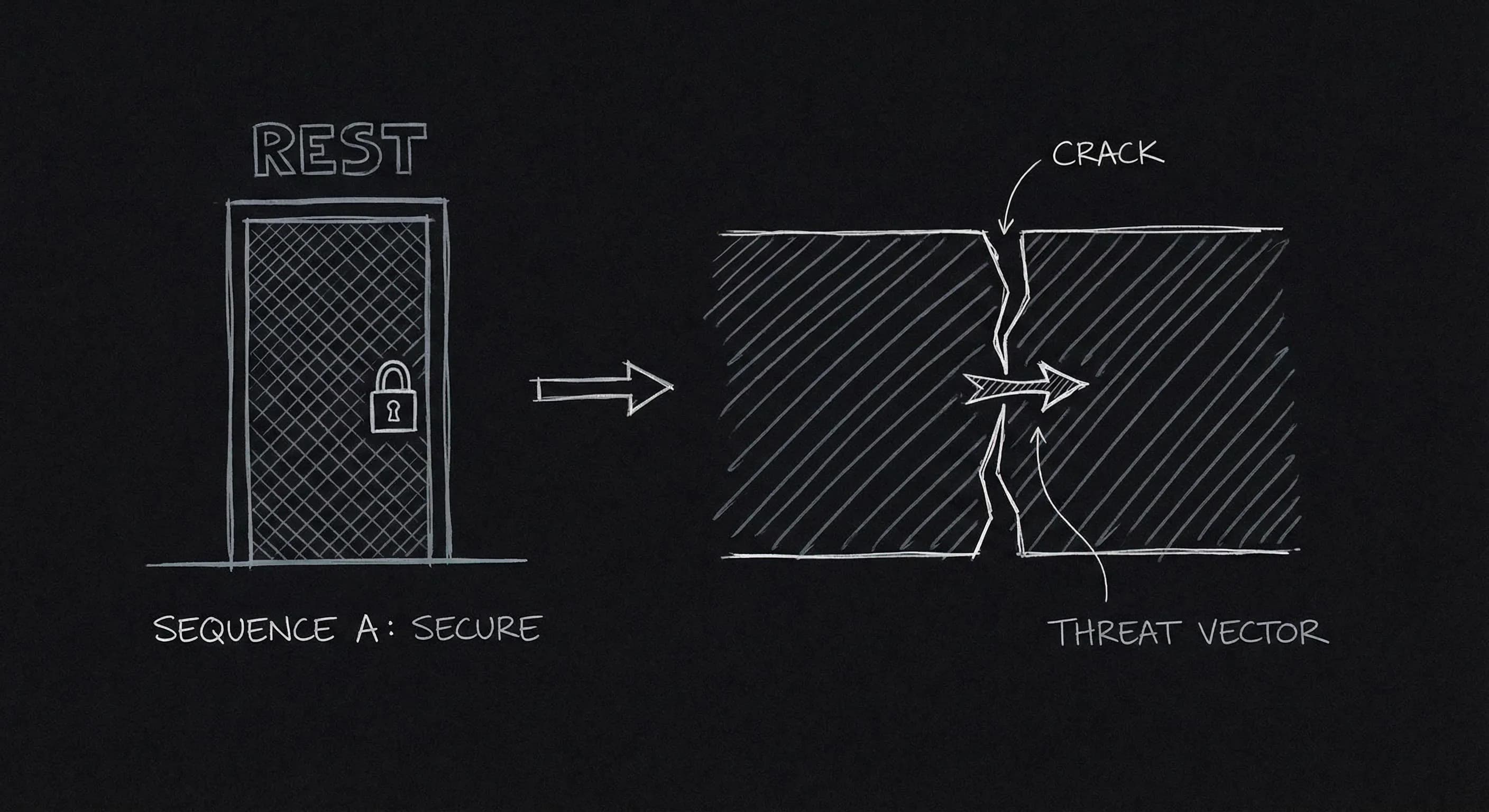

The monster is dead. The survivors embrace. The sun comes up. We exhale. Then,the false ending collapses. The thing isn’t dead. The door wasn’t locked. The real threat was behind them the whole time. Horror has trained the audience to expect one climax. When you give them a fake one first, you take away their safety. The second climax hits harder because they thought they were safe. That’s not a trick. It’s structure. And it only works if you set it up and pay it off.
The false ending doesn’t cheat. It makes a promise,safety,and then breaks it. The break is the point.
Think about the films that do it. Scream. A Nightmare on Elm Street. The Descent. We get a moment of relief. The killer is gone. The nightmare is over. Then the rules change. The audience’s guard was down. So when the real threat returns, the fear is sharper. The false ending isn’t just “one more scare.” It’s a structural beat: we satisfy the expectation of an ending, then we revoke it. The writer has to earn both,the fake resolution and the return. If the fake resolution feels unearned, the audience doesn’t relax. If the return feels random, the audience feels cheated. So the craft is in the setup and the timing.
Why Horror Uses the False Ending
Horror is about the violation of safety. The audience enters a contract: something will threaten the characters, and we will feel that threat. The climax is when the threat is faced,defeated or endured. But if the climax is the only peak, the audience is braced for the whole third act. The false ending does something else. It gives them a moment of release. “It’s over.” Then it takes that release away. The violation isn’t just the monster. It’s the fact that we were allowed to think we were safe. So the false ending is a way to reset the audience’s state. They drop their guard. Then you hit them again. The second hit lands harder because they weren’t ready.
That only works if the first “ending” feels real. The audience has to believe, for a beat, that the story is over. So the false ending has to look like a real ending. Music. Relief. Hugs. Sunrise. The genre’s normal signals of “we’re done.” Then you undercut it. The thing moves. The phone rings. The door opens. The audience’s brain has to shift from “safe” to “not safe” in a second. That shift is where the scare lives.
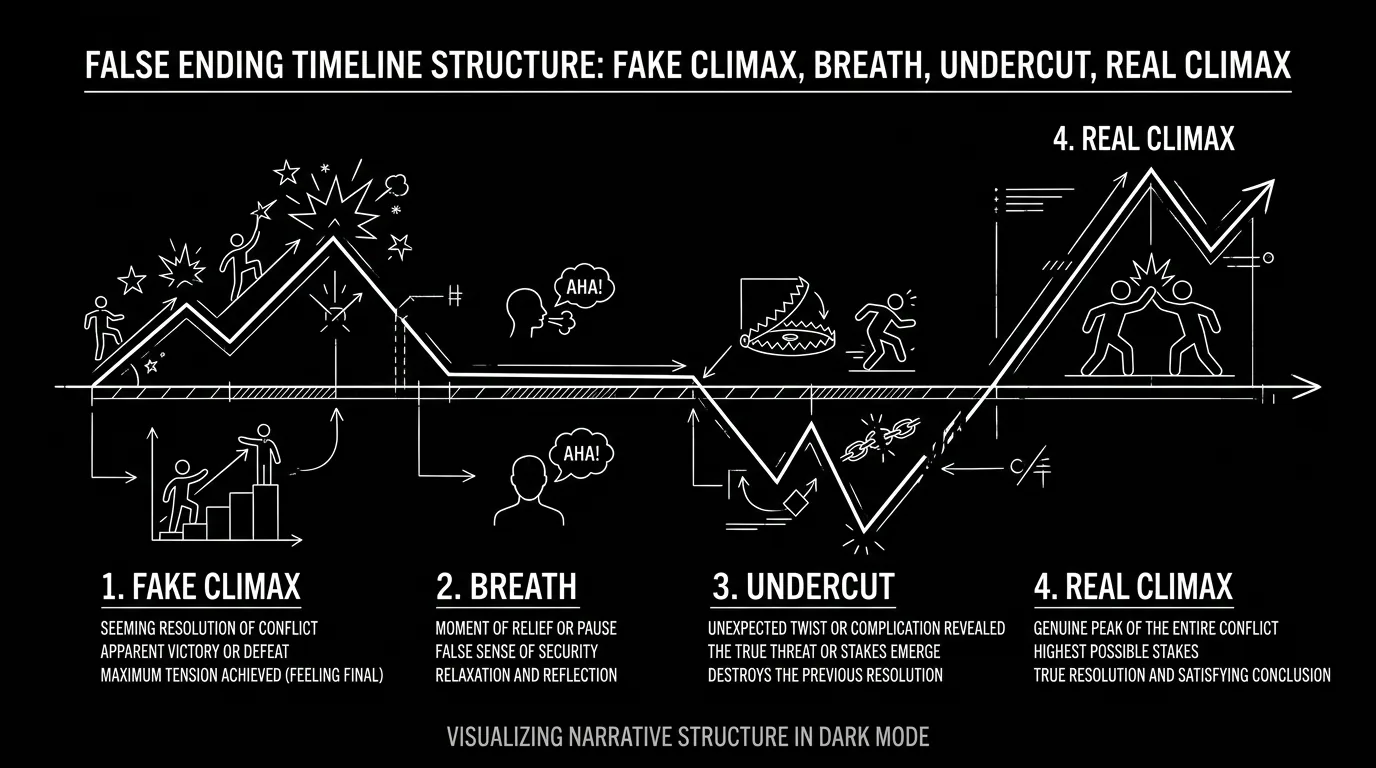
The Anatomy of a False Ending
The fake climax: The protagonist (or the group) defeats the threat. We see it die, flee, or dissolve. The staging is clear. The audience believes the threat is gone. This has to feel earned. If the defeat is too easy or too vague, the audience won’t buy it,and they won’t relax. So the fake climax has to look like a real climax. Effort. Cost. Maybe a sacrifice. Then the moment of relief.
The breath: The characters (and the audience) exhale. This is the “false ending” proper. We sit in the relief. It can be short,thirty seconds,or a bit longer. The longer the breath, the more the audience lets down their guard. But if it’s too long, they’ll start to suspect something. So the breath is usually a beat or two. Hugs. “It’s over.” Maybe they move toward the door. The sun comes up. We’re almost out.
The undercut: Something breaks the safety. The thing wasn’t dead. There was another one. The door won’t open. The phone rings and it’s them. The undercut has to be clear and fast. We don’t need a long build. We need the moment when safety is revoked. One image. One sound. One line. Then we’re back in the nightmare.
The real climax: Now the story has to deliver the actual ending. The real threat. The real choice. The real cost. The false ending has raised the stakes,we’ve been reminded that safety is fragile. So the real climax has to pay that off. It can’t feel like an afterthought. It has to feel like the ending we were wrong to think we’d already had.
| Beat | Purpose |
|---|---|
| Fake climax | Looks like victory; audience believes threat is gone |
| Breath | Moment of relief; audience drops guard |
| Undercut | Safety revoked; one clear moment that breaks the peace |
| Real climax | Actual ending; pays off the return of the threat |
As with writing the jump scare, the false ending works when the audience’s body is ahead of their brain. They’ve relaxed. Then the threat is back. The script has to put that rhythm on the page,the relief, then the cut.
Try it free
Try Screenweaver for free on your script
It is free. Import your existing project, get a clearer view of your outline, and regain control of your story structure in minutes.
Start FreeRelatable Scenario: The Cabin in the Woods
The group has killed the creature. They’re wounded but alive. They stumble outside. Dawn. Someone says “We made it.” They’re at the car. Keys in hand. Then,the creature’s hand grabs the ankle from under the car. We thought it was dead. We thought they were safe. The false ending did its job: we exhaled. The undercut does its job: we’re back in the nightmare. The rest of the script has to deliver the real climax,do they get away? Does someone else die? The false ending isn’t the end. It’s the trap before the end.
Relatable Scenario: The Home Invasion
The intruder is down. The police are on the way. The family is in the kitchen, holding each other. We hear sirens. Then the “dead” intruder’s phone rings. Someone is calling him. There’s another one. Or: he’s not dead. He moves. The false ending was the family’s embrace, the sirens, the sense that help is coming. The undercut is the phone, or the movement. Now the script has to deliver the real final confrontation. The audience’s guard was down. Now it’s back up,and the real climax has to earn that.
The Trench Warfare Section: What Beginners Get Wrong
Making the fake climax too weak. The threat is “defeated” in a way that feels easy or unclear. The audience never really believes it’s over, so they never relax. Fix: The fake climax has to look like a real one. Stakes. Effort. Clear staging. The protagonist has to pay something. When they “win,” it has to feel earned. Then the undercut will land.
Skipping the breath. We kill the monster and immediately it’s back. There’s no moment of relief. The false ending doesn’t work because we never had a false ending,we just had two beats. Fix: Give the audience a beat (or several) of safety. Let them think it’s over. Let the characters think it’s over. Then break it.
Undercut that feels random. The threat returns for no reason. There was no setup. It just… comes back. The audience feels cheated. Fix: Plant the possibility earlier. Maybe we never saw the body. Maybe there was a second creature mentioned. Maybe the rules of the world allow for return. The undercut should feel like “we should have known” not “the writer needed one more scare.”
Real climax that’s weaker than the false one. The false climax was huge. The real one is a quick stab and it’s over. The audience feels let down. Fix: The real climax has to be the true peak. It can be shorter,we’ve already had a big beat,but it has to have weight. Stakes. Cost. The false ending sets up the real one. Don’t let the real one feel like an afterthought.
Using the false ending when the genre doesn’t support it. Not every horror story needs a false ending. Some are relentless. Some end on a single climax. Fix: Use the false ending when you want to violate the audience’s sense of safety,when the point is “you thought you were done.” If your story is about endurance or inevitability, a single climax might be stronger. The false ending is a tool. Use it when the story calls for it.
Step-by-Step: Building a False Ending
After your protagonist “wins,” write the breath. One to three beats. Relief. Hugs. Movement toward safety. Make it look like an ending. Then choose your undercut. What breaks the safety? The thing moves? A new threat? A locked door? Write that moment. One image or one sound. Make it clear. Then write the real climax. How does the story actually end? The false ending has raised the stakes,the audience knows safety can be taken away. The real climax has to pay that off. Read the sequence. Does the breath feel real? Does the undercut land? Does the real climax feel like the true ending? If the false ending feels cheap, strengthen the fake climax and the breath. If the real climax feels weak, give it more weight. Our guide on structure in thrillers applies to how you build to both peaks; the false ending is a second peak, not a replacement.
The Perspective
The false ending is the horror writer’s way of saying: safety was an illusion. You have to give the audience that illusion,let them believe the story is over,before you take it away. When you do it right, the second climax isn’t a trick. It’s the real ending they were wrong to think they’d already had. And that’s why it hurts.
Final Step
Build your next script with Screenweaver
Move from ideas to production-ready pages faster with timeline-native writing and AI-assisted story flow.
Try Screenweaver