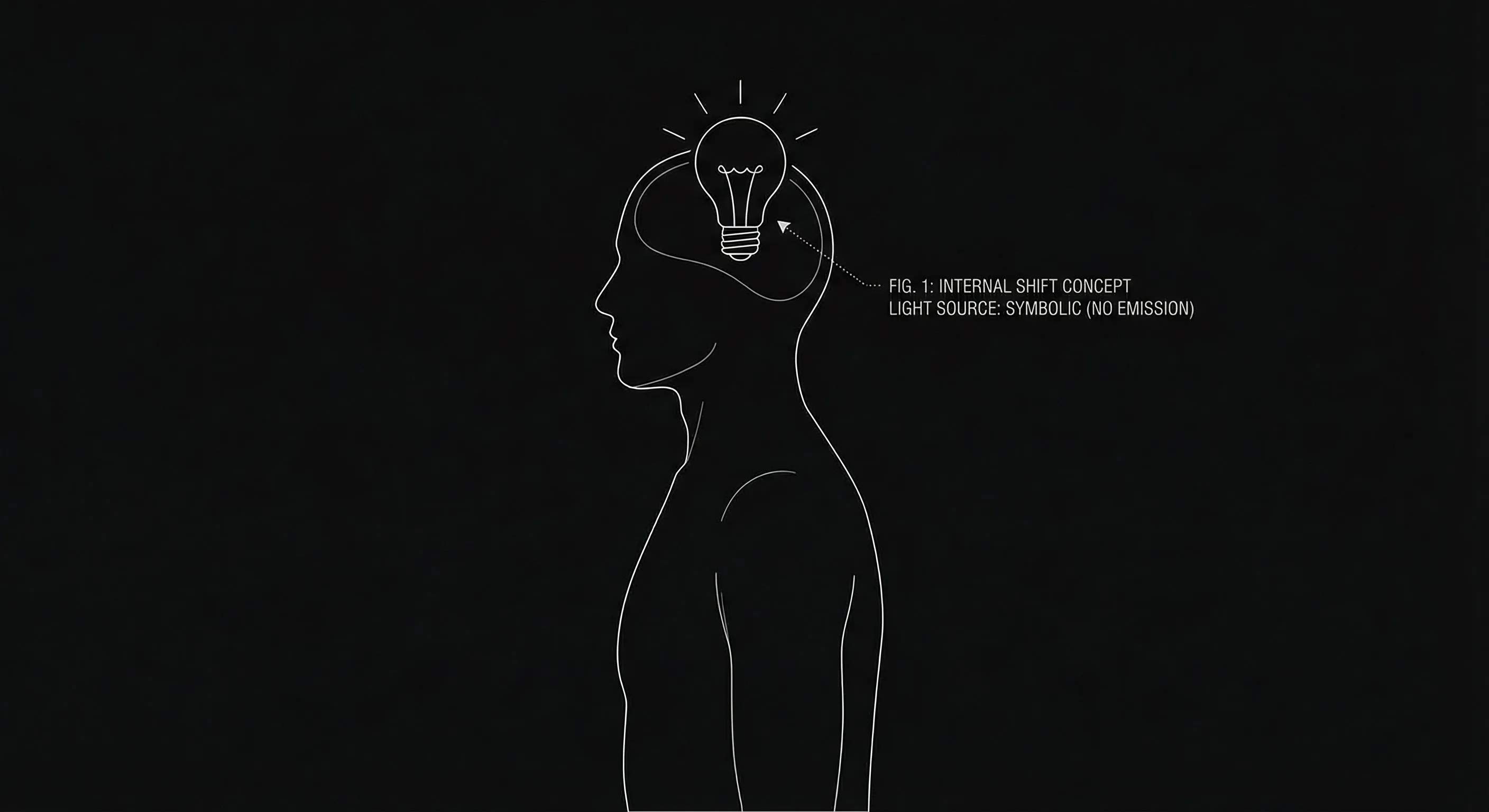

The character stops. Something has changed,inside. They’ve understood something they didn’t before. The audience needs to feel it. But there’s no voice-over. No character turning to camera to explain. The epiphany scene is the challenge of putting an internal shift on the page in a way that becomes visible. What they do, what they see, what they choose to do next,that’s how we know. If you write it right, the reader (and the audience) has the same realization at the same time. Not because they were told. Because they were shown.
Realization on the page is behavior. The character doesn’t announce the change. They act from it.
Think about the moments that stick. The detective who finally sees the pattern. The parent who understands what they’ve been missing. The hero who accepts what they have to do. We don’t need a speech. We need a moment,a look, an action, a decision,that is the realization. The writer’s job is to find that moment and put it in action and image. So the epiphany scene isn’t a special format. It’s a discipline: translate the internal into the external. Make the audience feel the shift without being told.
Why Epiphanies Are Hard to Write
In life, realizations happen in our heads. We think. We connect. We change. On screen, we don’t have direct access to thought. We have face, body, action, dialogue. So the epiphany has to be expressed. That doesn’t mean the character says “I now understand.” It means they do something that only makes sense if they understand. They pick up the phone. They put down the weapon. They walk toward the person they’ve been avoiding. The action is the proof. The audience infers the realization from the action. So when you write the epiphany scene, you’re not writing “she realizes.” You’re writing what she does, what she sees, and what she chooses,in an order that makes the realization inevitable. The audience gets there with her.
That’s why voice-over or on-the-nose dialogue often weakens the moment. If the character explains the realization, we don’t have to feel it. We’re told. The stronger move is to let the behavior carry it. A pause. A look at an object that now means something different. A decision that couldn’t have happened before. The audience puts it together. That’s the epiphany.
The Building Blocks of a Visual Epiphany
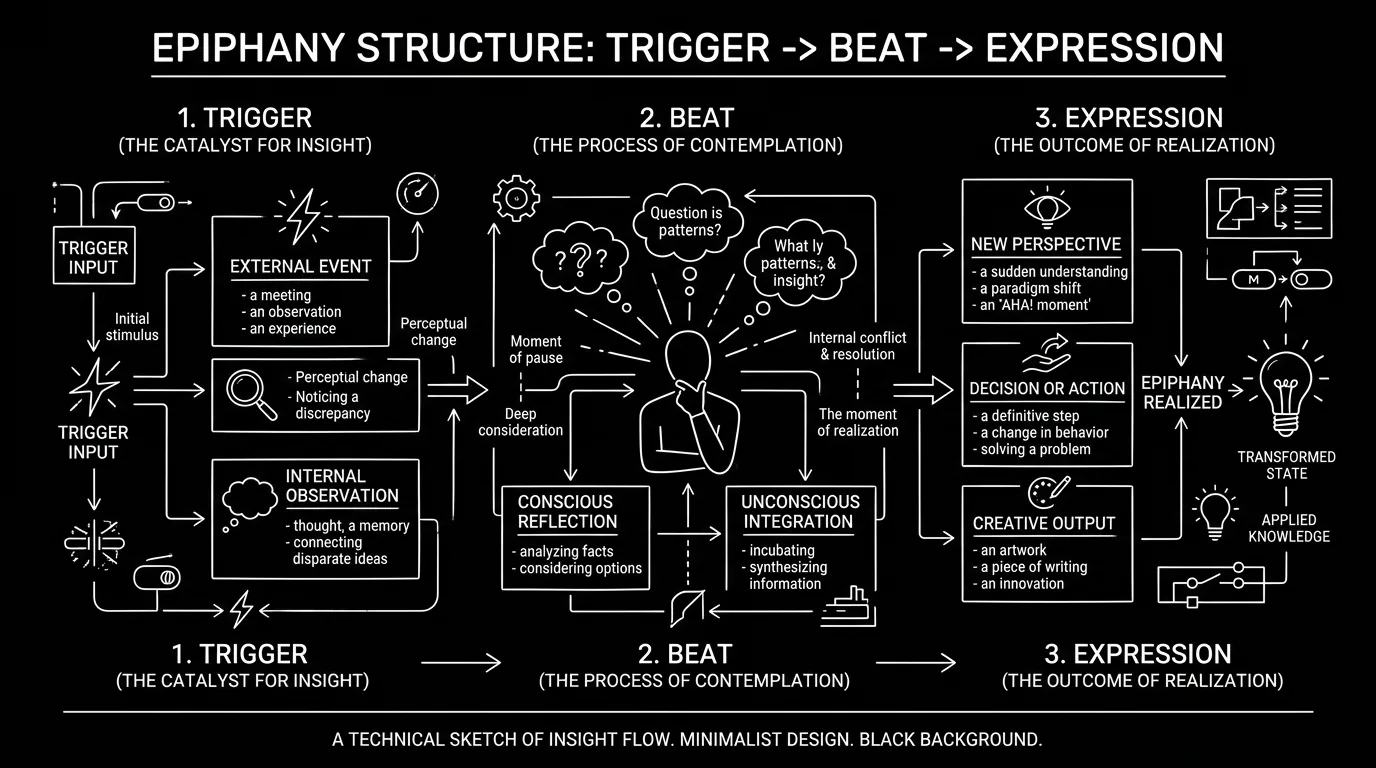
Trigger: Something the character sees, hears, or experiences. It can be small,a photograph, a line of dialogue, a detail they missed before. It can be the accumulation of the scene. The trigger is the thing that makes the penny drop. On the page, you write the trigger as action or dialogue. We see what they see. We hear what they hear. We don’t have to label it “the trigger.” We just put it there.
The beat: The moment between the trigger and the response. Often it’s silence. The character doesn’t move. Or they move in a way that suggests something is shifting,they slow down, they look again. On the page, this is often a short action line. “She doesn’t move.” “He looks at the photo again.” “A long beat.” The beat is where the audience catches up. They’re processing too. Don’t rush it.
The expression: What the character does with the realization. They make a choice. They speak. They leave. They stay. The action is specific. It’s not “she understands.” It’s “she picks up the phone and dials.” The audience reads the understanding from the action. So the expression has to be something that only makes sense after the realization. If they could have done it before, it’s not the expression of an epiphany.
| Element | On the page |
|---|---|
| Trigger | Action or dialogue we see/hear; the thing that changes them |
| Beat | Pause, look, or small action; space for the shift |
| Expression | Concrete choice or action that proves the shift |
As with writing a silent scene, the epiphany often works best when you lean on image and action rather than dialogue. The character doesn’t have to say what they’ve learned. They have to do what only someone who learned it would do.
Relatable Scenario: The Detective’s Breakthrough
She’s been stuck. The case file is a mess. Then she sees it,the detail that was there all along. You could write: “She realizes the killer was at the wedding.” That’s telling. Or you could write: She’s flipping through photos. Stops. One photo. The wedding. She’s seen it before. This time she looks at the background. Someone in the corner. She goes still. Then she’s reaching for the file, cross-referencing names. She doesn’t say “It was him.” She picks up the phone. “I need a warrant. Now.” The realization is in the stop, the look, the action. The audience sees the photo with her. They get it when she gets it. That’s an epiphany on the page.
Try it free
Try Screenweaver for free on your script
It is free. Import your existing project, get a clearer view of your outline, and regain control of your story structure in minutes.
Start FreeRelatable Scenario: The Parent Who Finally Sees
He’s been hard on his kid. Pushing. Criticizing. Then he sees his son in the hallway,shoulders slumped, the way he used to stand when he was little and scared. Something clicks. You don’t write “He realizes he’s been wrong.” You write: He’s in the doorway. His son passes. Doesn’t look at him. The way he walks,like he’s trying to be invisible. Dad watches. Something in his face shifts. He doesn’t call out. He doesn’t apologize yet. He just,watches. Then he turns and goes to the kitchen. We see him pick up his phone. Put it down. The next scene might be the conversation. Here, the epiphany is the look, the shift, the decision not to speak yet. The audience feels the weight. They don’t need a voice-over.
The Trench Warfare Section: What Beginners Get Wrong
Naming the realization. “She realizes he’s been lying.” “It hits him: he’s been wrong.” Once you name it, the audience doesn’t have to feel it. Fix: Cut the line. Give us the trigger and the expression. Let the audience infer “she realizes.” If you’ve set it up right, they’ll get there.
Skipping the beat. The trigger happens and immediately the character acts. There’s no moment of processing. The audience doesn’t have time to catch up. Fix: Insert a beat. A pause. A look. A silence. One or two lines of action that hold the moment. The epiphany lands when the audience has a second to process with the character.
Making the expression vague. “She decides to change.” “He understands what he has to do.” Change how? Do what? Fix: The expression has to be a specific, visible action. She calls someone. He walks into the room he’s been avoiding. She puts down the drink. Specificity is what makes the realization believable. Vague intention reads as weak.
Using dialogue to explain. The character says “I get it now. I’ve been wrong.” That’s a summary, not an epiphany. Fix: Let the dialogue be minimal, or let the action do the work. If they speak, what they say should be a consequence of the realization (e.g., an apology, a decision) not a description of it (“I now realize…”).
No clear trigger. The character seems to shift for no reason. The audience is confused. Fix: Make the trigger visible. Something they see, hear, or do in the scene has to be the thing that changes them. Put it on the page. Let the audience see the same thing the character sees. Then the shift feels earned.
Step-by-Step: Writing an Epiphany Beat
Identify the realization: what does the character understand or accept? Then work backward. What could they see, hear, or experience in this scene that would cause that shift? That’s your trigger. Write it. Then: what would they do,concretely,once they’ve shifted? That’s your expression. Write it. Between trigger and expression, add a beat. One or two action lines. They stop. They look. They don’t move. Then they act. Read it. If you cut the line that names the realization, does the scene still work? If yes, you’ve written an epiphany. If no, strengthen the trigger or the expression so the audience can get there without being told.
How This Connects to Character Arc
The epiphany is often a turning point in the character’s arc. They’ve been avoiding something, believing something, or missing something. The epiphany is the moment that changes. So it has to connect to what comes before and after. The trigger should feel like a payoff,something the story has been building. The expression should set up or launch the next phase of the story. As with character arcs, the change has to be visible. The epiphany scene is where that visibility is concentrated. Get it right, and the whole arc lands.
The Perspective
The epiphany scene is the writer proving they can show thought without explaining it. The character doesn’t announce the change. They act from it. Give the audience the trigger, the beat, and the expression. Cut the line that names the realization. When you do that, the audience has the same moment the character has,and that’s when the scene earns its name.
Final Step
Build your next script with Screenweaver
Move from ideas to production-ready pages faster with timeline-native writing and AI-assisted story flow.
Try Screenweaver