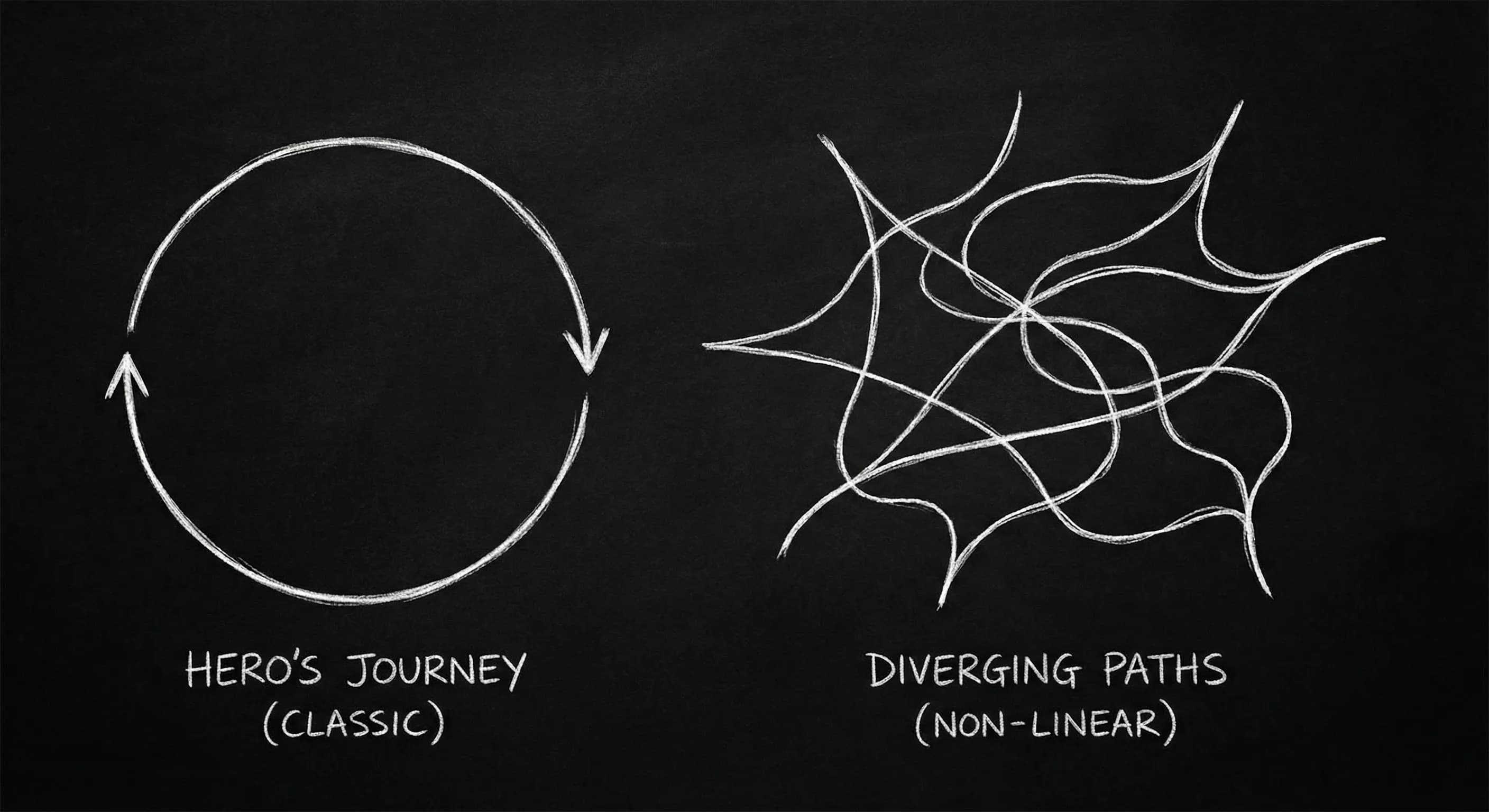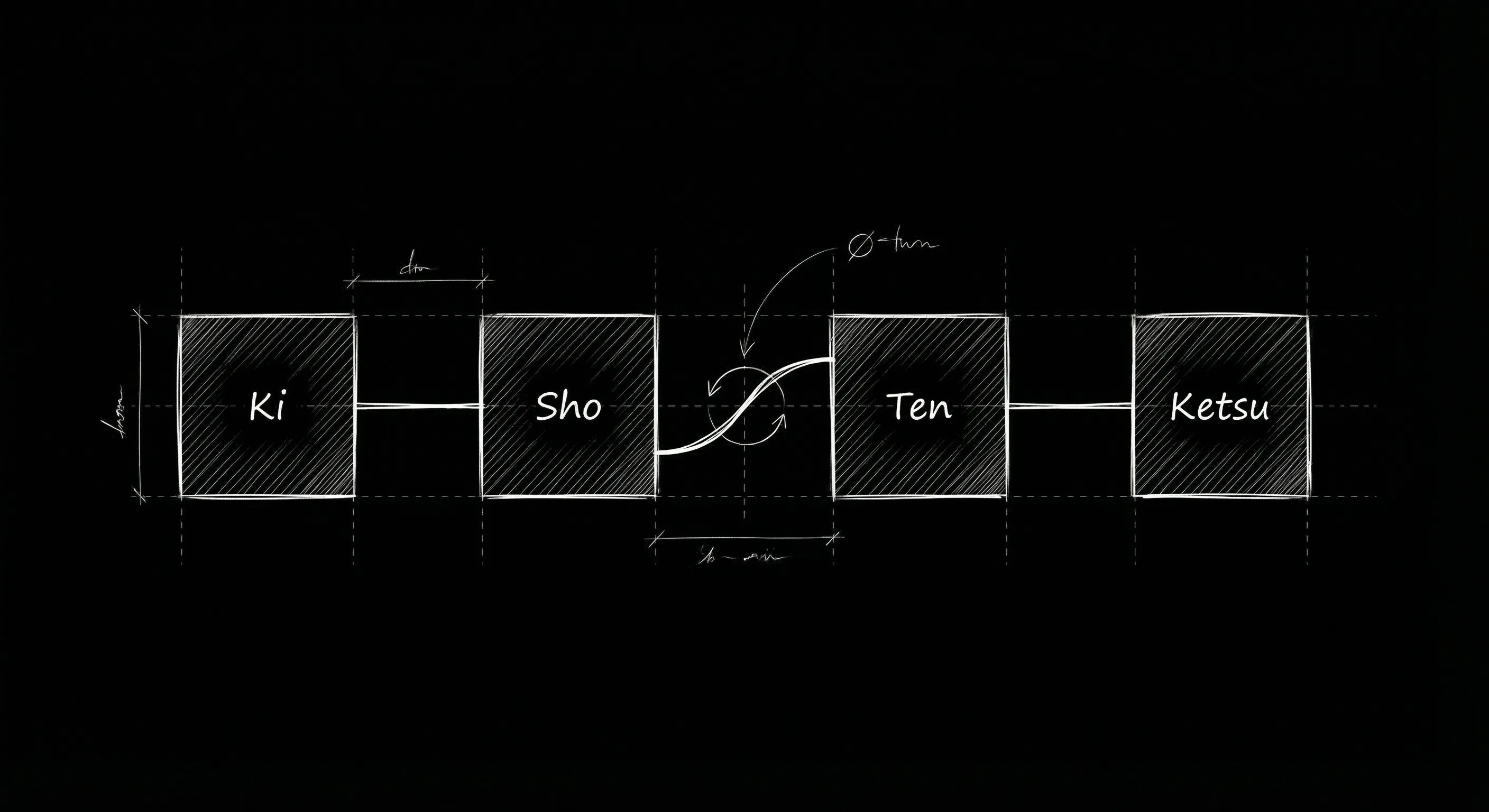

If you walk into any TV writers' room in 2026, you will likely see two things scrawled on the whiteboard: a rigid list of 15 beats, or a messy, cyclical circle.
For decades, Blake Snyder’s Save the Cat! was the bible of screenwriting. It promised a formula for the perfect blockbuster. But as television overtook film as the primary medium for complex character studies, a challenger emerged from the mind of Dan Harmon: The Story Circle.
Now, in 2026, the landscape has shifted again. Seasons are shorter, audiences are smarter, and the line between "cinema" and "TV" has dissolved. So, which structural philosophy actually holds up? Is the rigid beat sheet dead? Is the circle too abstract?
The truth is, the most successful showrunners today aren't choosing one side,they are weaponizing both. Let’s break down the battle for the soul of your screenplay.
The Contenders
Save the Cat!
Origin: Blake Snyder (2005)
The Philosophy: Structure is a checklist. A movie must hit specific emotional and plot milestones at specific page numbers to satisfy the audience's primal need for story.
- Focus: Pacing, stakes, and "moments."
- Key Beats: Catalyst, Debate, Break into Two, Midpoint, All is Lost, Dark Night of the Soul.
- Best For: Feature films, pilots, high-concept plots.
The Story Circle
Origin: Dan Harmon (Adapted from Joseph Campbell)
The Philosophy: Story is a cycle of change. A character leaves their comfort zone, gets what they want, pays a heavy price, and returns changed.
- Focus: Character arc, psychology, and transformation.
- Key Steps: You, Need, Go, Search, Find, Take, Return, Change.
- Best For: Episodic TV, character studies, serialized arcs.
The Case for the Cat: Why Structure Matters
Critics call Save the Cat! "formulaic." They aren't wrong. But in 2026, where the first episode of a series determines its renewal fate within 48 hours of streaming data, formula is safety.
The "Save the Cat" beat sheet is essentially a pacing algorithm. It ensures you don't spend 40 pages clearing your throat.
"The reason executives love Save the Cat is that it speaks the language of sales. 'The Catalyst' isn't just a plot point; it's the hook in the trailer. 'The All is Lost' moment is the cliffhanger that drives the binge."
For a pilot episode, strict adherence to Snyder’s beats is often a smart play. You need to establish the world (Set-up), disrupt it (Catalyst), and launch the series engine (Break into Two) efficiently.
The Case for the Circle: The Character Engine
If Save the Cat creates a roller coaster, the Story Circle builds a therapy session. Dan Harmon’s simplified adaptation of the Hero’s Journey is deceptively simple:
- You (A character is in a zone of comfort)
- Need (But they want something)
- Go (They enter an unfamiliar situation)
- Search (Adapt to it)
- Find (Get what they wanted)
- Take (Pay a heavy price for it)
- Return (Then return to their familiar situation)
- Change (Having changed)
This structure dominates modern TV because it is fractal. You can apply the circle to a 5-season arc (Walter White), a single season, a single episode, or even a single scene.
In 2026, audiences crave authenticity over spectacle. The Story Circle forces the writer to ask: "How does this plot point hurt the protagonist? How does it change them?" It prevents empty action.
The 2026 Hybrid Model
The most exciting writing happening right now,shows like Severance, The Bear, or the latest HBO hits,often fuses these two methods.
The Macro vs. The Micro
A common strategy in modern writers' rooms is to use Save the Cat for the Season and The Story Circle for the Episode.
- The Season Arc: Needs big structural tentpoles. You need a Midpoint turnover in Episode 4 or 5. You need a Dark Night of the Soul in the penultimate episode. Snyder’s beat sheet manages this macro-pacing perfectly.
- The Episode Arc: Needs to feel self-contained and character-driven. Harmon’s circle ensures that even in a plot-heavy episode, the character undergoes an internal journey.
The 2026 Writer's Room: Mapping the Season (Linear) vs. The Episode (Circular).
Visualizing the Hybrid in ScreenWeaver
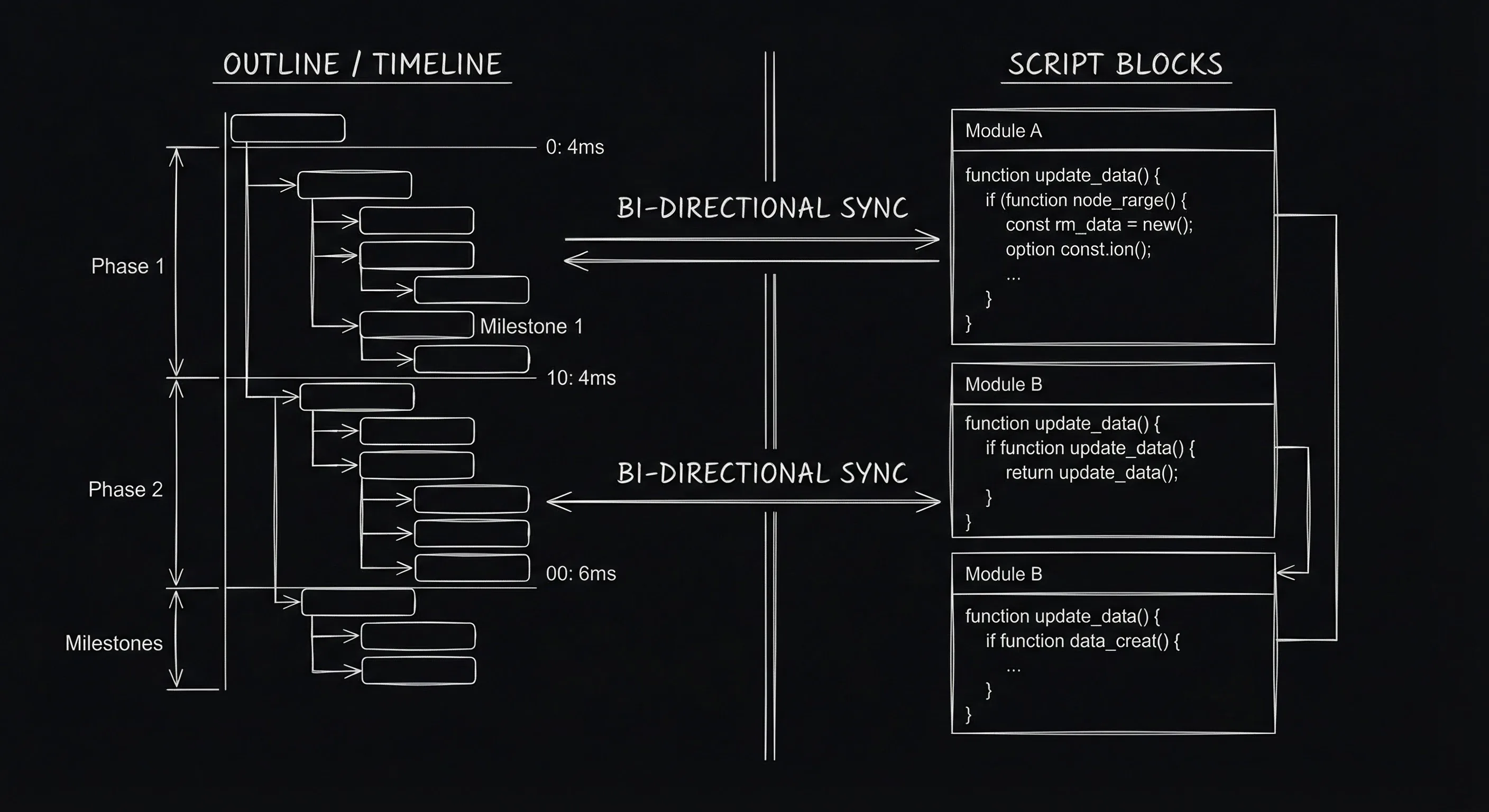
This is why we built the Dual-Layer Timeline in ScreenWeaver. You can toggle between a "Beat View" (tracking Snyder’s 15 beats) and a "Circle View" (tracking the character’s psychological descent and return).
Seeing your story through both lenses simultaneously highlights the gaps. Maybe you have a perfect "All is Lost" moment (plot), but your protagonist hasn't actually "Paid the Price" (character).
Case Studies
Example A: The "Pilot" Structure
Think of a show like The Last of Us (HBO).
- Save the Cat: The pilot hits every beat. The "Catalyst" is the outbreak. The "Break into Two" is leaving the quarantine zone. It’s a perfect thriller structure.
- Story Circle: Joel starts in a zone of comfort (albeit a miserable one). He needs a battery/car. He goes into the Firefly deal. He finds Ellie. He takes the job. The price he pays is the reopening of his fatherly trauma.
The structure works because the external threats (Snyder) force the internal change (Harmon).
Which One Rules?
In 2026, the winner isn't Snyder or Harmon. It’s flexibility.
If you are writing a tightly wound thriller or a high-stakes pilot, lean into Save the Cat. It will keep your pacing tight and your executives happy.
If you are writing a dark comedy, a character study, or a "vibes-based" dramedy, lean into The Story Circle. It will ensure your characters feel human and your ending feels earned.
The best writers treat these structures not as rules, but as diagnostic tools. If your second act drags, ask Blake Snyder for help. If your ending feels empty, ask Dan Harmon why.
And if you want to see both at the same time? Well, that's why we built ScreenWeaver.
Master Your Structure
Map your beats and your circles side-by-side in ScreenWeaver's new Timeline 2.0.
Try ScreenWeaver for FreeFinal Step
Build your next script with Screenweaver
Move from ideas to production-ready pages faster with timeline-native writing and AI-assisted story flow.
Try Screenweaver