Intercutting Scenes: Formatting Parallel Action Sequences
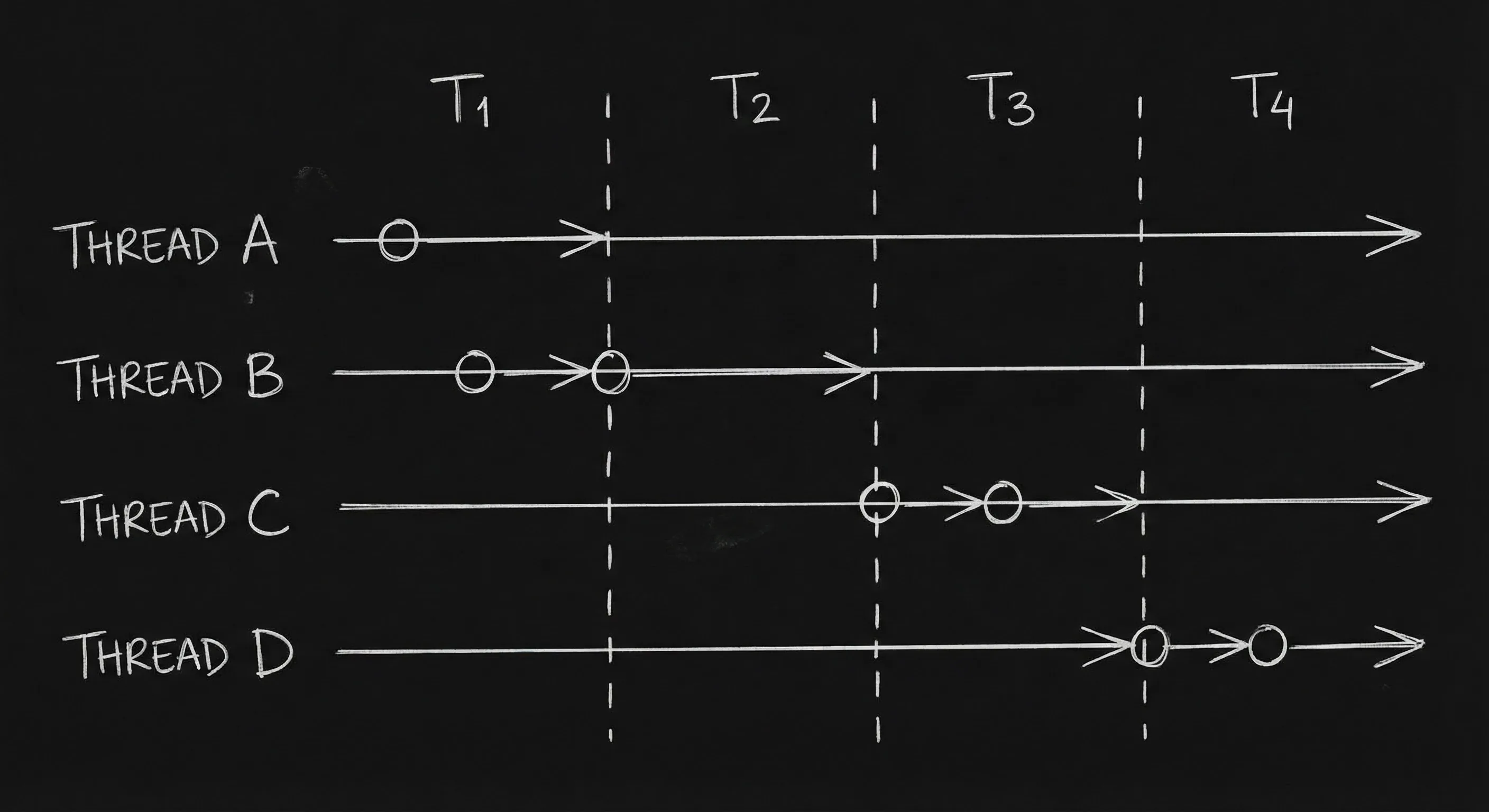
INTERCUT and mini-slugs so the reader always knows which location we're in. How to format parallel action.
Intercutting Scenes: Formatting Parallel Action SequencesDeep dives into modern screenwriting, visual storytelling, and how AI is reshaping the creative process.
Categories

INTERCUT and mini-slugs so the reader always knows which location we're in. How to format parallel action.
Intercutting Scenes: Formatting Parallel Action Sequences
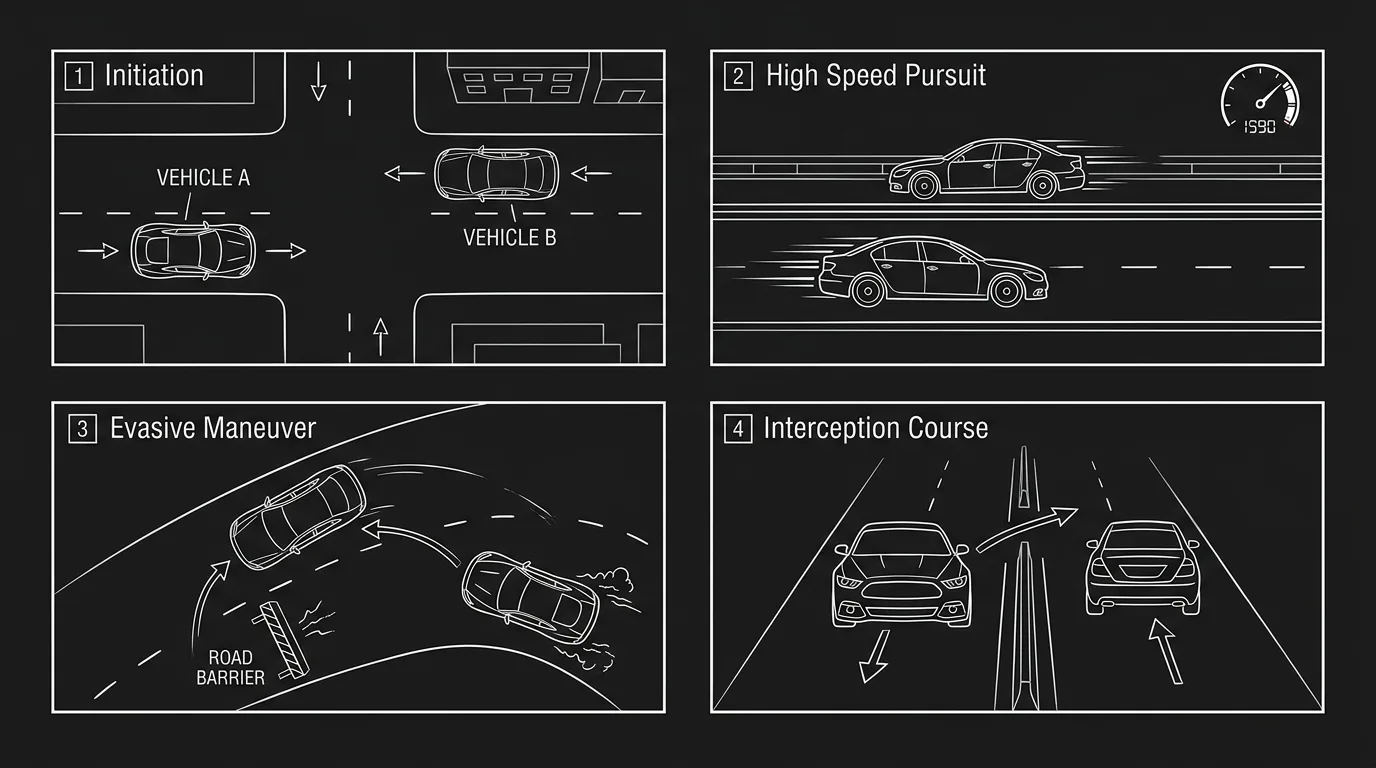
One clear beat per moment. Who's in which car, what happens, and the outcome. Short blocks so the reader and stunt team follow.
Writing Car Chases: Clarity Amidst Chaos
Suggest the continuous flow. Describe the path and the beats so it can be shot in one take, without directing the camera.
The "One-Shot" Sequence: Describing Continuous Takes
When to specify each move and when to give outcome and feel. How to choose and format so the stunt team and reader get what they need.
Formatting Fight Scenes: Blow-by-Blow vs. The "Big Picture"
Every time we change time or thread, the page has to say so. Supers, headings, or labels, one clear convention.
Handling Multiple Timelines: Visual Cues for the Reader
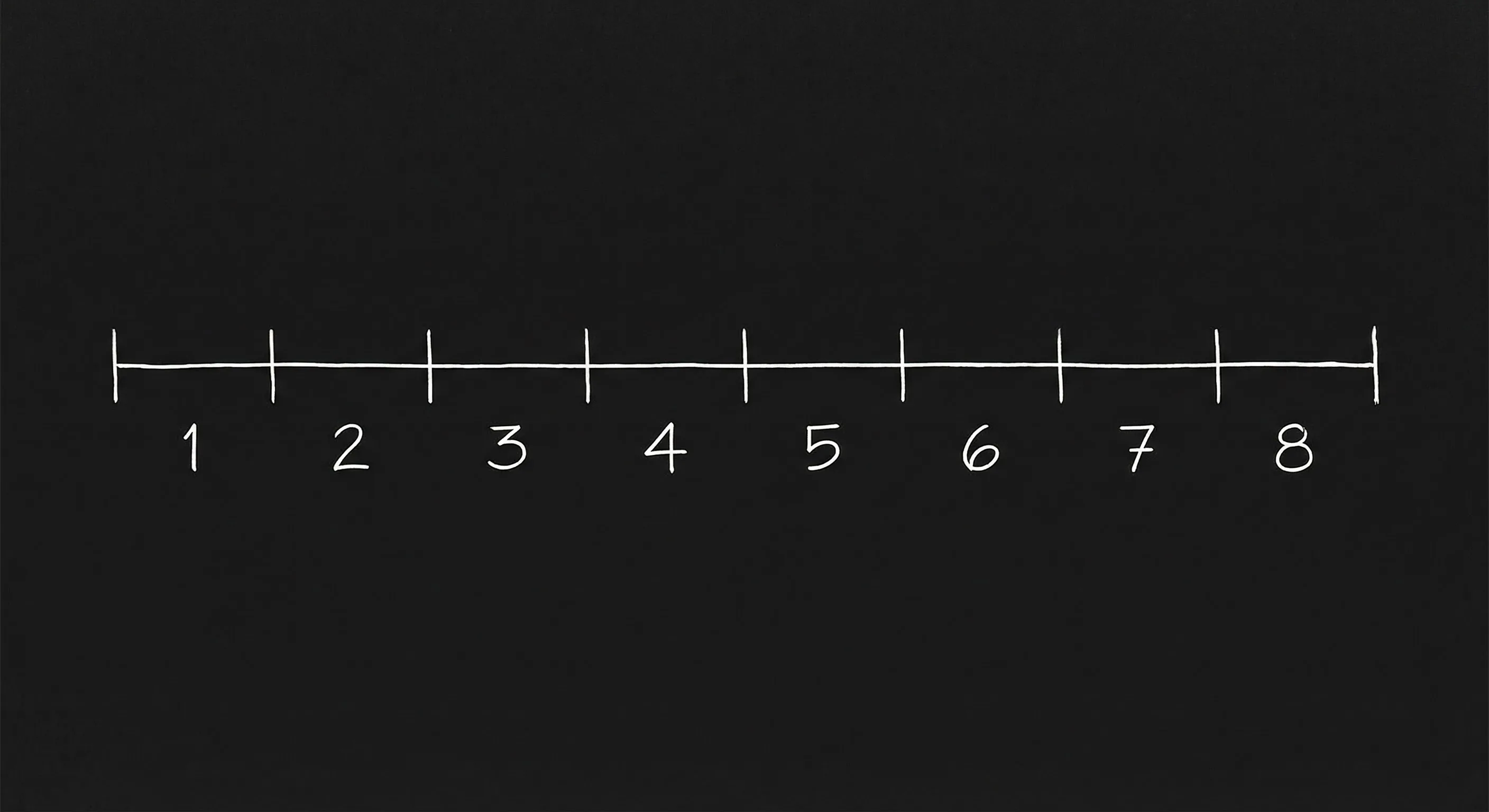
A feature isn't one long story. It's eight mini-movies,each about 15 minutes, each with a job. How to use the 8-sequence model to fix the sagging middle and keep tension high.
The 8-Sequence Approach: Breaking Down Your Feature into 15-Minute Movies
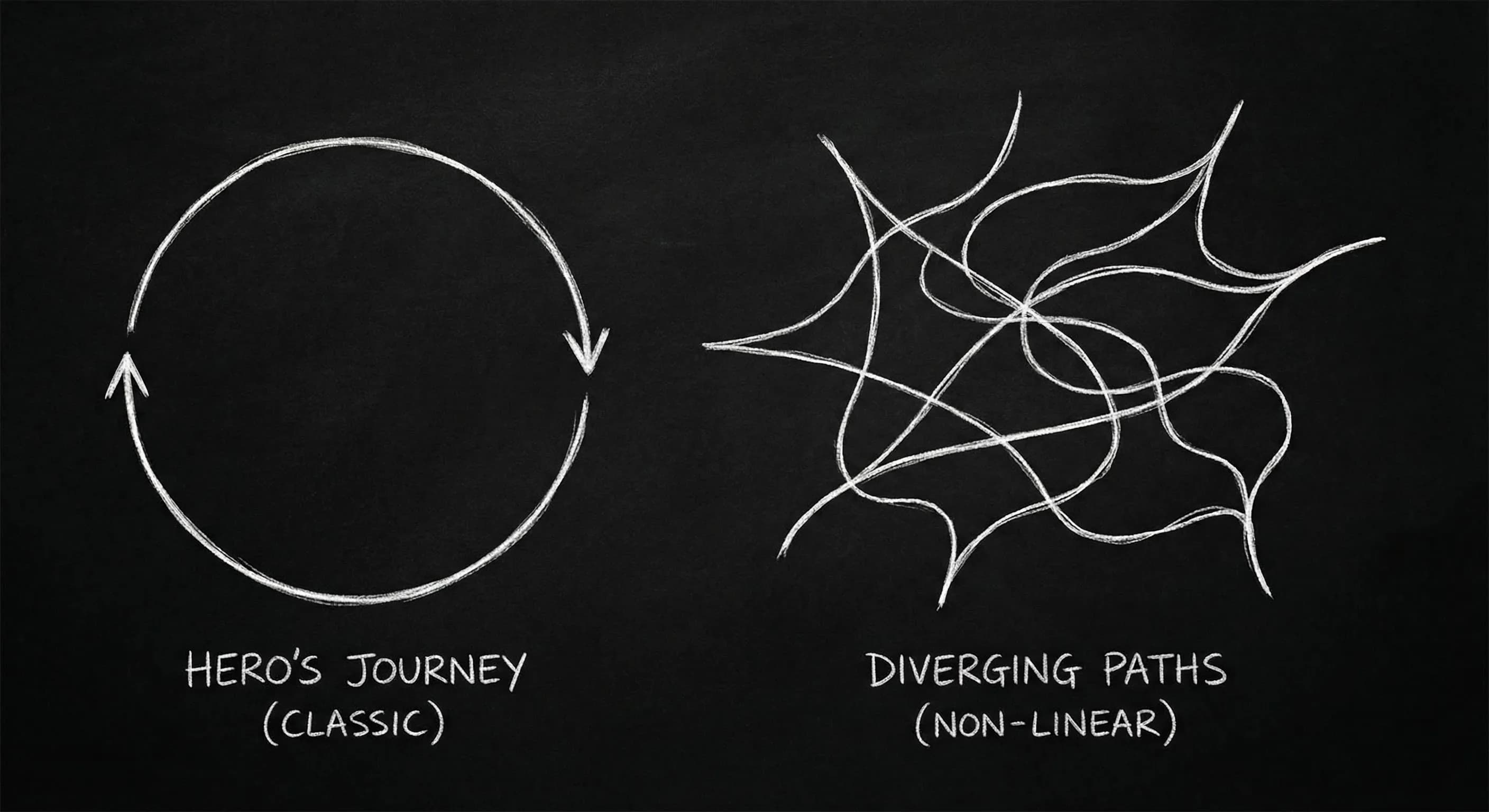
The monomyth isn't dead. But it's no longer enough. Ensemble, tragedy, and stories that don't 'return with the elixir' are what many viewers want. When to use the Hero's Journey,and when to choose something else.
Beyond the Hero's Journey: Why Modern Audiences Demand New Paradigms
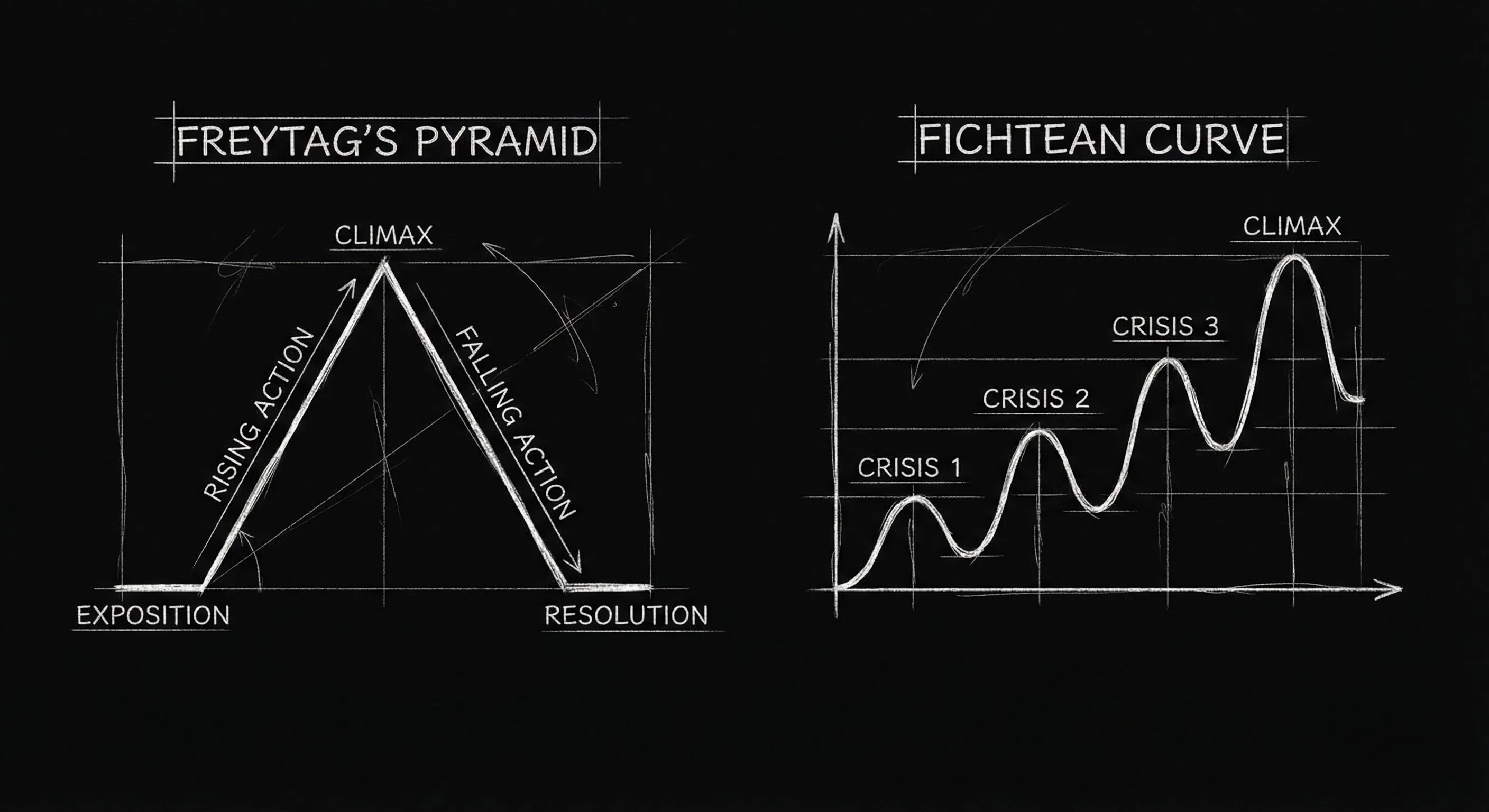
One long rise to one climax, or crisis after crisis? For thrillers and suspense, the Fichtean curve often fits better. How to choose and how to build the middle so it doesn't sag.
Fichtean Curve vs. Freytag's Pyramid: Structuring the Modern Thriller