The ScreenWeaver Blog

Deep dives into modern screenwriting, visual storytelling, and how AI is reshaping the creative process.

Categories

Eight sequences on a feature timeline
Craft
February 19, 202614 min read

The 8-Sequence Approach: Breaking Down Your Feature into 15-Minute Movies

A feature isn't one long story. It's eight mini-movies,each about 15 minutes, each with a job. How to use the 8-sequence model to fix the sagging middle and keep tension high.

Read Article
Classic monomyth versus multiple narrative paths
Craft
February 19, 202614 min read

Beyond the Hero's Journey: Why Modern Audiences Demand New Paradigms

The monomyth isn't dead. But it's no longer enough. Ensemble, tragedy, and stories that don't 'return with the elixir' are what many viewers want. When to use the Hero's Journey,and when to choose something else.

Read Article
Fichtean curve and Freytag's pyramid compared
Craft
February 19, 202614 min read

Fichtean Curve vs. Freytag's Pyramid: Structuring the Modern Thriller

One long rise to one climax, or crisis after crisis? For thrillers and suspense, the Fichtean curve often fits better. How to choose and how to build the middle so it doesn't sag.

Read Article
Five acts across a limited series timeline
Craft
February 19, 202614 min read

The 5-Act Structure for Limited Series: Mapping the Netflix Binge

A limited series isn't a long movie. It's one story in five acts across six or eight episodes. Where to put the midpoint, the crisis, and the climax so the season feels shaped,and bingeable.

Read Article
Four-part Kishōtenketsu structure: Ki, Shō, Ten, Ketsu
Craft
February 19, 202614 min read

Kishōtenketsu Explained: Utilizing Eastern Narrative Structures in Western Scripts

Four parts: Ki, Shō, Ten, Ketsu. No central conflict required. The Ten is the twist that reframes the story. When to use it for mood pieces, indies, and stories that settle instead of resolve.

Read Article
Pulp Fiction-style non-linear timeline
Craft
February 19, 202614 min read

Deconstructing Pulp Fiction: A Guide to Non-Linear Narrative Formatting

How to put non-linear storytelling on the page. Section headers, time stamps, thread labels,so the reader and production never get lost when the chronology is deliberately broken.

Read Article
Midpoint: reactive to active pivot
Craft
February 19, 202614 min read

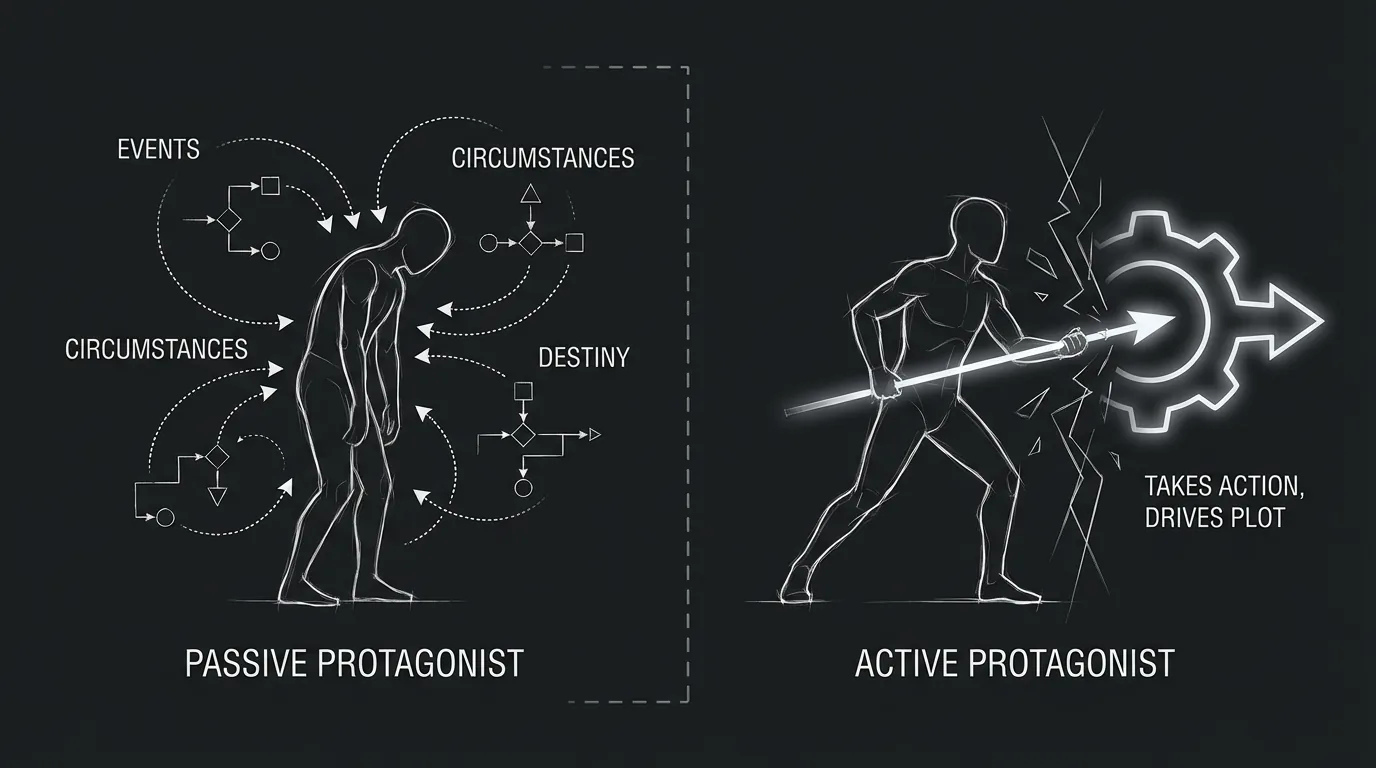
The Midpoint Shift: Turning Passive Protagonists Active

The midpoint isn't just a twist. It's the pivot where the protagonist stops reacting and starts acting. How to write that shift so the second half has a new engine.

Read Article
Emotional low: the All Is Lost valley
Craft
February 19, 202614 min read

The "All Is Lost" Moment: How to Write Genuine Despair Without Melodrama

The lowest point before the rally. How to land it with specificity and restraint,so the audience feels the valley instead of watching a performance.

Read Article
ScreenWeaver Blog | Insights on Storytelling & Screenwriting