
writing-tv-pilot-procedural-vs-serialized
Writing the Pilot: Procedural vs. Serialized (And What Your First Hour Really Has to Prove)
Some pilots feel like you’ve watched a movie. Others feel like you’ve been handed the remote and told, “Here’s what pressing this button will do every week.”
That’s the first fault line between serialized and procedural television.
In a serialized pilot, you’re promising a story that will move forward if the show continues. In a procedural pilot, you’re promising a machine that will reliably output new stories every episode. Most scripts blend the two in some ratio, but you have to know which promise is dominant, or your pilot will come out as grey mush.
The note readers give a lot is “this feels like a feature” or “this feels like episode three.” Underneath that, what they mean is: your pilot doesn’t clearly articulate what kind of engine this show runs on.
Let’s fix that.
Procedural vs. Serialized: The Grown‑Up Definitions
Forget debates on Twitter about “monster of the week” vs “prestige TV.” For craft purposes:
Procedural means the primary engine of each episode is a new case / problem that begins and ends within that hour.
Serialized means the primary engine of each episode is the continuation of arcs that began before and will extend after this hour.
The key phrase is “primary engine.”
You can absolutely have:
- Procedurals with big serialized elements (The Good Wife, Elementary, House).
- Serialized shows with case‑of‑the‑week wrappers (Buffy, early Supernatural, Mr. Robot season one).
What matters is: what does the audience feel cheated by if you don’t deliver it every week?
If they’d be angrier about “no case this week” than “no progress on the season‑long conspiracy,” you’re procedural‑led. If it’s the reverse, you’re serialized‑led.
Your pilot has one job: prove that engine works.
Scenario 1: The Pilot That Feels Like Episode 3 of a Show That Doesn’t Exist Yet
Let’s say you’re writing a cop show.
You love True Detective and Line of Duty and you want to do something “grounded and gritty with serialized elements.” You write 60 pages of:
- Two detectives with messy personal lives.
- A sprawling murder conspiracy.
- A few half‑sketched cases that tie in.
- A cliffhanger that reveals a corrupt superior.
On paper, it’s full. In practice, readers come back with: “Strong writing, but this feels like episode three.” Or: “I don’t know what a normal week of this show looks like.”
Here’s what went wrong: you wrote a chapter of a story, not a format sample.
Even in a heavily serialized show, the pilot has to answer:
- What is the repeating situation?
- What are the rules of engagement?
- What does an hour of this show do to the characters and to the world?
If we can’t see how this becomes ten more episodes without inventing a new structure from scratch, your pilot hasn’t done its job.
Rebuilding That Cop Pilot as Procedural‑Led
Version A: you decide the show is primarily procedural. Each week: a new case that intersects with a slow‑burn corruption arc.
Now your pilot spine changes.
You pick one case, say, a hit‑and‑run that looks random and then links up to the larger conspiracy. Your pilot gives that case a beginning, middle, and end:
- Cold open: the crash.
- Act I: detectives pick up the case, meet key witnesses.
- Act II: they chase leads, hit dead ends, argue about methods.
- Act III: they solve the case enough to restore order, arrest, confession, or at least a covered‑up resolution.
Along the way, you seed serialized threads:
- A detail at the crime scene that doesn’t fit and points to something bigger.
- A superior pressuring them to close it early for reasons that smell bad.
- The personal life blows that will complicate future cases (custody, addiction, secrets).
We finish the pilot satisfied by the case and hooked by the hints.
We also know exactly what episode two looks like: new cold open, new case, same detectives, same world, conspiracy arteries widening underneath.
Procedural engine proven.
Rebuilding the Same Premise as Serialized‑Led
Version B: you decide the show is primarily serialized. One murder, one season, maybe one case across multiple years.
Now your pilot has different obligations.
You don’t need to close a case in 60 minutes. You do need to:
- Introduce the inciting crime and why it matters beyond shock value.
- Establish the investigator(s) and what this case will cost them.
- Set rules for how the case will unfold over episodes (time jumps? dual timelines? political obstacles?).
- End with a reveal that transforms the meaning of what we’ve just seen, not just adds another twist.
The “job of the week” is replaced by “phase one of the season‑long investigation.”
Here, a pilot that tries to behave like a full procedural episode will feel rushed and thin. You’re allowed, even expected, to leave major threads open, as long as the audience understands that open is the format, not a sign you ran out of pages.
The same premise can work both ways; your pilot must commit to one primary promise.
The Trench Warfare: What Pilots Get Wrong About Both Modes
Let’s get into specific, fixable mistakes I see constantly in early TV scripts.
Mistake 1: Procedural Pilots That Forget to Close the Case
You’d be surprised how many “case‑of‑the‑week” pilots end with:
“TO BE CONTINUED…”
If your show lives or dies on solving a fresh case every week, you are not allowed to punt the very first one. The point isn’t that every mystery in the universe gets resolved; it’s that the format proves it can contain a story.
If you’re worried that closing the case will kill mystery, you’re confusing:
- “Who killed this person?” with
- “Why is this department the way it is?”, “How far will this cop go?”, “What rot sits above them?”
Let the weekly question end. Let the series question stay open.
Mistake 2: Serialized Pilots That Blow the Whole Season in One Hour
On the flip side, a lot of serialized pilots are so hungry to be “prestige” that they cram an entire feature’s worth of escalation into 55 minutes.
If you:
- introduce the conspiracy,
- expose it,
- topple the villain, and
- kill the protagonist’s main obstacle
in the pilot, what’s left? Season two?
Think of your serialized pilot as Phase One. Its job is not to complete the journey; it’s to trap your characters in a situation that will generate many more hours of story.
Ask:
- What is the one irreversible change this pilot makes to the world of the show?
- What problem is created by that change that the season will be about?
If you can’t answer both cleanly, you’re either under‑ or over‑shooting.
Mistake 3: Character Arcs That Ignore the Engine
In procedurals, writers often bolt on serialized character drama that has nothing to do with the weekly work. The detective’s divorce, the doctor’s addiction, the lawyer’s secret, never once affect how they handle a case.
The result feels like two shows badly superimposed.
Tie them together:
- An ER doctor who over‑treats minor cases because she’s traumatized by a missed diagnosis.
- A cop who cuts corners on warrants because he can’t bear to see another perp walk on a technicality.
- A lawyer who tanks a plea because it looks too much like the compromise that ruined their own life.
Now the case‑of‑the‑week is the lab where the long‑term arc is tested.
Serialized pilots make a mirrored mistake: they forget to show how this world will generate ongoing conflict, not just deep feelings.
If your characters’ wounds and desires don’t intersect with the show’s core situation, high‑school, spaceship, newsroom, family business, the premise will feel like a one‑time therapy session, not a series.
Mistake 4: No Clear “Episode Shape”
Even heavily serialized shows have episode shapes.
Breaking Bad is serialized, but you can often summarize individual hours: “the one where they dissolve the body,” “the one with the fly,” “the one where Hank reads the book on the toilet.”
Your pilot should make the shape of a typical episode legible:
- How do we usually start? (Cold open crime? Flash‑forward? Home life?)
- When does the workplace or central arena enter?
- Where does the big complication usually hit?
- How do we end: on closure, on charge, on twist?
If your pilot’s internal rhythm is pure chaos, you’re not being “innovative”; you’re hiding the absence of an engine.
Mistake 5: Teasers That Belong to Another Show
It’s fashionable to open with a flash‑forward: blood on the floor, fire in space, your protagonist running and gasping. Then, “24 hours earlier.”
Used well, it’s a hook. Used lazily, it’s a cheap promise you never cash.
Ask yourself:
- Does this image come from an inevitable part of the pilot’s story, or from a hypothetical future episode you may never write?
- Does it reflect the tone of a normal hour, or is it just your most extreme moment?
Your teaser is part of your format demo, not a separate music video.
Try it free
Try Screenweaver for free on your script
It is free. Import your existing project, get a clearer view of your outline, and regain control of your story structure in minutes.
Start FreeBuilding a Procedural‑Led Pilot: A Step‑By‑Step Workflow
Let’s get granular. You’re writing a half‑procedural, half‑serialized medical drama.
Step 1: Define the Weekly Unit
Answer in one sentence:
“Each week, the show tells the story of ______ at ______.”
Examples:
- “…one unusual patient whose case exposes a flaw in the hospital.”
- “…one legal mess the PR firm has to spin before it hits the press.”
- “…one supernatural disturbance in a different small town on Route 66.”
This is your case‑of‑the‑week contract. Your pilot must deliver a fully readable version of this unit.
Step 2: Choose a Pilot Case That Attacks the Premise
Don’t make the pilot’s case “typical.” Make it the perfect stress test.
If your premise is “a concierge ER for the ultra‑rich,” your pilot case shouldn’t be a vanilla appendicitis. It should be a client whose presence exposes every ethical fault line: a dictator’s child, a whistleblower, a viral influencer.
The pilot case should:
- Force your lead to break or bend a personal rule.
- Reveal at least one ugly truth about how this institution really works.
- Create a problem that cannot be fully fixed in one episode.
Step 3: Thread in One or Two Serialized Hooks Only
Limit yourself. Two, max three, serialized threads:
- A relationship question (divorce, affair, new partner).
- An institutional question (budget cut, ownership change, cover‑up).
- A personal secret (past malpractice, hidden crime, chronic illness).
Give each at least two beats in the pilot. End one on a clear cliff, that’s your “watch the next one” pull.
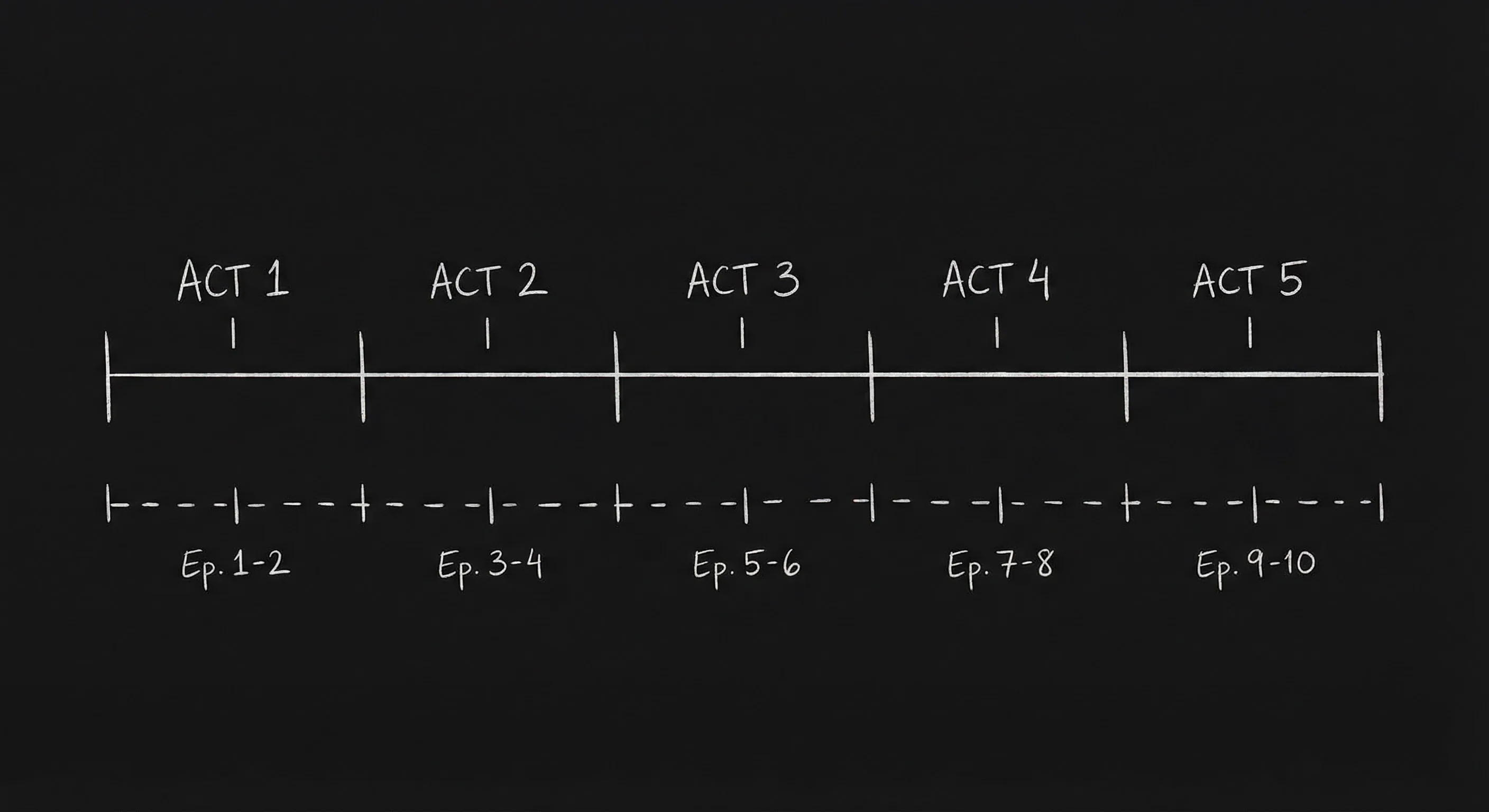
Step 4: Outline the Hour as a Case Spine With Hooks
Rough shape:
- Teaser – The case appears in the most upsetting way.
- Act I – We meet the team, see the world, and understand why this case is a problem.
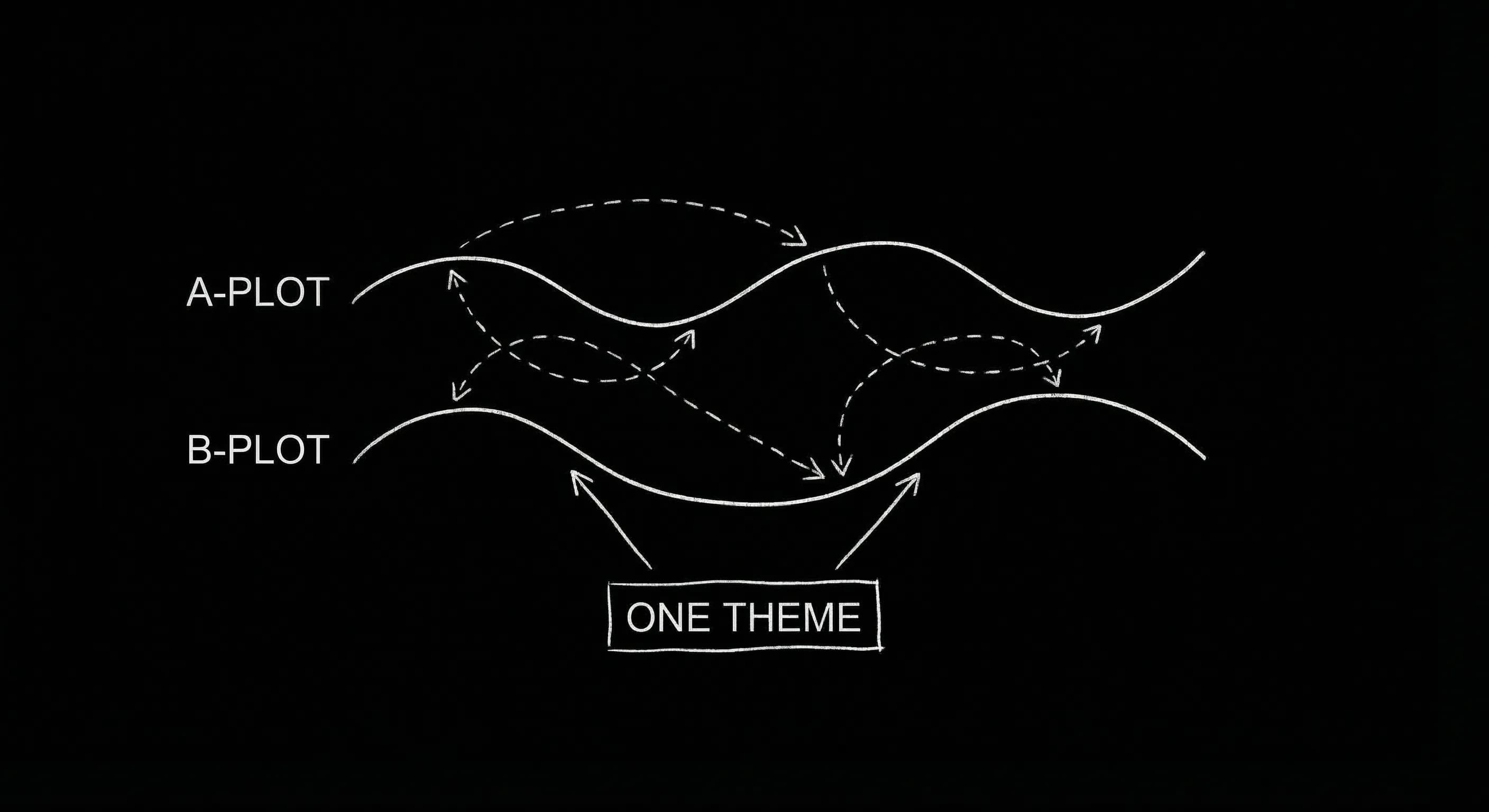
- Act II – Investigation/treatment attempts; the first plan fails; serialized B‑story moves.
- Act III – New angle on the case; big personal or ethical choice.
- Act IV – Resolution of the case; at least emotional closure for the weekly story; tag beats for serialized threads.
At outline level, pair each act’s case beat with at least one character beat that proves why this show can run indefinitely: how their flaw interacts with this week’s specifics.
Building a Serialized‑Led Pilot: A Parallel Workflow
Now flip it. You’re writing a serialized family crime saga for streaming.
Step 1: Identify the “Series Event”
The series doesn’t really start until one big event happens: the patriarch dies, the company floats, the ship leaves port, the aliens arrive.
Your pilot should get to that event and its immediate fallout, not skate around forever “setting up” life before it.
Ask:
“What moment, once it happens, makes it impossible for life to go back to normal, and guarantees at least a season of fallout?”
Bullseye that by your midpoint or end of Act II.
Step 2: Define the Renewable Source of Conflict
If the “series event” is a match, the renewable conflict is the pile of wood.
In a serialized show, that’s usually:
- A resource to be fought over (power, money, land, reputation).
- A secret that must be protected or exposed.
- A relationship that can’t be cleanly ended (family, marriage, crew).
Your pilot’s scenes should showcase multiple vectors of this conflict:
- Sibling vs sibling about control.
- Old guard vs new guard about methods.
- Insider vs outsider about what’s “owed.”
Step 3: Give Episode 1 Its Own Answerable Question
Even serialized hours need closure at the micro level.
Pick a pilot‑specific question that can be resolved without undercutting the season:
- “Will he accept the CEO job?”
- “Will she tell her wife about the affair?”
- “Will the crew decide to take this illegal haul?”
Resolve that by the end. The answer should create a bigger problem, not end one.
Step 4: Sketch the First Three Episodes
Before you lock the pilot, write one‑paragraph synopses of episodes 2 and 3.
You’re checking that:
- The engine you demonstrated in 1 can actually repeat.
- You didn’t burn through all your best turns immediately.
- New problems arise organically from choices already made.
If episode 2 sounds like you’re starting from scratch, the pilot may be too self‑contained.
Where This Sits in Your Larger Craft Map
Thinking procedurally vs serialized is really just thinking about story engines.
Once you get used to asking “what does this show do each week?”, you’ll find you approach all TV structure differently. Your outlining becomes less about stringing events together and more about designing repeatable patterns with room for variation.
You can cross‑pollinate this thinking with other topics:
- Bottle episodes (extreme constraint inside your engine).
- Ensemble casts (who “carries” procedural beats vs serialized beats).
- Adaptation (what from a novel becomes the weekly unit vs the season spine).
You’re not choosing between “formula” and “art.” You’re choosing the shape of the promise you’re making to anyone who presses play on your pilot.
If you can articulate that shape on the page, procedural, serialized, or a deliberate hybrid, you’re already ahead of 90% of pilots out there.
The rest is execution.
Final Step
Build your next script with Screenweaver
Move from ideas to production-ready pages faster with timeline-native writing and AI-assisted story flow.
Try Screenweaver