
Reunion scenes should be easy.
Two people separated by time see each other again. Built-in emotion. Built-in stakes. Built-in history.
So why do so many reunion scenes feel flat, sentimental, or weirdly fake?
Because writers often confuse backstory with present-tense drama.
They load the scene with memory references, emotional speeches, and nostalgia cues, then wonder why it reads like recap instead of revelation. A reunion scene is not a scrapbook moment. It is a collision between two versions of the past and two incompatible versions of who these people are now.
That collision is the scene.
Here is why that matters: in strong scripts, reunion scenes do not merely reconnect characters. They force plot reconfiguration. Old loyalties return, old wounds reopen, new information reframes old events, and current goals become harder to hold.
If your reunion could be removed without changing decisions later, it is decorative.
Decorative reunion scenes do not survive rewrite rounds.
Why Reunion Scenes Become Cliche
Most cliche reunion scenes fail in one of four ways.
First, instant emotional certainty. Characters see each other and immediately cry, hug, forgive, or fight in predictable rhythm. No ambiguity.
Second, nostalgia overfunction. The scene leans on shared references ("remember summer '09?") without present stakes.
Third, symmetrical emotional pacing. Both characters process at the same speed, which feels engineered.
Fourth, no objective conflict. They reunite, talk, then separate with no meaningful decision.
Think about it this way: time apart creates narrative tension only if time has changed each character differently. If both characters remained emotionally frozen for years waiting for this scene, readers feel manipulation.
A reunion scene works when recognition is immediate but understanding is delayed.
The Core Model: Recognition, Mismatch, Probe, Exposure, Decision
A high-functioning reunion scene usually runs through five active phases.
Recognition is the initial perceptual shock: "you."
Mismatch is the immediate realization that old assumptions do not fit current reality.
Probe is cautious testing through questions, humor, silence, or deflection.
Exposure is where a hidden wound, truth, or value conflict becomes visible.
Decision is the forward-moving choice that changes plot trajectory.
Without Mismatch, reunion becomes sentiment.
Without Exposure, reunion becomes small talk.
Without Decision, reunion becomes filler.
Scenario One: The Former Lovers Reunion That Feels Like Fan Service
Beginner version: ex-lovers meet at a cafe after ten years, exchange polished lines, share one emotional confession, and promise to meet again.
It can read pleasant.
It rarely reads necessary.
A stronger version adds objective conflict before intimacy can stabilize. Maybe one is in town to contest a will tied to shared past. Maybe one needs a signature that the other refuses. Maybe one appears with a child whose timeline raises immediate questions. The emotional reunion now sits inside practical pressure.
Now every line has dual function: emotional reconnection and strategic positioning.
That is dramatic density.
Scenario Two: The Childhood Friends Reunion with Uneven Class Mobility
Many scripts miss the class and status dynamics embedded in reunions.
Two old friends meet and talk as if social trajectory changed nothing.
In reality, class mobility, professional status, language shifts, and geographic identity often create subtle distance even when affection remains.
Write that tension carefully.
One friend may overcompensate with jokes. The other may over-formalize language. Small gestures can reveal who feels judged, who feels abandoned, who feels guilty for leaving, who resents being "remembered" selectively.
This does not require speeches about class.
It requires precise behavior.
Scenario Three: Family Reunion After Estrangement
Family reunions after long separation often collapse into immediate yelling or immediate reconciliation in weak drafts.
Both extremes can feel false.
A better approach stages layered thresholds. Maybe the first contact is logistical and constrained. The emotional confrontation arrives later after a trigger. Maybe one sibling wants facts while the other wants acknowledgment. Maybe an elder's health crisis forces proximity before trust.
Family reunions are rarely one-scene closures.
Write them as process with spikes.
Step-by-Step Workflow for Writing a Reunion Scene That Moves Story
Step 1: Define the Cost of Separation
Before drafting dialogue, write what each character lost because of the years apart.
Not abstractly. Concretely.
Lost opportunity.
Lost relationship.
Lost narrative control.
Lost safety.
Lost identity coherence.
This defines emotional stakes beyond nostalgia.
Step 2: Define the Cost of Reconnection
Reunion should also carry present risk.
What becomes harder if they reconnect?
Current partnership?
Legal strategy?
Family stability?
Career positioning?
Without reconnection cost, scene lacks tension.
Step 3: Choose the Reunion Arena for Pressure, Not Aesthetics
Location is leverage.
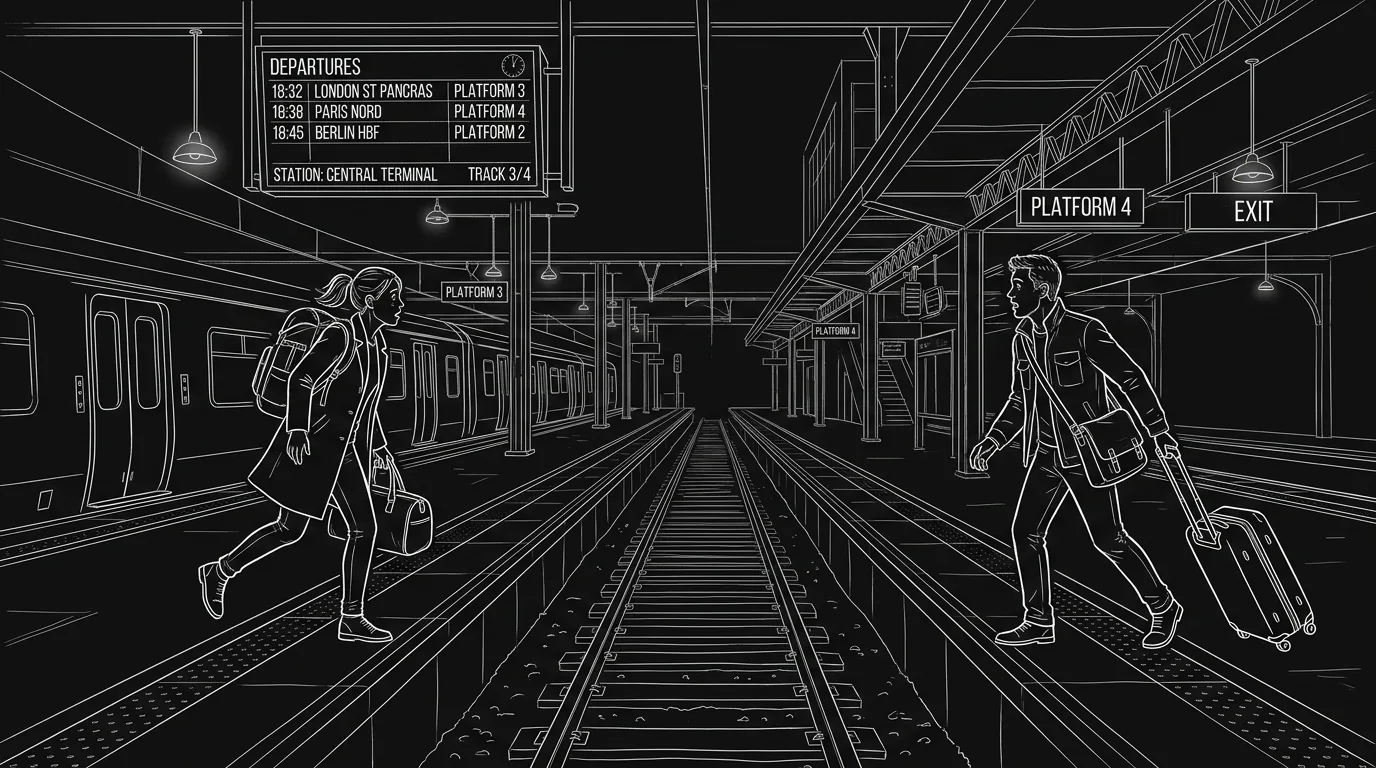
Public station gives surveillance pressure.
Hospital corridor gives urgency and interruption pressure.
Funeral reception gives social role pressure.
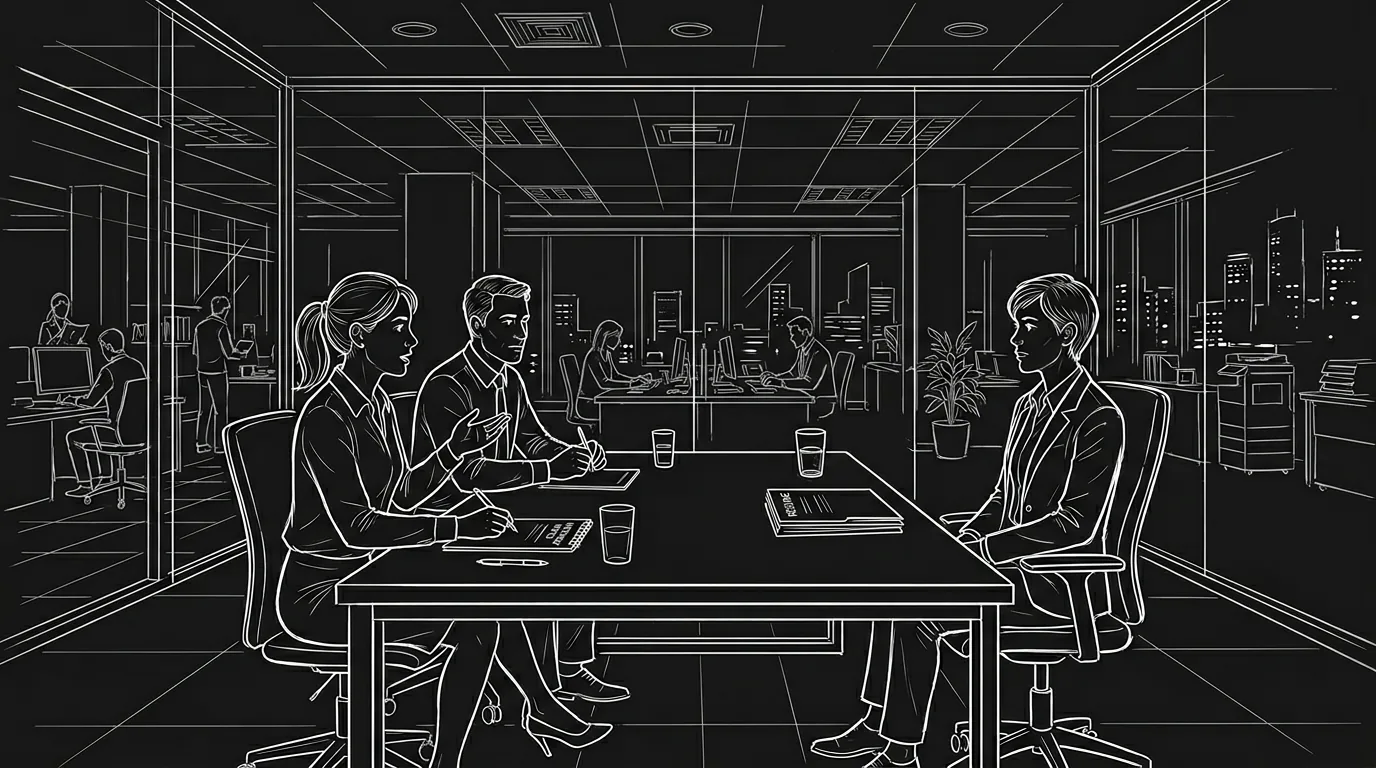
Office lobby gives status pressure.
Pick arena based on what pressure you need, not just visual mood.
Step 4: Script Asymmetrical Emotional Tempo
One character may move too fast emotionally.
The other may stay procedural.
One may seek apology.
The other seeks information.
This asymmetry prevents artificial harmony and creates live friction.
Step 5: Build Probe Lines Instead of Exposition Lines
Replace "As you know" history lines with probe behavior:
half-questions,
loaded names,
test references,
deliberate omissions.
Probes reveal what each person is willing to acknowledge now.
Step 6: Insert One Irreversible Reveal or Boundary
A reunion scene should cross a line.
A secret revealed.
A request refused.
A lie exposed.
A condition set.
An invitation accepted against prior vow.
This line-crossing makes the scene consequential.
Step 7: End with a Forward Commitment or Refusal
Do not end on wistful smile.
End on action commitment:
meeting scheduled,
file shared,
door closed,
alliance formed,
contact blocked.
Choice converts emotion into plot.
Table: Nostalgic Reunion vs Story-Driving Reunion
| Dimension | Nostalgic Reunion | Story-Driving Reunion |
|---|---|---|
| Primary energy | Memory recall | Present-tense objective conflict |
| Emotional rhythm | Symmetrical sentiment | Asymmetrical processing speeds |
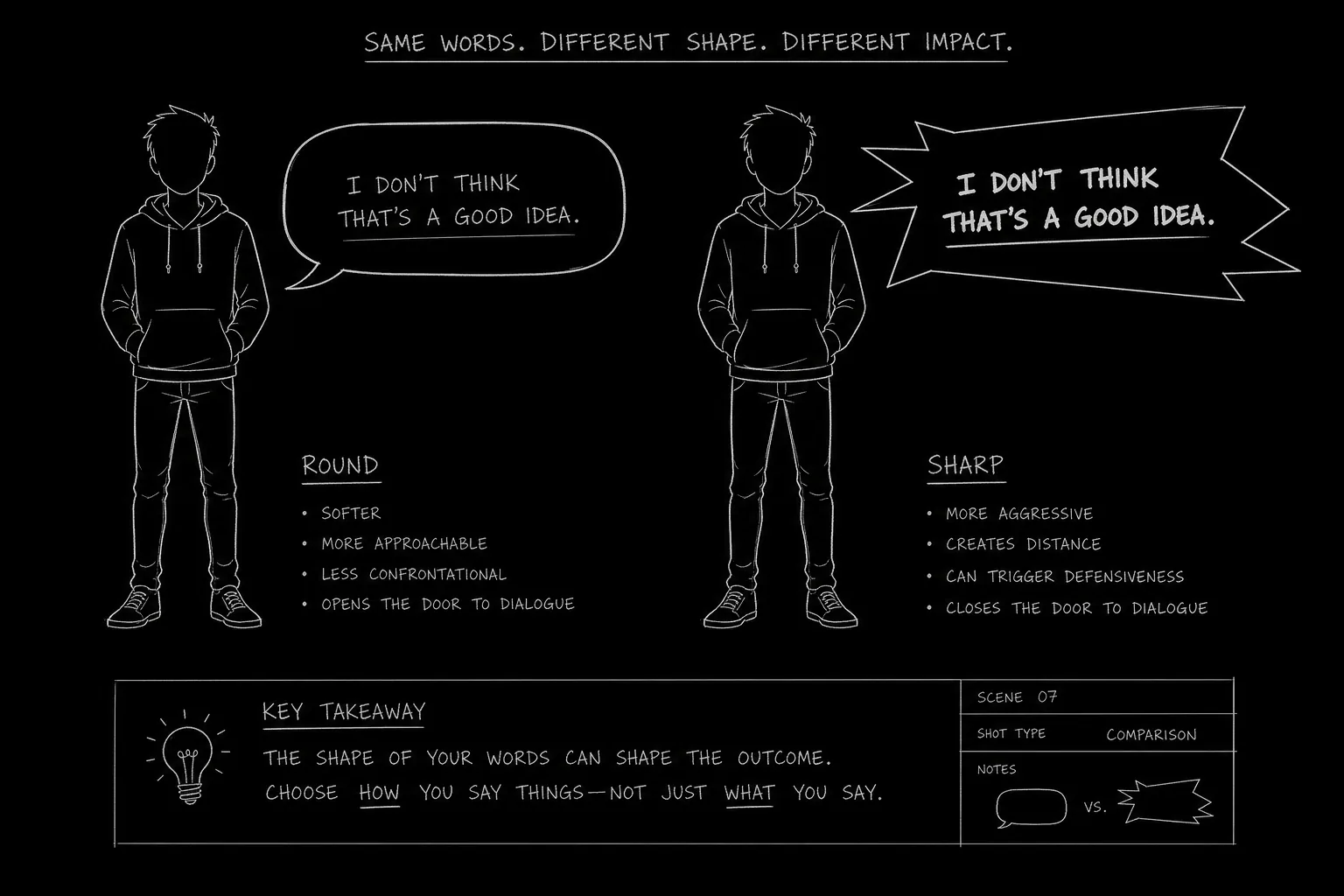
| Dialogue function | Shared history recap | Probing, testing, repositioning |
| Location use | Mood backdrop | Pressure environment |
| Scene outcome | Emotional closure beat | Strategic decision with consequences |
| Arc impact | Minimal | Changes relationships and next actions |
The Trench Warfare Section: What Beginners Get Wrong (and How to Fix It)
This is where reunion writing usually gets upgraded.
Mistake one: assuming history equals depth.
Long shared history does not automatically create dramatic present. Fix by tying history to current objective conflict.
Mistake two: immediate full honesty.
Characters disclose everything instantly. Fix by sequencing trust restoration and keeping tactical withholding active.
Mistake three: over-nostalgia dialogue.
Too many memory references, too little present risk. Fix by limiting nostalgia to one or two high-signal references that trigger current stakes.
Mistake four: no relationship status update.
Scene ends with ambiguity that feels accidental. Fix by clearly defining new status: ally, rival, conditional contact, no-contact.
Mistake five: identical emotional tone.
Both characters feel same thing, same way, same time. Fix with emotional asymmetry and conflicting objectives.
Mistake six: no social context.
Reunion occurs in vacuum. Fix by adding witness presence, institutional constraints, or family politics.
Mistake seven: sentimental monologue overload.
One character explains years of pain in polished speech. Fix with fragmented revelation under resistance.
Mistake eight: no power dynamics.
Scene framed as equal exchange despite changed status. Fix by writing current power imbalance explicitly through behavior and access.
Mistake nine: no consequence chain.
Reunion feels intense but changes nothing. Fix by adding immediate post-scene action shift.
Mistake ten: reunion as fan-service callback.
Scene exists to satisfy expected pairing. Fix by ensuring scene advances theme and plot, not only audience wish.
Mistake eleven: no mistrust residue.
After serious estrangement, trust returns too quickly. Fix with boundary language and verification beats.
Mistake twelve: one-dimensional hurt.
Only sadness. Fix by layering anger, relief, curiosity, pride, resentment, longing.
Mistake thirteen: weak entry beat.
Characters spot each other without embodied reaction. Fix with specific recognition behavior: pause, object drop, name hesitation, route correction.
Mistake fourteen: weak exit beat.
Scene trails off. Fix by ending on explicit choice under tension.
Mistake fifteen: unclear reason for years apart.
Estrangement cause stays vague. Fix by making causal fracture legible, even if partially hidden.
Mistake sixteen: no setting friction.
Environment does not interfere. Fix with interruptions, timing pressure, or spatial constraints.
Mistake seventeen: dialogue too clean.
Real reunions are messy, with starts and stops. Fix by allowing interruptions, corrections, and silence beats.
Mistake eighteen: no update to self-concept.
Characters do not reassess who they are after contact. Fix with one self-reframing beat.
Mistake nineteen: all revelation, no negotiation.
Scene confesses but does not bargain boundaries. Fix by adding terms: what happens next, what is off-limits, what is required.
Mistake twenty: thematic drift.
Reunion does not echo central story question. Fix by embedding core theme in the conflict axis of scene.
The most memorable reunion scenes do not answer "do they still care?" first. They answer "what care costs now."
Try it free
Try Screenweaver for free on your script
It is free. Import your existing project, get a clearer view of your outline, and regain control of your story structure in minutes.
Start FreeBody Image: Reunion Mismatch and Probe Map

Practical 50-Minute Rewrite Drill
Take your existing reunion scene and run this process.
First ten minutes: cut all lines that only recap shared history.
Next ten minutes: write one hidden objective for each character and revise lines to reflect those objectives.
Next ten minutes: add one pressure interruption from location or social context.
Next ten minutes: insert one crack beat where a mask fails.
Final ten minutes: rewrite ending to include concrete commitment or refusal that affects next scene.
This drill usually turns sentimental reunions into active dramatic pivots.
Advanced Calibration: Time Gaps and Identity Drift
Years apart do not just create emotional distance. They create identity drift.
People change language, values, body rhythms, relational expectations, and tolerance thresholds. Reunion scenes feel authentic when this drift is visible without overstatement.
One character may still use old nickname; the other rejects it.
One may frame past as formative adventure; the other frames it as survival period.
One may seek continuity; the other seeks rupture.
This is where dialogue precision matters. A single corrected pronoun, title, or place name can signal entire identity shifts.
For external produced-script study, the Writers Guild Foundation Library is useful and should be treated as nofollow in publishing workflows.
As discussed in our guide on [how to write a breakup scene that does not feel cliche], emotional scenes gain power when objective conflict and consequence are explicit.
If reunion uncovers hidden truth under pressure, the framework in [how to write a confession scene in a thriller] helps structure disclosure and verification.
And when reunion escalates into endgame conflict, our guide on [how to write a final confrontation scene that feels earned] can support payoff architecture.
Body Image: Post-Reunion Decision Branch

YouTube Placeholder
[YOUTUBE VIDEO: A scene lab rewriting a nostalgic reunion into a high-stakes character collision with objective conflict, asymmetrical emotion, and plot-moving decisions.]
Extra Deep Dive: Writing Silence, Eye Contact, and Nonverbal Debt
Reunion scenes are often over-written verbally and under-written behaviorally.
But in high-stakes reunions, silence is not absence. Silence is negotiation.
A three-second pause after hearing an old nickname can carry more history than ten lines of exposition. A withheld hug can be a boundary declaration. Looking at someone's hands instead of their eyes can reveal fear of recognition, guilt, or unresolved attraction.
Think of nonverbal behavior as debt accounting.
Who owes apology.
Who owes explanation.
Who refuses to pay.
Who pays too much too fast.
This "nonverbal debt" framework can sharpen scene design quickly.
If one character over-offers warmth while the other withholds basic acknowledgment, you immediately establish asymmetry and unresolved grievance. If both overperform politeness, you can create dread through mismatch between tone and body language.
Another advanced tool is object choreography.
Reunion scenes benefit from meaningful object handling:
a returned key,
an unopened letter,
a shared photo not recognized immediately,
a jacket once borrowed and never returned,
a phone contact renamed but not deleted.
Objects are memory anchors. They let you externalize history without monologues.
Used carefully, one object can do the work of a whole flashback sequence.
Scenario Layer: Reunion with Third-Party Witness
One of the strongest ways to avoid cliche is adding a witness who changes behavior.
Imagine two estranged siblings reuniting at a school event while one sibling's teenage child is present. Neither sibling can speak freely. Every line becomes coded. The child interprets tone without context. That misunderstanding creates fresh conflict and future scene fuel.
This structure gives reunion two simultaneous audiences:
the character they are speaking to,
and the person they are performing for.
Now scene complexity rises naturally.
Practical Revision Pass: Convert Dialogue Weight into Behavioral Weight
If your reunion draft feels speech-heavy, run this pass.
Identify three lines where characters explain past feelings directly.
Replace each line with one action beat plus one shorter line.
Then insert one silence beat after each replacement and define what each character thinks is happening in that silence.
This keeps emotional intensity while reducing melodrama.
You can also perform a "subtext swap" pass:
Take one literal line ("I was hurt you left") and rewrite with tactical language that preserves emotion without naming it directly ("You were gone before the lease ended, and you left me to explain it to everyone").
This increases specificity and voice authenticity.
Reunion Arc Planning Across Multiple Episodes or Acts
If your story has more than one reunion between the same characters, do not write each one with the same emotional purpose.
Design progression:
first reunion establishes mismatch,
second reunion surfaces contested memory,
third reunion forces boundary decision or alliance.
Each reunion should answer one question and raise a harder one.
If every reunion repeats the same emotional beat ("we miss each other but cannot reconnect"), audience fatigue sets in.
Track progression in a simple grid:
what changed in trust,
what changed in information,
what changed in power,
what changed in practical stakes.
If none changed, cut or merge scenes.
Micro-Checklist for Final Draft Pass
Before locking reunion scene pages, ask:
Does each character want something different right now?
Is at least one line doing double duty (literal meaning + strategic intent)?
Is there one clear crack beat?
Is there one clear decision beat?
Does next scene behavior prove this reunion mattered?
If you cannot answer yes to all five, revise.
Ending Perspective: Reunions Are Negotiations with Time
If your reunion scene feels cliche, the fix is not more nostalgia.
It is sharper present-tense pressure.
Who are these people now.
What version of the past each one is defending.
What they need from each other that they are afraid to ask for directly.
What they are willing to risk by reconnecting.
Write those questions into behavior, not speeches.
Then your reunion scene stops being a sentimental checkpoint.
It becomes what it should be: a negotiation between memory and survival where one decision changes the road ahead for everyone involved.
Final Step
Build your next script with Screenweaver
Move from ideas to production-ready pages faster with timeline-native writing and AI-assisted story flow.
Try Screenweaver