
The camera follows Marcus through the kitchen door, past the sous chefs shouting orders, around the corner where a waitress narrowly avoids collision, into the dining room where a couple argues at table seven, out the front door to the street where rain is falling, and comes to rest as Marcus lights a cigarette under the awning.
One take. No cuts. A oner.
Writing a continuous shot is tricky. You want to convey the unbroken flow, the virtuosity, the choreography, the building tension that comes from no escape into editing. But you also don't want to clutter the page with camera directions that aren't your job to write. You're the screenwriter, not the director or DP.
The challenge: How do you suggest the oner without being prescriptive? How do you write a single unbroken action without it reading like a technical manual?
Free tool: use the Slugline Formatter to clean up and standardize your scene headings.
Cinematic workflow frames
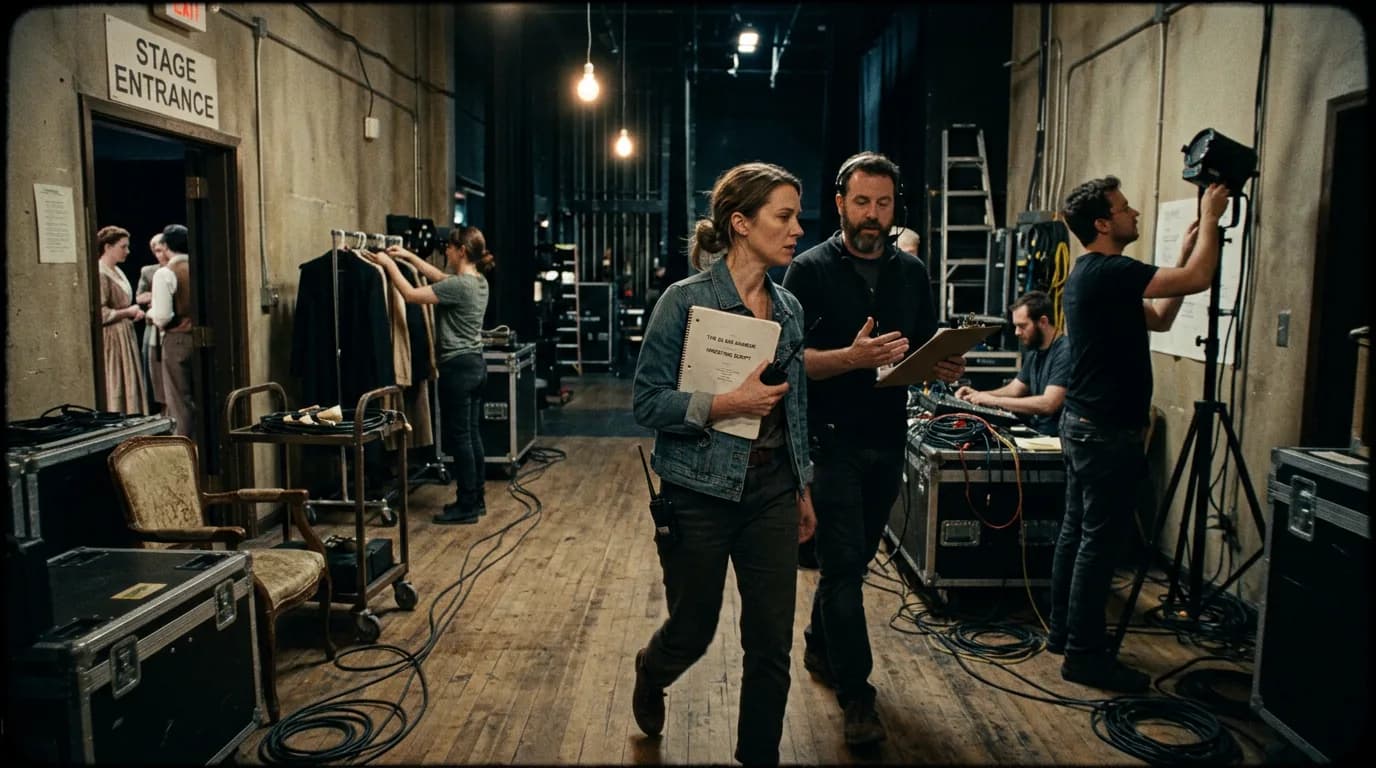
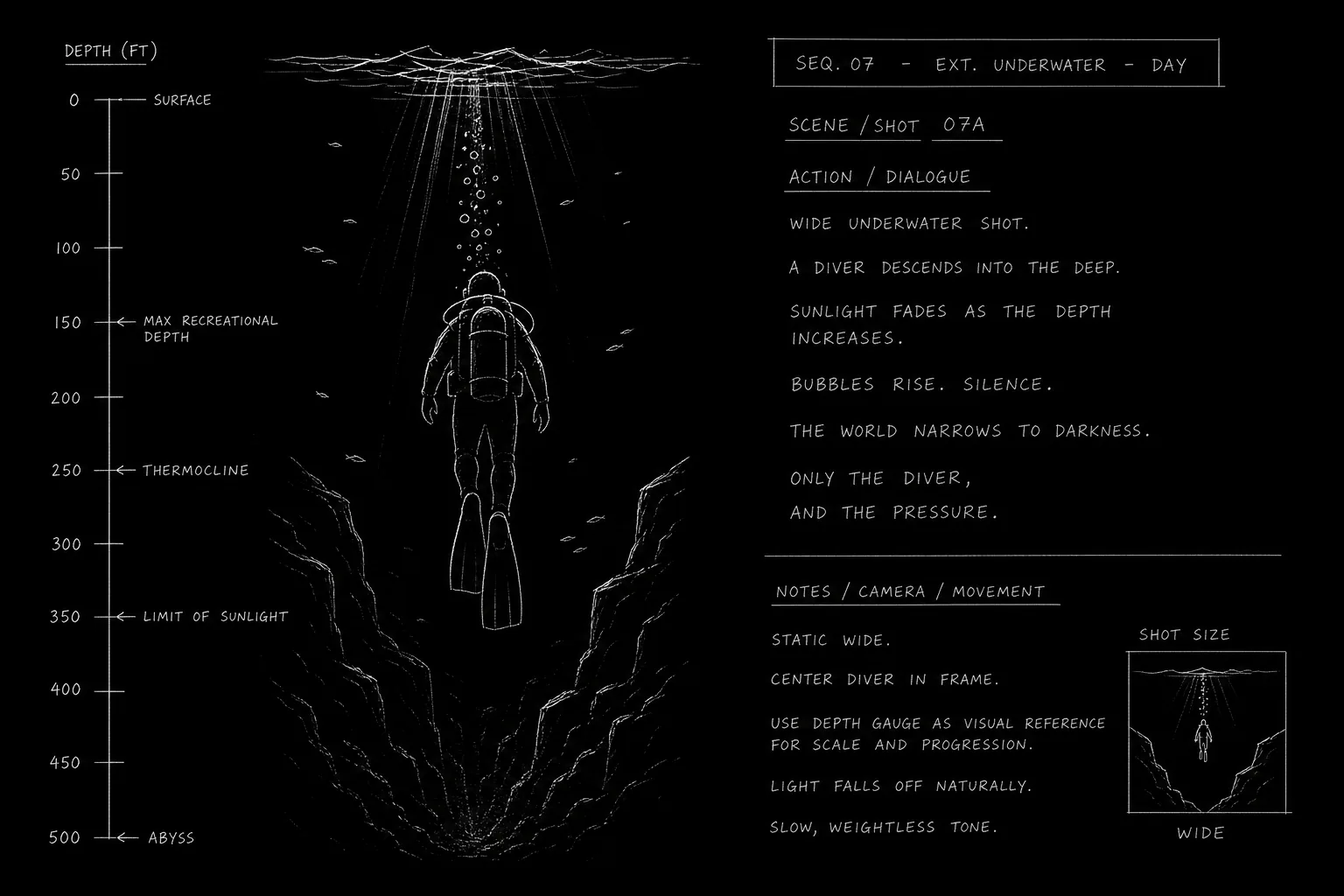
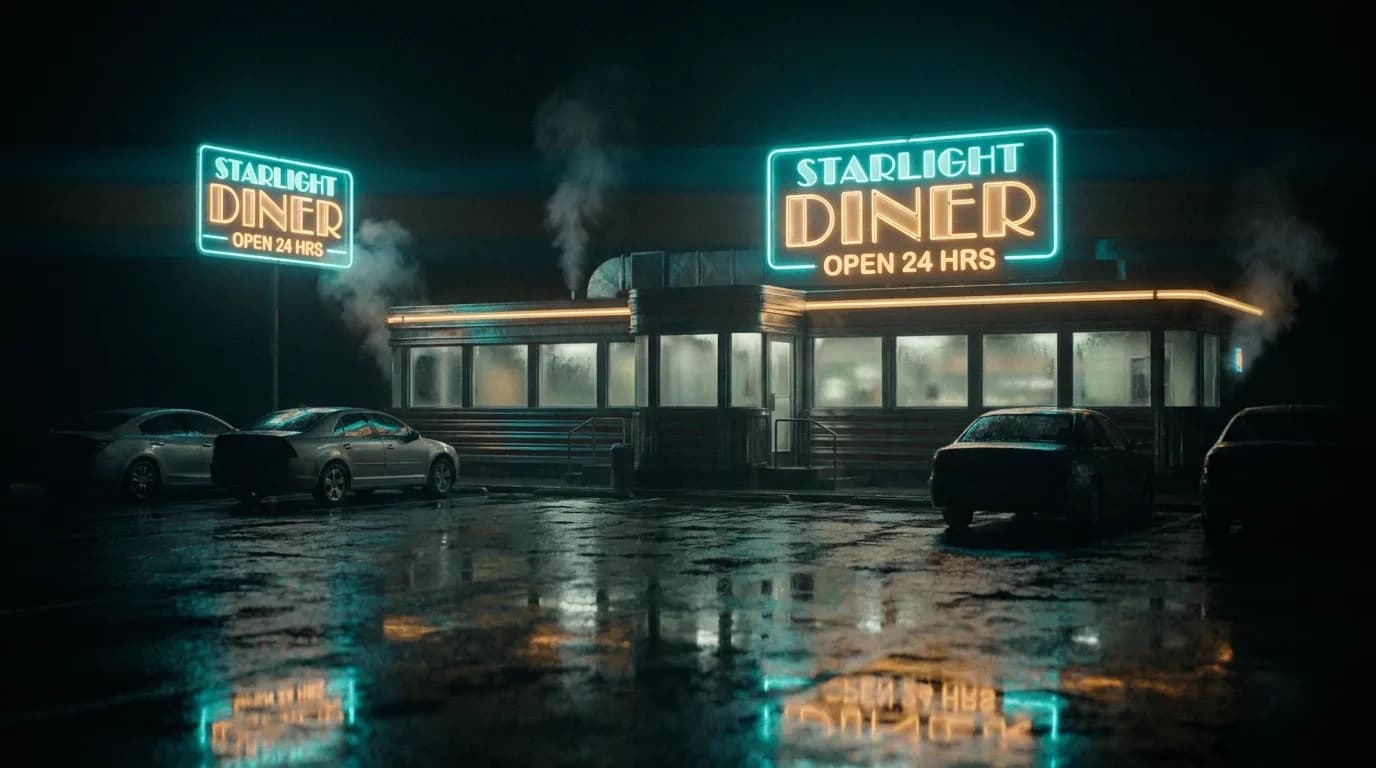
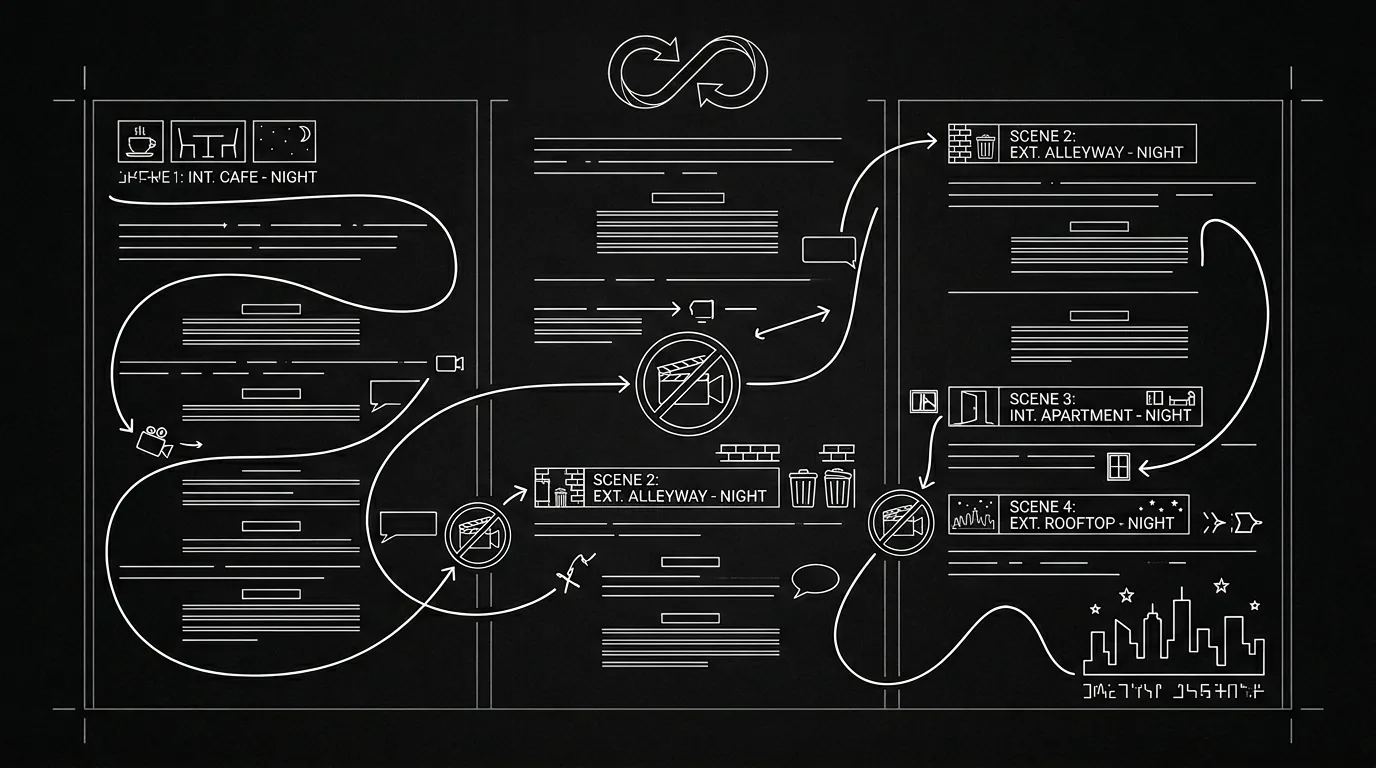
These two visuals work as a pair: the first shows Cinematic workflow still, first angle, 35mm film grain, and the second shifts to Cinematic workflow still, second angle, 35mm film grain - compare them briefly, then move on.
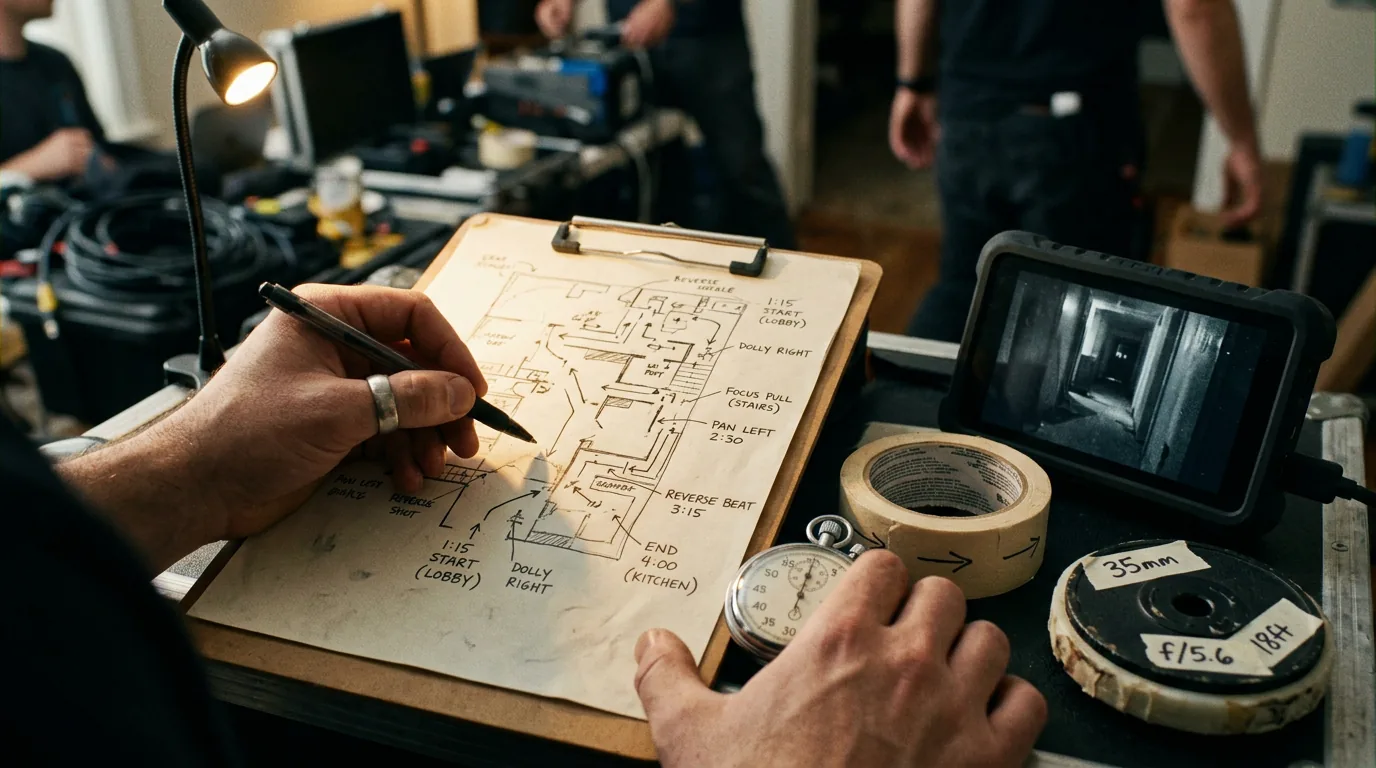
When to Write a Oner
Not every long scene needs to be a oner. The continuous shot is a specific tool with specific effects:
Builds tension. Without cuts, there's no release. The audience can't escape. Time feels real.
Creates immersion. The unbroken perspective mimics lived experience. We follow as if we're there.
Showcases choreography. Action, dance, physical performance, the oner proves it's really happening.
Reveals space. Moving through an environment without cuts shows how spaces connect.
If your scene doesn't need these effects, cuts might serve better. But when you need the oner's power, you need to know how to write it.
The Problem: Camera Directions in Specs
Here's the tension: In a spec script, you're not supposed to direct. "CAMERA FOLLOWS" or "WE TRACK" or "IN A SINGLE SHOT" are considered overstepping. Readers notice. Coverage analysts roll their eyes.
But a oner without any indication reads like cuts. The reader mentally inserts edits where paragraphs break. They don't experience the continuous flow, they imagine standard coverage.
So the question becomes: How do you imply the oner without directing?
The trick is writing action that cannot be cut, where the flow itself is the story.
Technique #1: The Unbroken Paragraph
The most elegant approach: Don't break the paragraph.
A oner happens in continuous time and space. If your action description flows in one block, no white space, no hard breaks, the reader experiences continuity. Their eye moves without stopping. Time feels unbroken.
Example:
Marcus pushes through the kitchen doors into chaos, the sous chef barking, flames leaping from the grill, a dishwasher dropping a rack of glasses that SHATTERS across the tiles, and he doesn't slow, weaving past the prep station where someone shouts his name, he doesn't answer, through the swinging door into the dining room where the light changes from fluorescent to amber and a couple at table seven is deep in a fight they don't notice him pass, past the host stand and the glass doors to the street where rain is falling and he finally stops, breathes, fumbles for a cigarette.
That's one paragraph. The reader's eye never rests. The continuous sentence mirrors the continuous shot.
Technique #2: Fluid Action Transitions
If you need paragraph breaks (the action is too long), use transitional language that implies movement without cuts.
Words that suggest continuation:
- "...and"
- "...into"
- "...where"
- "...as"
- "...still moving..."
- "...doesn't stop..."
- "...keeps walking..."
Words that suggest cuts (avoid in oners):
- "Meanwhile"
- "At the same time"
- "We see"
- "Cut to"
- "Elsewhere"
The language cues the reader to stay with the motion.
A Table: Cut Language vs. Continuity Language
| Cut Language | Continuity Language |
|---|---|
| Meanwhile... | As she... |
| We see... | She sees... |
| Elsewhere... | Beyond her... |
| Another room. | Into the next room... |
| (paragraph break) | ...and continues... |
| INT. NEW ROOM | She steps through the door into... |
Technique #3: Embedded Movement Cues
You can suggest camera movement by describing what the audience sees as the character moves. You're describing the experience of following, not directing the camera.
Example:
Sarah walks down the hospital corridor. Ahead, a doctor confers with a nurse. She passes them, catches a word, "terminal", and keeps walking. The walls change from green to blue. A child on a gurney wheels past. The double doors ahead swing open as an orderly approaches from the other side, and Sarah slips through before they close, into the ICU where machines beep in concert.
Notice: No "WE FOLLOW" or "CAMERA TRACKS." But the reader feels the movement because what Sarah sees keeps changing. The environment flows. The eye travels.
Technique #4: The Strategic Scene Heading
Scene headings typically signal cuts. But in a oner, you might have none, or use a modified approach.
Option A: One heading, long scene.
A single INT. or EXT., then a long continuous action block. The reader understands it's one location-experience.
Option B: Embedded location shifts.
If the oner moves through multiple spaces:
INT. MARCUS'S APARTMENT – CONTINUOUS
Marcus grabs his coat, moves to the door,
INT. HALLWAY – CONTINUOUS
, and into the hall, past Mrs. Chen's apartment, down the stairs,
EXT. STREET – CONTINUOUS
, to the sidewalk where the morning light is blinding.
The "CONTINUOUS" tag signals no time break. But visually, the repeated headers can fragment the flow. Use sparingly, only when location changes matter for story.
Option C: No intermediate headings.
Just write through the space changes within action:
Marcus grabs his coat and moves to the door, through it, down the hall past Mrs. Chen's place and the smell of frying garlic, down the stairs two at a time, burst onto the sidewalk where morning light is blinding.
This keeps flow intact.
Try it free
Try Screenweaver for free on your script
It is free. Import your existing project, get a clearer view of your outline, and regain control of your story structure in minutes.
Start FreeThe "Trench Warfare" Section: What Goes Wrong
Failure Mode #1: Over-Directing
The script reads like shot list: "WE PUSH IN on Marcus, THEN WE FOLLOW HIM through the door, PANNING RIGHT as he passes the stove..."
How to Fix It: Delete camera language. Rewrite as character action. "Marcus moves through the door, passes the stove." The director will decide the shot.
Failure Mode #2: Breaking the Flow
Frequent paragraph breaks, scene headings, or editorial intrusions ("Meanwhile...") kill the sense of continuity.
How to Fix It: Write in longer paragraphs. Use continuity transitions. Remove anything that suggests a cut.
Failure Mode #3: Unclear Blocking
The reader can't visualize where characters are in space. The "oner" feels confusing rather than immersive.
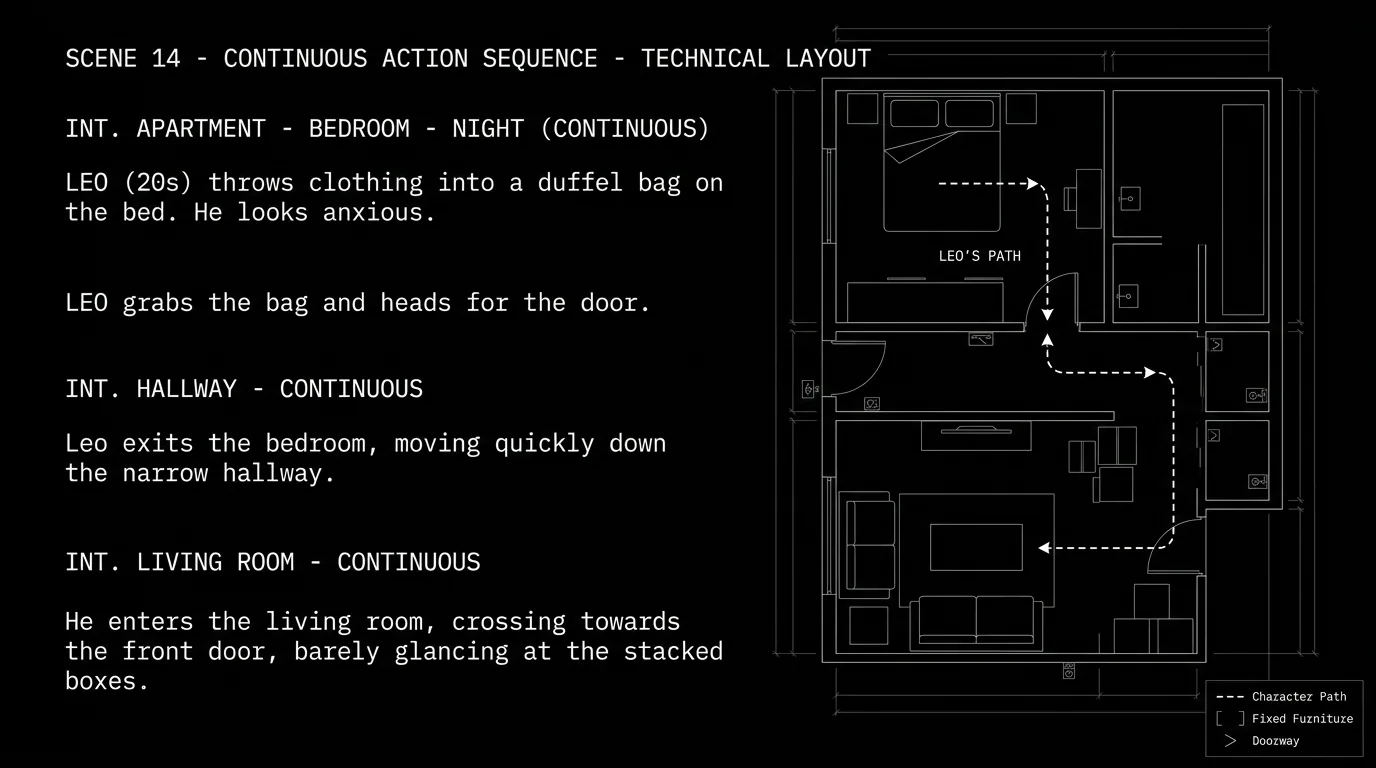
How to Fix It: Anchor action in specific spatial details. "Past the front desk, left down the corridor, through the glass door into the courtyard." Readers need mental geography.
Failure Mode #4: No Reason for the Oner
The scene could be shot with standard coverage. The oner feels like showing off rather than serving story.
How to Fix It: Ask what the oner accomplishes. Tension? Immersion? Choreography? If it's just "cool," reconsider. The technique should serve the scene.
Failure Mode #5: Exhausting to Read
A two-page unbroken paragraph is technically a "oner" but is also exhausting. Eyes glaze over.
How to Fix It: Vary sentence length. Include dialogue breaks. Let the reader breathe within the flow. Continuous doesn't mean monotonous.
Example: A Three-Minute Oner
Here's how you might write a oner that spans multiple locations and three pages of script time:
INT. THEATER BACKSTAGE – NIGHT – CONTINUOUS
Maya moves through the darkness, past crew members checking headsets, a dancer stretching, the costume rack where someone is panic-sewing a hem, into the wings where she can hear the orchestra warming up, violins sliding into tune, and the stage manager grabs her arm,
STAGE MANAGER You're on in five.
She nods, keeps moving, steps onto the stage where the lights are blinding and the audience is a wall of darkness beyond, crosses to the mark, the orchestra falls silent, she takes a breath,
The conductor's baton rises.
She begins.
Notice:
- One long action block with embedded dialogue.
- Location shifts (backstage → wings → stage) with no new scene headings.
- Transitional language ("into the wings," "steps onto the stage").
- The reader never stops moving.
Dialogue in Oners
Dialogue doesn't break a oner, but formatting can disrupt flow.
Keep dialogue embedded. When possible, make lines brief and integrated:
She passes the bouncer, "ID", she flashes it without stopping, "Go ahead", and she's inside.
Minimize parentheticals. Character direction can add friction. Use only when necessary.
Let action surround dialogue. The conversation happens while movement continues:
They walk and talk, weaving through the market stalls,
ELENA You can't keep running.
JAVIER Watch me.
, past the fish vendors, the smell overwhelming, and Javier accelerates, leaving her behind.
The action lines before and after dialogue maintain momentum.
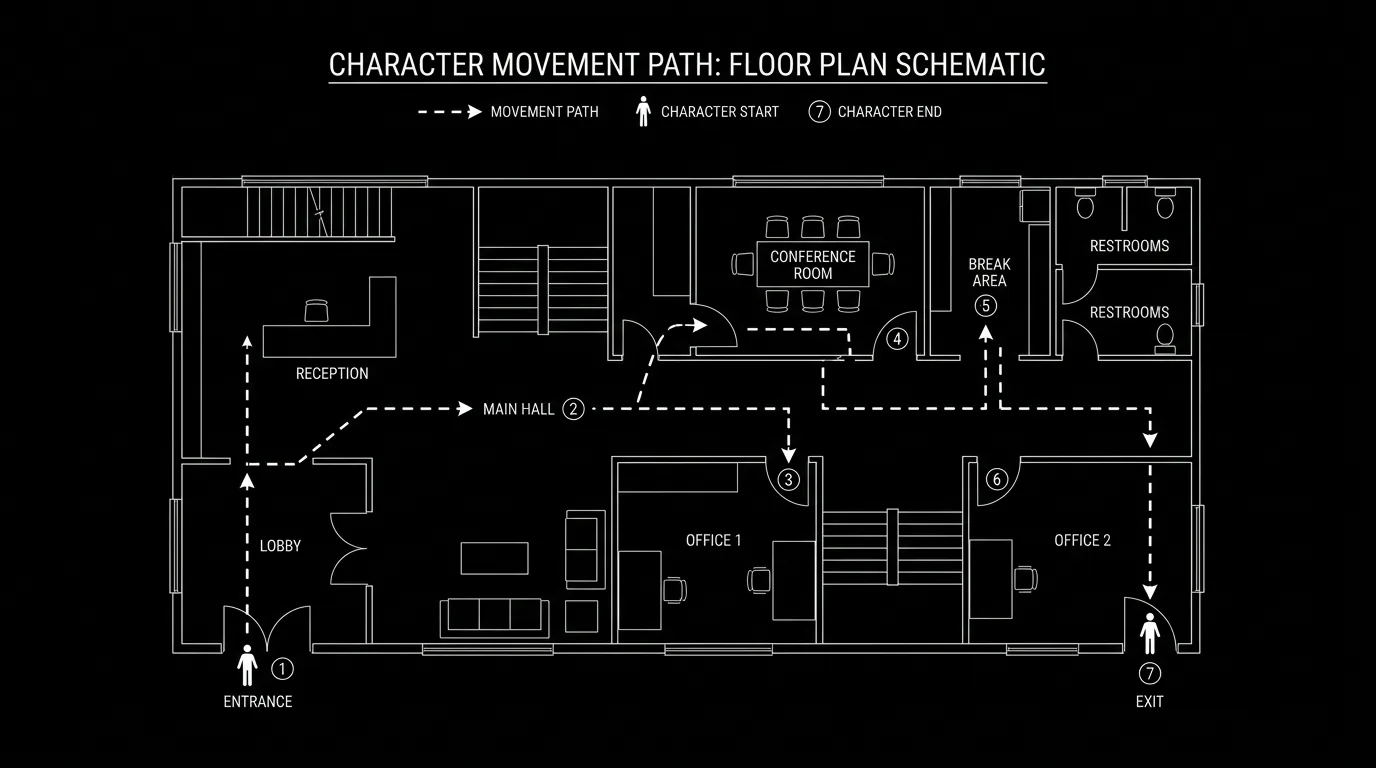
Famous Oners and How They'd Script
The Goodfellas Copacabana Shot:
Henry and Karen enter through the back of the club, through the kitchen, past the staff, into the dining room, to a table that appears out of nowhere.
In script form:
Henry takes Karen's hand and leads her past the line at the front door, around the corner, down the stairs to the basement entrance where a COOK props the door open with a nod,
They're in the kitchen now, steam and shouts, white uniforms parting for Henry, "How are ya, Mr. Hill", through the double doors into the main room where the noise hits, tables packed, and a WAITER is already carrying a table toward the stage,
The table lands. Chairs appear. They sit. The comic on stage pauses,
COMEDIAN Hey, Henry.
Henry nods. Karen looks around, overwhelmed.
The script suggests movement without directing. The reader feels the flow.
The Perspective: Writing Time That Doesn't Cut
The oner is more than a technique, it's a philosophy of time. In life, there are no cuts. One moment flows into the next. We can't edit our experience; we live it continuously.
A well-written oner captures this feeling. The reader (and eventually the viewer) can't escape into another angle, another moment. They're locked in, moving through space and time as the character does. That's powerful, and rare in film, which is otherwise built on the grammar of editing.
Use it when the story demands it. When tension must not release. When immersion is the point. When the choreography itself is the spectacle.
And write it with flow, long sentences, transitional language, unbroken paragraphs. Let the prose mirror the shot.
If the page feels like it can't be cut, the director might actually shoot it that way.
[YOUTUBE VIDEO: A cinematographer breaking down famous oners and explaining how the script indicated (or failed to indicate) the continuous nature of the shot.]
Further reading:
- For writing complex action sequences, see formatting the unfilmable action line.
- If you're working with visual transitions, see the match cut: indicating a brilliant transition on the page.
- The American Society of Cinematographers has resources on long-take photography at theasc.com{:rel="nofollow"}.
Final Step
Build your next script with Screenweaver
Move from ideas to production-ready pages faster with timeline-native writing and AI-assisted story flow.
Try Screenweaver