
The phone rings. The letter arrives. The stranger steps into the café. One moment, and the world of the story tilts. That moment has a name: the inciting incident. Get it wrong,too early, too late, or too soft,and the rest of the script fights for air.
Writers throw the term around. Development notes demand it. But few pause to ask what the inciting incident actually does, why it belongs where it does, and how the best films use it not as a checkbox but as a hinge. This piece breaks down the catalyst that launches your story, with concrete examples and a clear sense of where it should land on the page.
What the Inciting Incident Actually Is
The inciting incident is the event that disrupts the protagonist’s ordinary world and forces a response. It is not the theme. It is not the backstory. It is the first domino. After it, the protagonist can no longer stay in the status quo. Refusal is possible; ignorance is not.
Think of it as the story’s first real question. Before it, we have setup: who the character is, what their life looks like, what they want or fear. After it, we have a new question: what will they do about this? That question drives the rest of Act One and locks the audience into the premise.
The inciting incident doesn’t ask the protagonist to be heroic. It asks them to react. The choice to engage,or to try to avoid engagement,is what turns reaction into story.
Placement matters. In a 110-page feature, the inciting incident typically lands between pages 10 and 15. Earlier, and the audience hasn’t bonded with the character or the world. Later, and the script feels slow; readers and viewers start to ask why they’re watching. That window isn’t arbitrary. It’s the point at which we’ve had just enough context to care, and not so much that we’re impatient for the plot to start.
The Matrix: A Clean Break
In The Matrix, Neo’s ordinary world is defined in a handful of scenes: he’s a hacker, under surveillance, restless. The inciting incident is the message that appears on his computer,“Follow the white rabbit”,and the knock at the door that leads him to a club and to Trinity. That’s the hook. But the moment the story truly locks in is when Morpheus offers him the red pill. Up to then, Neo could still walk away. After the pill, he is in the story. The film uses two beats: the invitation (the rabbit, Trinity) and the point of no return (the pill). The second is the structural inciting incident; the first is the tease.
Why it works: we know who Neo is. We know he’s looking for something. When the offer comes, we understand both why he’s tempted and why he’s afraid. The incident doesn’t happen in a vacuum. It lands in a character we’ve already started to follow.
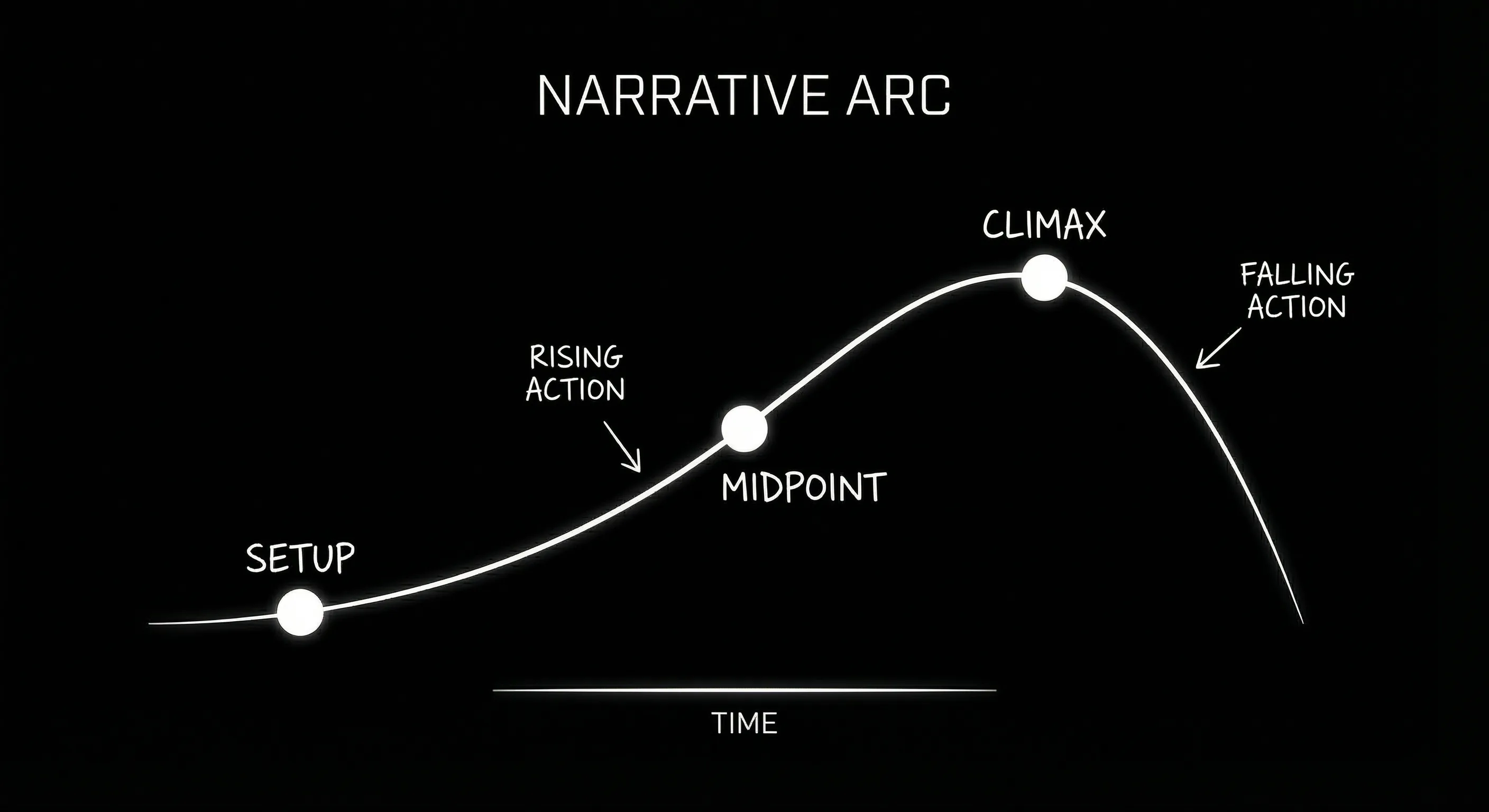
Where the inciting incident sits: after enough setup to care, before the audience checks out.
Star Wars: The Message in the Droid
Star Wars (Episode IV) plants Luke on Tatooine: he wants off the planet, but he’s tied to his uncle’s farm. The inciting incident is R2-D2’s playback of Leia’s message. That’s the moment the story reaches into Luke’s world. He doesn’t choose to go yet,his uncle refuses to let him leave. So the script adds a second blow: the Empire kills his aunt and uncle. Now there’s nothing left. The incident isn’t one moment; it’s a one-two punch. The message creates the possibility; the destruction of his home removes the alternative.
This illustrates a useful distinction. Some scripts use a single, sharp incident. Others use a short sequence: the trigger, then the removal of the exit. Both are valid. What matters is that by the end of that sequence, the protagonist is committed to the central conflict or is clearly refusing it at great cost.
Inciting Incident vs. Catalyst vs. Call to Adventure
Terminology varies. Some systems use “catalyst” for the same beat; others use “call to adventure” from myth-based structure. For our purposes, the inciting incident is the first story event that makes the main conflict unavoidable. The “call” might be the same moment, or it might be the moment the character says yes. In Star Wars, the call is the message; the commitment is when Luke has no home to return to. In The Matrix, the call is the white rabbit; the commitment is swallowing the pill. Naming it consistently in your own outline helps. For more on how different frameworks label this beat, see our guide on the three-act structure.
| Film | Inciting Incident | Page / Beat |
|---|---|---|
| The Matrix | Morpheus offers the red pill | ~15 min / point of no return |
| Star Wars (IV) | Leia’s message in R2-D2; then destruction of the farm | Message early; commitment after loss |
| Jaws | First shark attack; Brody sees the body | ~10 min / problem enters the world |
Landing the Beat on the Right Page
If the inciting incident drifts too early, the audience hasn’t invested in the character. Too late, and the script feels like a slow burn with no fuse. Hitting the right beat is a matter of both feel and structure. You need to know where you are in the page count and where that moment sits in your story’s spine.
Tools that show your story as a map,acts, sequences, beats,make this visible. When the inciting incident is a block on the timeline, you can see at a glance whether it sits in the first 10–15% of the story. If it’s buried on page 25, you’ll notice. If it’s on page 3, you’ll see that the setup is cramped. In ScreenWeaver, the Story Map lets you place and label this beat explicitly. The timeline isn’t just a list of scenes; it’s the same object as your script. Move the beat, and you see how the surrounding pages reflow. That way you’re not guessing whether the incident “lands” around page 12,you’re designing where it lands and adjusting the rest accordingly.
For more on keeping structure and script in sync, our piece on the death of the static outline explains why a single map that drives the script helps with pacing decisions like this.
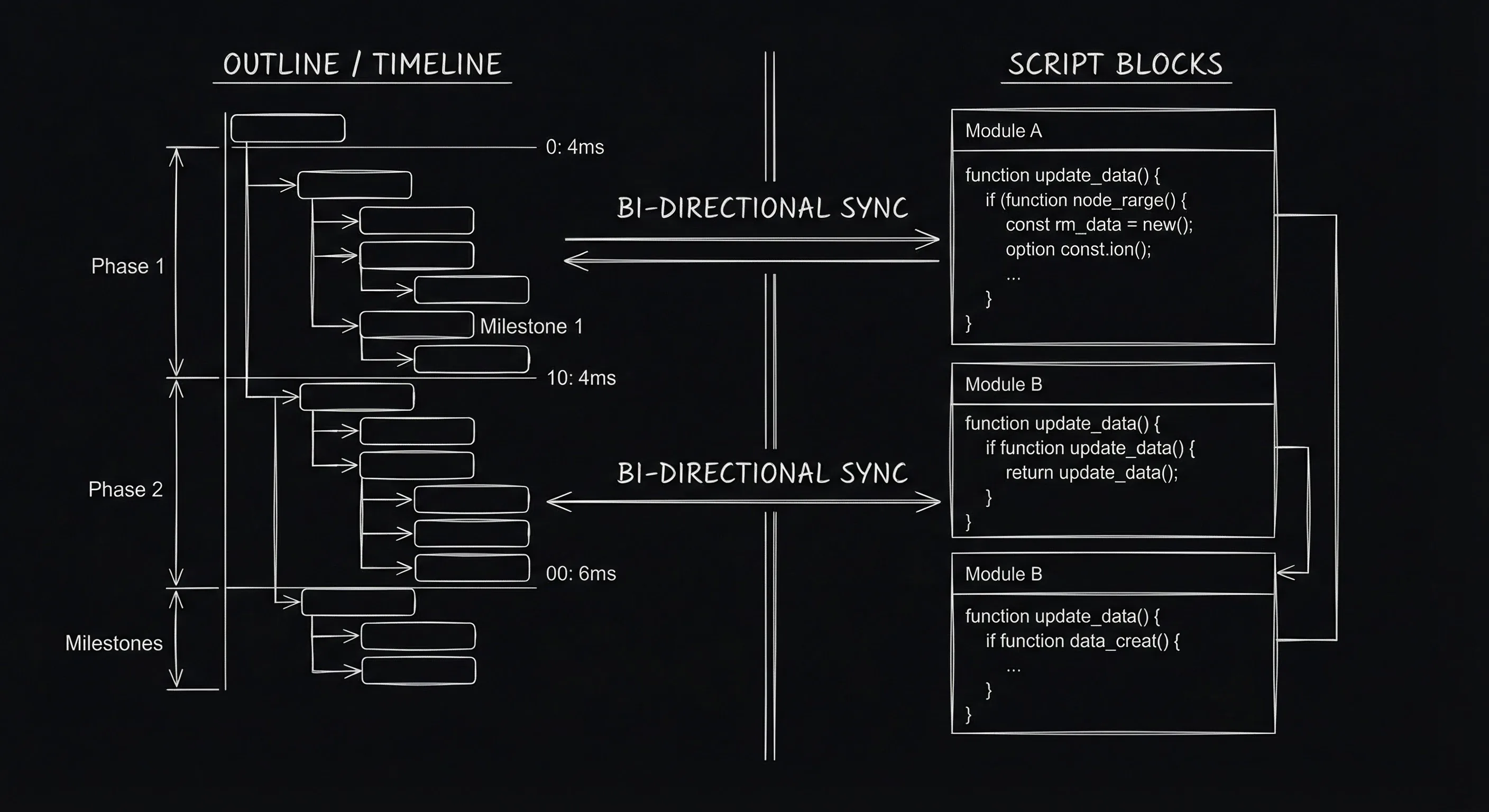
The Story Map keeps the inciting incident visible so it lands on the right page.
Why Placement Matters More Than You Think
The 10–15 page window exists for a reason. Before page 10, the audience is still orienting. They're learning names, faces, and the rules of the world. If you throw the inciting incident at them on page 3, they may not yet care about the protagonist. The incident will feel like noise. Conversely, if you hold it until page 25, you've spent a quarter of the script in setup. Readers and viewers will start to wonder when the story is going to start. The sweet spot is the moment when we've just enough context to invest,and not a page more.
Different genres and formats bend the rule. A thriller might open with a cold incident and then spend the next ten pages introducing the protagonist who will respond to it. In that case, the inciting incident for the protagonist might be the moment they're pulled in. Television pilots often front-load the incident because they have less time to earn attention. The principle is the same: the incident should land when the audience is ready to care about the consequence.
What Goes Wrong
The most common mistake is a weak incident. Something happens, but it doesn’t force a real choice. The protagonist could ignore it and the story would have no stakes. Another mistake is piling too much on top of it: the incident plus a twist plus a second incident. One clear, sharp disruption is usually stronger than three small ones.
A third mistake is divorcing the incident from character. The event should matter to this protagonist specifically. If anyone could react the same way, the moment may be generic. When the incident is tied to what the character wants or fears, the audience feels the pull.
The best inciting incidents feel inevitable in hindsight. The story couldn’t start any other way. That’s not luck,it’s design.
For scripts that use a “refusal of the call,” the incident still has to happen. The refusal is a response to the incident. If the character refuses, the next beat is usually a second push,another event that makes refusal impossible or too costly. Our guide on Save the Cat vs. the Hero’s Journey compares how different structures handle the call and the refusal.
The Sharp Takeaway
The inciting incident is the hinge between the world you’ve established and the story you’re about to tell. It should land after we care, before we get bored, and it should force a response that the rest of the script can’t undo. Study the films that work,The Matrix, Star Wars, Jaws,and you’ll see the same discipline: one clear disruption, placed with intention. Your job is to make that moment unmistakable on the page and on the map. When it’s in the right place, the rest of the story has somewhere to go.
Final Step
Build your next script with Screenweaver
Move from ideas to production-ready pages faster with timeline-native writing and AI-assisted story flow.
Try Screenweaver