Detector de repeticiones
Verificador de repeticiones · Detector de ecos para guiones
Todo el mundo tiene palabras muletilla que repite sin darse cuenta: el mismo verbo, el mismo sustantivo o el mismo adjetivo que vuelve una y otra vez en una escena.
Pega abajo el texto de tu escena. La herramienta ignora las palabras funcionales (el, la, y, pero, etc.) y resalta las palabras con carga de sentido (verbos, sustantivos, adjetivos) que aparecen más de tres veces a corta distancia, para que detectes los ecos y varíes tu vocabulario.
Todo ocurre en tu navegador. Un pequeño script cuenta la frecuencia de las palabras y la distancia entre sus apariciones; solo se señalan las palabras repetidas al menos cuatro veces, con al menos dos apariciones separadas por menos de 50 palabras.
Cómo funciona
El algoritmo corta tu texto en palabras y descarta las vacías (artículos, conjunciones, pronombres, auxiliares habituales). Para cada palabra restante registra todas sus posiciones. Una palabra se señala como eco si aparece al menos cuatro veces y si al menos dos de esas apariciones están separadas por menos de 50 palabras. El resaltado se hace en tu navegador, no se envía ningún dato a un servidor.
Ya sabes cuánto dura.Ahora escribe el guion.
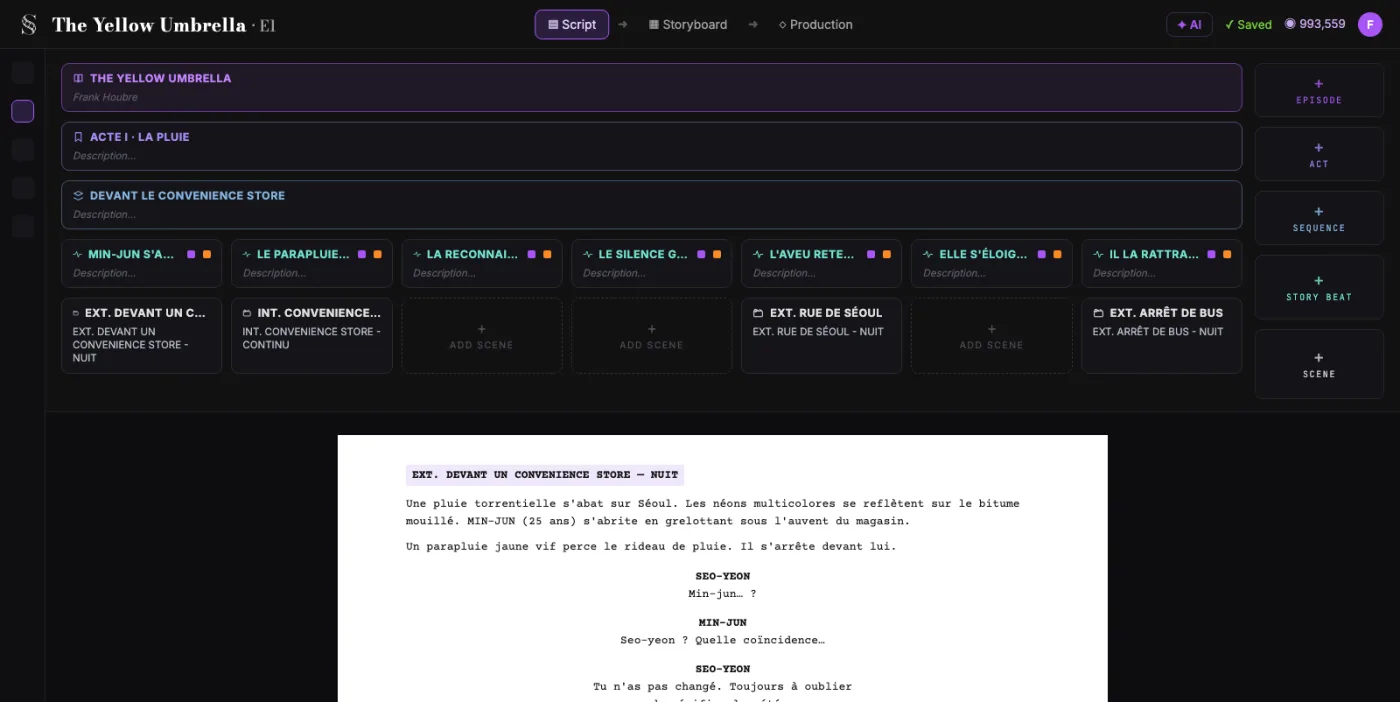
Escribe el guion completo en ScreenWeaver, con el formato estándar de la industria y páginas ilimitadas. El plan Screenwriter es gratis y no caduca.
- 0 $, sin fecha de caducidad
- Exporta a PDF y Final Draft
- Mac, Windows, Linux, iPad
Buscador de repeticiones: la guía completa
Encuentra las palabras fuertes que vuelven demasiado cerca unas de otras, para que la prosa suene intencionada y no repetitiva.
En este trabajo el problema central está claro: las repeticiones de palabras que pasan desapercibidas dejan la prosa plana, apresurada o cómica sin querer. Si no se resuelve, genera fricción más adelante y decisiones más lentas. El objetivo concreto es una textura de lenguaje más limpia, con más variedad de frase y menos redundancia accidental.
Límite que conviene tener presente: No distingue por sí solo una repetición poética de un eco accidental, sigue haciendo falta criterio humano.
Uso avanzado: Lanza la revisión después de las reescrituras estructurales: mover escenas duplica verbos y etiquetas emocionales sin que te des cuenta.
El método paso a paso
- Analiza una secuencia cada vez y mira los grupos de palabras con contenido que se repiten.
- Decide en cada caso si es un motivo buscado o un eco involuntario.
- Sustituye o reformula solo las repeticiones sin valor, las que restan claridad o tono.
- Haz una pasada final para comprobar la coherencia de la voz tras los cambios.
Casos de uso por perfil
- Guionista: limpiar tus muletillas antes de compartir páginas.
- Editor: acelerar la pasada de pulido sobre la variedad de vocabulario.
- Sala de guionistas: homogeneizar el tono entre varias personas.
Errores frecuentes que evitar
- Eliminar toda repetición, incluidos los efectos retóricos buscados.
- Cambiar una palabra por un sinónimo más débil solo por variar.
- Dejar pasar ecos cercanos que restan fuerza a la línea.
Buenas prácticas del oficio
- Protege los motivos buscados y recorta solo la repetición accidental.
- Prioriza los verbos y adjetivos más frecuentes en las pasadas de limpieza.
- Lee en voz alta lo revisado para cazar la monotonía rítmica.
Trata lo que sale de esta herramienta como apoyo a la decisión, no como sustituto de la escritura. Un buen guion se recuerda por sus decisiones concretas, su precisión emocional y la claridad de su movimiento dramático. Las herramientas sirven para quitar ruido, de modo que tu energía vaya donde importa: personaje, conflicto, escalada y pago. Si revisas los resultados después de cada pasada y llevas un registro de los cambios que aceptas, tu método se vuelve más rápido y más previsible de una versión a otra. Eso es justo lo que valoran los colaboradores profesionales: menos sorpresas, razones más claras y un guion que evoluciona con intención.
Preguntas ampliadas
¿Hay que eliminar toda repetición?
No. Conserva los motivos buscados y los ecos retóricos. Quita solo la repetición accidental sin valor.
¿Qué palabras conviene atacar primero?
Verbos, adjetivos y etiquetas emocionales muy frecuentes, los que aplanan la voz cuando vuelven.
¿Limpiar ecos puede cambiar el tono sin querer?
Sí, si las sustituciones se hacen a la ligera. Contrasta siempre el nuevo vocabulario con la voz del personaje y el tono del género.
¿Cada cuánto conviene pasar la herramienta?
En fases tardías de reescritura y después de cambios estructurales grandes que duplican patrones de lenguaje.
¿Sirve para una pasada solo de diálogo?
Mucho. Reescribir diálogo introduce fórmulas repetidas sin que uno lo note.
¿Cuál es una buena comprobación final?
Leer en voz alta las páginas revisadas para verificar ritmo, precisión y las repeticiones que sí quieres.