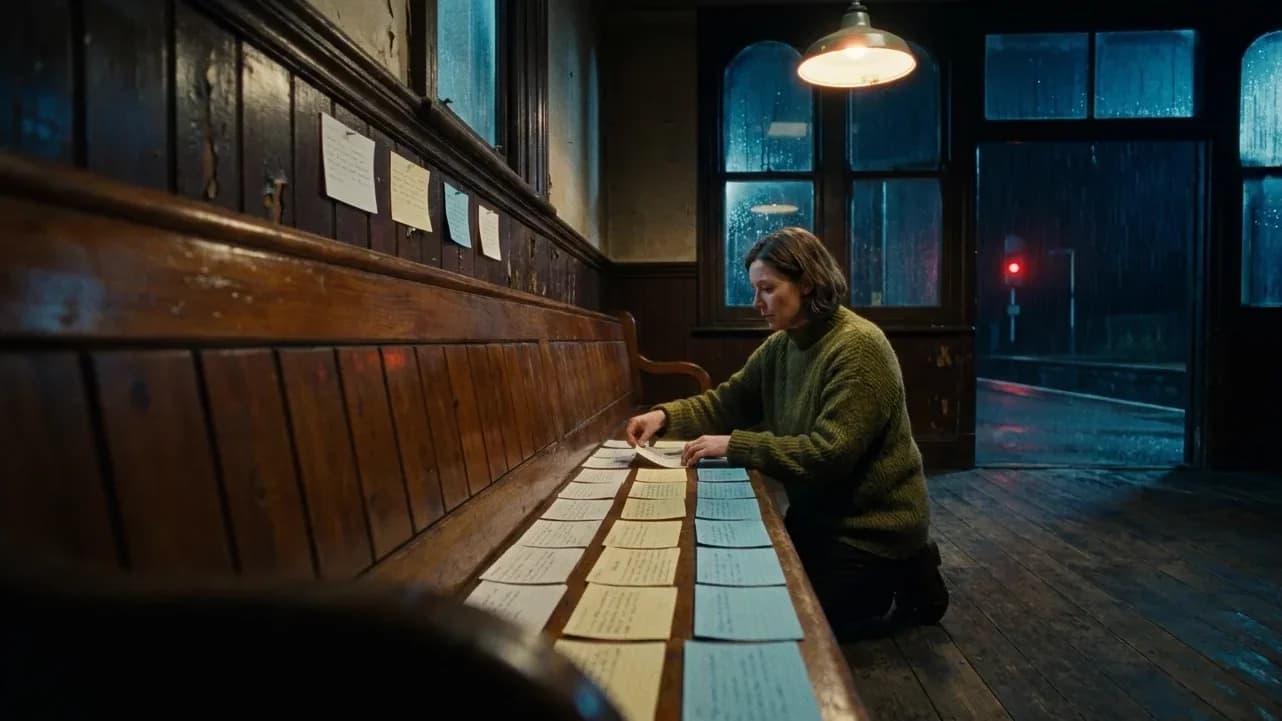

The script doesn't start at the beginning. It starts in the middle. Maybe the end. We see a outcome before we see the cause. We meet a character who's already dead in the next section. The audience has to hold the pieces and wait for the moment when the puzzle locks. That's non-linear storytelling. It's not a gimmick when it's done right. It's a way to make the audience feel the story instead of just following it. Pulp Fiction didn't invent it. But it showed a generation of writers that you could break time and still land.
The risk is real. Do it badly and the audience is confused, not intrigued. Do it without purpose and it's style for style's sake. The best non-linear scripts have a reason. The structure serves the theme. The out-of-order sequence creates meaning that a straight line wouldn't.
Free tool: use the Scene Extractor to pull and organize every scene from your script.
Why Go Non-Linear?
Sometimes the story is better when we don't experience it in order. We see the aftermath first. Then we see how we got there. The tension isn't "what will happen?" It's "how did we get here?" Or we see one character's day, then another's, then we realize they're the same day,and the overlap changes everything. Or we're in the present, then the past, then the present again, and the past reframes what we thought we knew. Non-linear structure lets you control what the audience knows and when. It lets you create irony, dread, or revelation by the order of information.
Think about Pulp Fiction. We see Jules and Vincent in the apartment. We see the robbery at the diner. We don't see the chronology that connects them until later. When we do, we're not just learning the plot. We're feeling the design. The film is about coincidence, choice, and grace. The structure,interlocking stories, out of order,makes that theme tangible. We're putting the pieces together. So are the characters.
In a linear story we ask "what happens next?" In a non-linear one we ask "how does this fit?" The question is different. So is the payoff.
The Tools: Time Blocks, POV Shifts, and Reversals
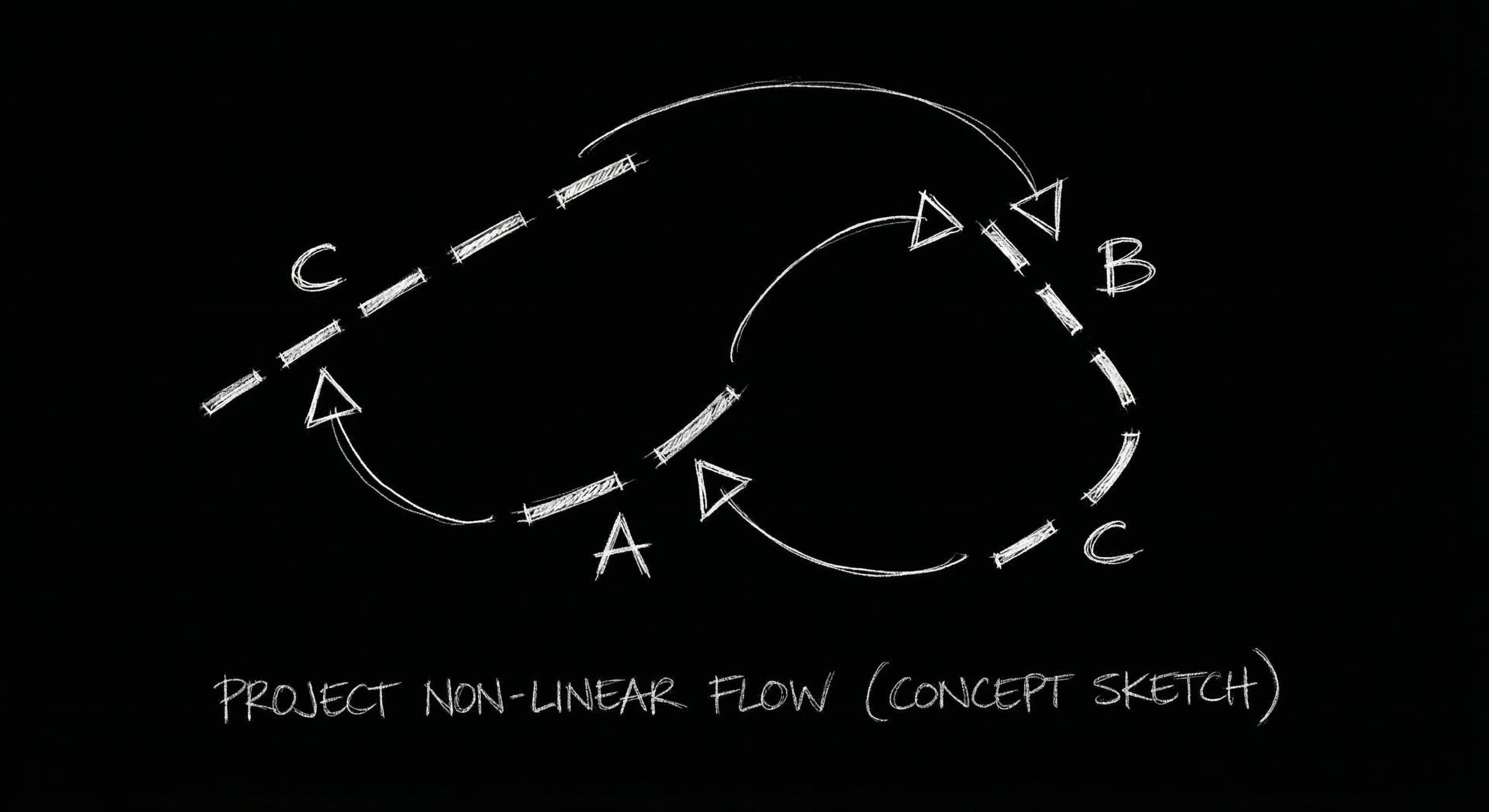
Non-linear narratives use a few core devices. Time blocks: the story is divided into chunks (chapters, acts, storylines) that are presented out of chronological order. We might get "Day 1 , Anna," then "Day 3 , Ben," then "Day 1 , Ben." The audience assembles the timeline. POV shifts: we follow one character, then another. Their stories intersect. The order in which we see each POV creates the meaning. Reversals: we see an outcome (a death, a breakup, a victory) and then we see the lead-up. The dramatic question becomes "how?" not "what?"
You can combine these. Pulp Fiction uses time blocks and POV shifts. So does Babel. Memento uses reversal as its engine,we're moving backward through time, so every scene recontextualizes the one that came before. Choose the tool that serves your story. Don't choose non-linear because it sounds cool. Choose it because the story is more powerful when we don't get it in order.
You Need a Map
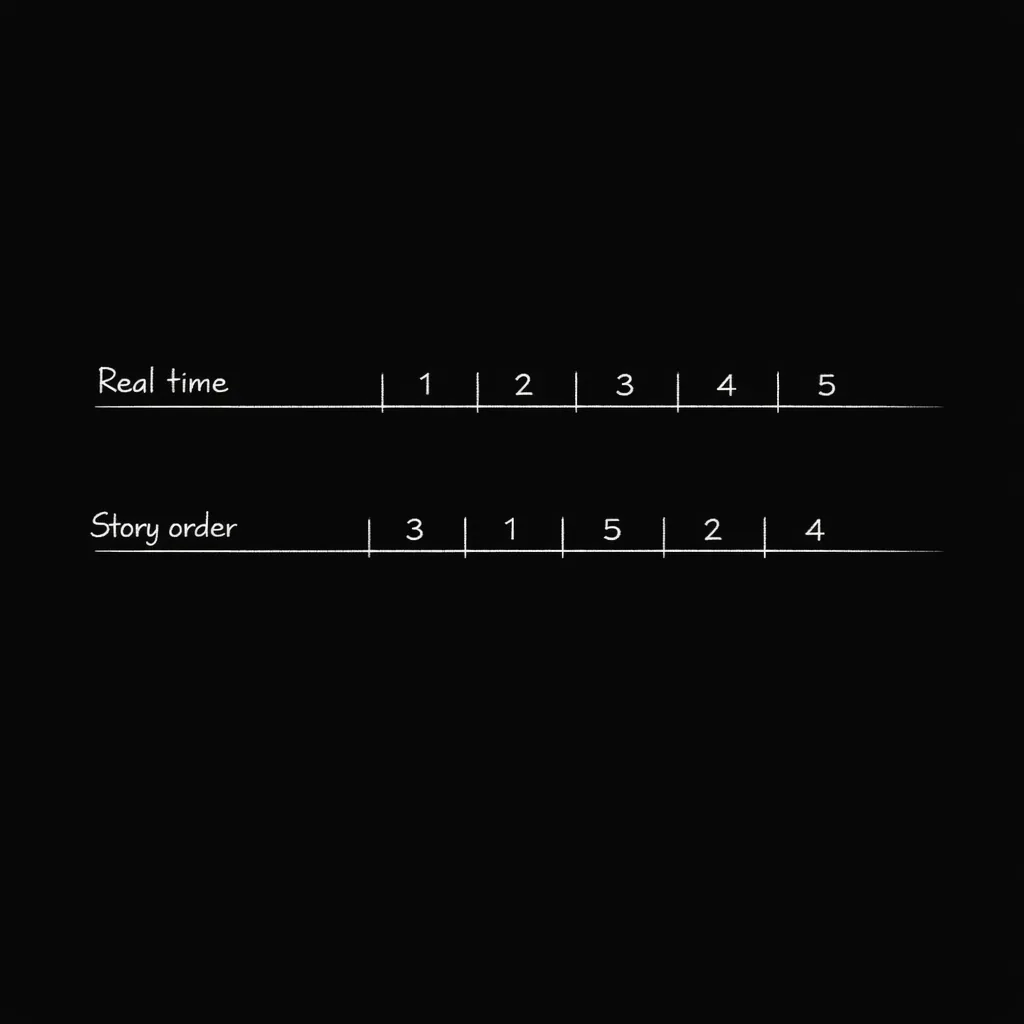
Before you write, you need to know the real order of events. What actually happened, in sequence? Write it down. A one-page chronology. Then decide the order in which you'll present those events to the audience. Which block do we see first? Which second? Where do we loop back? The script may be written in presentation order. But you, the writer, need the hidden timeline. Otherwise you'll contradict yourself. A character will know something they couldn't know yet. A prop will be in two places. The audience may not articulate the error, but they'll feel it. Consistency in the underlying chronology is what makes non-linear feel intentional instead of messy. For a parallel discipline,structuring a whole hour of story,see how to outline a 60-minute TV drama pilot; the same need for a clear spine applies.
Relatable Scenario: The Revenge Thriller
Your protagonist is hunting the person who wronged them. Linear version: we follow the hunt from start to finish. Non-linear version: we open with the protagonist standing over the villain, gun out. We don't know who they are or why they're there. Then we cut to "Six months earlier." We see the inciting incident. We see the hunt. We're building toward a moment we've already seen,but now we understand it. The opening wasn't just a hook. It was a promise. The question is "how did we get here?" and "should we want this?" That's a different story than "will they get their revenge?"
Try it free
Try Screenweaver for free on your script
It is free. Import your existing project, get a clearer view of your outline, and regain control of your story structure in minutes.
Start FreeRelatable Scenario: The Relationship Drama
Two people. We see them at the end,cold, separate, one moving out. Then we see them meeting. Then we see the first fight. Then we see the good times. We're assembling the relationship in reverse or in fragments. The audience feels the loss before they've seen the love. When they do see the love, it's colored by the end they already know. The structure does the emotional work. You're not telling us "they were happy once." You're making us feel the before and after at the same time.
What Beginners Get Wrong (The Trench Warfare Section)
Non-linear for its own sake. The structure has to earn its place. If you can tell the same story in order and it's just as good, tell it in order. Non-linear should create meaning,irony, dread, recontextualization. If it's only a trick, the audience will feel the gimmick.
Losing the throughline. The audience still needs a thread. A character they follow. A question they care about. A theme that holds the pieces together. If every section is a new character and a new tone with no connection, you have an anthology, not a non-linear narrative. The pieces have to add up. By the end we should feel that we've experienced one story, not several.
Chronology errors. You showed the character leaving the city in Block A. In Block B, which is "earlier," they're still in the city. But they're wearing the same clothes as in Block A. Or the weather doesn't match. Or a character references something that hasn't happened yet in their timeline. Keep a master chronology. Check every block against it. One slip and the careful viewer (or the script reader) loses trust.
Overexplaining. You don't need to put "THREE WEEKS EARLIER" on every section if the context is clear. You don't need a character to say "so that's why we're here now." Trust the audience to assemble. Over-signposting makes the structure feel heavy. Let the design breathe.
Opening with the wrong block. The first block sets the contract. It tells the audience what kind of story this is. If you open with something small and then jump to something huge, the tone can feel disjointed. If you open with the end, we need enough to hook us,and we need to care about the "how" before we get there. The first block is the most important. Choose it with intention.
The Role of the Protagonist in a Non-Linear Story
In a linear story we usually have one protagonist. In non-linear you may have several storylines. Each might have a lead. But you still need a central question or a central character that the audience uses as an anchor. Pulp Fiction has multiple leads, but the film has a tone and a theme that hold it together. The Godfather Part II has two timelines, each with a clear lead. The audience knows who to follow. If your non-linear script has no anchor,no character or question that runs through the pieces,the audience will drift. For more on how to think about who carries the story, see the role of the protagonist vs. the main character; in non-linear, that choice is even more important because the audience is already doing extra work to follow time.
Step-by-Step: Building a Non-Linear Outline
Write the story in chronological order. One paragraph per major event. That's your secret map. Then decide how many blocks you have. Three? Five? Label them (by character, by day, by theme). Now decide the order of presentation. Which block is first? What do we learn? What do we not yet know? For each block, write two sentences: what happens, and what the audience learns or feels. Read the blocks in presentation order. Does the story build? Does the final block land because of what came before? If yes, you have a structure. Now write the script in that order. Refer back to the chronological map when you need to check logic or continuity.
The Perspective
Non-linear narrative is a choice. It's not a way to hide a weak story. It's a way to make a strong story hit harder by controlling what we know and when. Map the real chronology. Decide the presentation order. Serve the theme. When you do that, the structure stops being a trick and starts being the point.
Final Step
Build your next script with Screenweaver
Move from ideas to production-ready pages faster with timeline-native writing and AI-assisted story flow.
Try Screenweaver