
You've finished the script. Before you send it to a manager, enter a contest, or let a producer read it, you want to know it's protected. That means copyright and registration. In the US, your work is copyrighted the moment you fix it in a tangible form, so the moment you save the file, you have a copyright. But that's not enough for enforcement. To sue for infringement and to get statutory damages, you need to register the work with the US Copyright Office (Library of Congress). Writers also hear about the WGA Registry. The two are not the same. This guide explains what each does, when to use which, and how to register so your script is protected before you hit send.
Copyright is automatic. Registration is what gives you teeth. Register with the US Copyright Office for legal leverage; use the WGA Registry as a quick, cheap timestamp if you want, but don't rely on it alone for legal protection.
Once your work is protected, you can focus on getting a manager, option agreements, and when to bring in an entertainment lawyer.
Free tool: use the Screenplay Title Page Maker to generate an industry-standard title page as a clean PDF.
What Copyright Actually Is
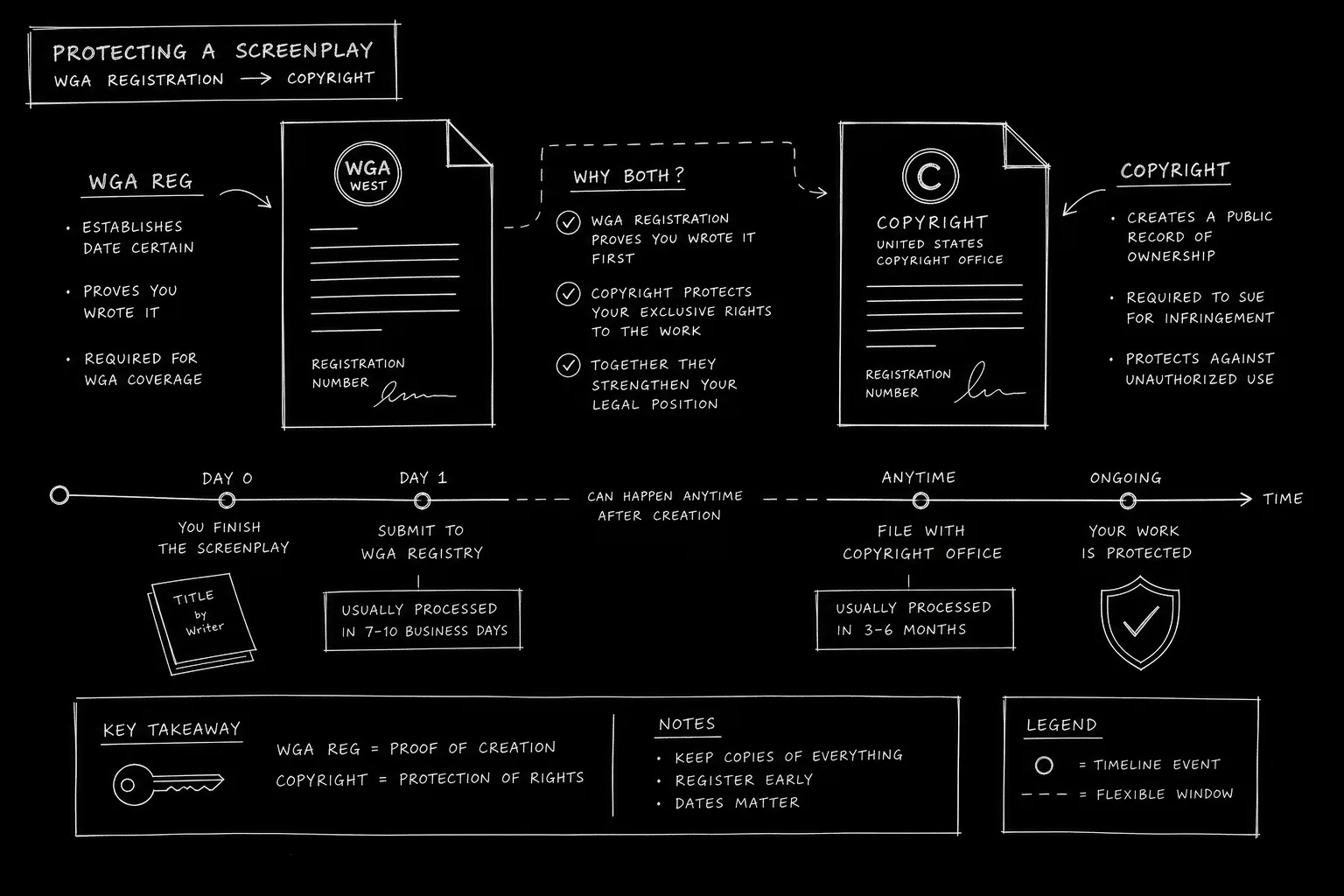
Copyright is the exclusive right to reproduce, distribute, perform, display, and create derivative works from your original work. For a screenplay, that means only you (or someone you've granted rights to) can make a film from it, adapt it, or copy it. You get that right automatically when you create an original work and fix it in a tangible medium, on paper, on a hard drive, in a PDF. You don't have to put a copyright notice on it (though it helps). You don't have to register to "have" a copyright. But without registration, your ability to enforce that right in court is limited. So: you already have a copyright. Registration is the next step to protect it properly.
US Copyright Office (Library of Congress) Registration
Registering your script with the US Copyright Office gives you a public record of ownership and a registration certificate. It's required (or strongly advisable) if you ever need to sue for infringement in the US. With registration, you can seek statutory damages and attorney's fees in many cases. Without it, you're often limited to actual damages (harder to prove and often smaller). So for serious protection, register with the Copyright Office.
How: Go to the Copyright Office website (copyright.gov). You can register online. You'll need to upload a copy of your script (or the deposit they specify), fill out the application, and pay the fee (as of 2026, typically in the range of $45–65 for a standard electronic registration). Processing can take several months. You get a certificate when it's done. Do this before you widely distribute the script, ideally right after you lock a draft you're happy to submit. That way, if someone steals an idea or a chunk of your script, you have a registration date that predates their use.
WGA Registry: What It Is and Isn't
The WGA Registry (Writers Guild of America, West or East) is a separate service. You send them your script (and a fee). They store it and give you a dated receipt. It's a timestamp, proof that your work existed as of that date. It does not create or replace a copyright. It does not give you the same legal standing as a Copyright Office registration. It's useful as a quick, inexpensive way to have a dated record. Some writers use both: WGA Registry for speed and a paper trail, Copyright Office for full legal protection. If you only do one, do the Copyright Office for enforcement. If you want a cheap timestamp before you send the script out tomorrow, the WGA Registry is fine as a supplement.
When to Register
Before you send the script widely. Once you're about to query managers, enter contests, or send to producers, have your registration in process or done. That way your date of registration is before any dispute.
When you've locked a draft. You don't have to register every draft. Register the draft you're submitting, the one you're willing to stand behind. If you do a major rewrite that changes a lot of the content, you can register the new version as a new work (or a derivative, depending on how much changed). For most writers, registering the "final" draft before submission is enough.
When you're collaborating. If you're writing with a partner, sort out ownership in a collaboration agreement first. Then register in both names (or as agreed). Don't register as sole author if you have a co-writer, that can create chain-of-title problems later.
What Beginners Get Wrong
Relying only on the WGA Registry. It's a timestamp, not a substitute for Copyright Office registration. For legal enforcement, register with the Copyright Office.
Registering too late. If you register after someone has already infringed, you may lose the ability to get statutory damages. Register before you send the script out.
Putting a false date or wrong author on the application. The Copyright Office application asks for author and date of creation. Be accurate. False information can undermine your registration.
Skipping registration to save money. The fee is small compared to the cost of not being able to enforce your rights. Budget for it. Do it.
Forgetting to register rewrites when the work is substantially new. If you do a page-one rewrite and the script is effectively a new work, consider a new registration. If it's a polish, the original registration usually still covers it. When in doubt, consult a lawyer.
Try it free
Try Screenweaver for free on your script
It is free. Import your existing project, get a clearer view of your outline, and regain control of your story structure in minutes.
Start FreeComparison: WGA Registry vs. Copyright Office
| Aspect | WGA Registry | US Copyright Office |
|---|---|---|
| Purpose | Timestamp, proof of date | Legal registration, enforcement |
| Cost | Lower | Moderate (e.g. $45–65) |
| Legal weight | Limited | Full, required for statutory damages |
| Processing time | Fast | Can take months |
| Best for | Quick record before sending out | Full protection before/after distribution |
Use both if you want: WGA for a fast timestamp, Copyright Office for the real protection.
The Perspective
Your script is your asset. Copyright is automatic; registration is how you back it up. Register with the US Copyright Office before you send the script to managers, contests, or producers. Use the WGA Registry as an extra timestamp if you like. Then focus on the next step, getting read, getting rep, and when the time comes, option agreements and entertainment lawyers. Protection first. Everything else after.
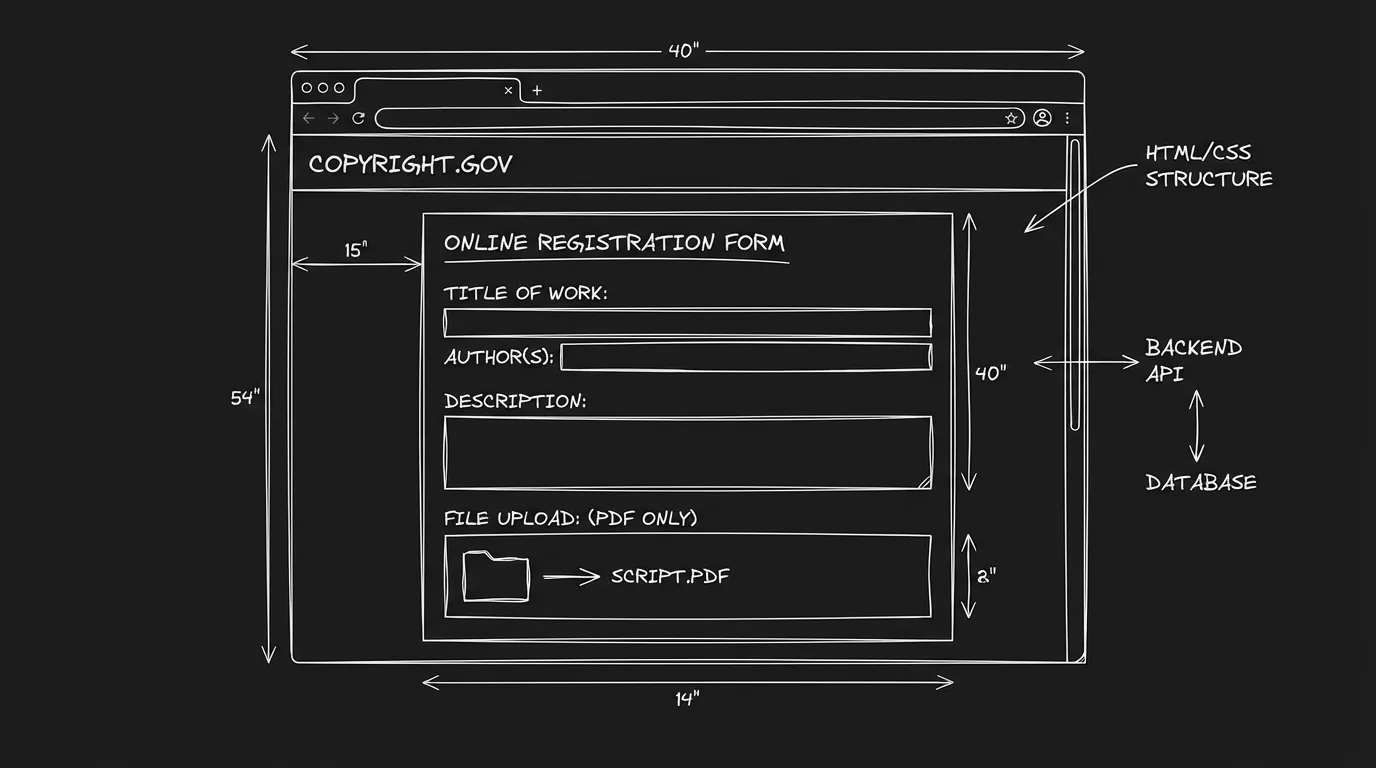
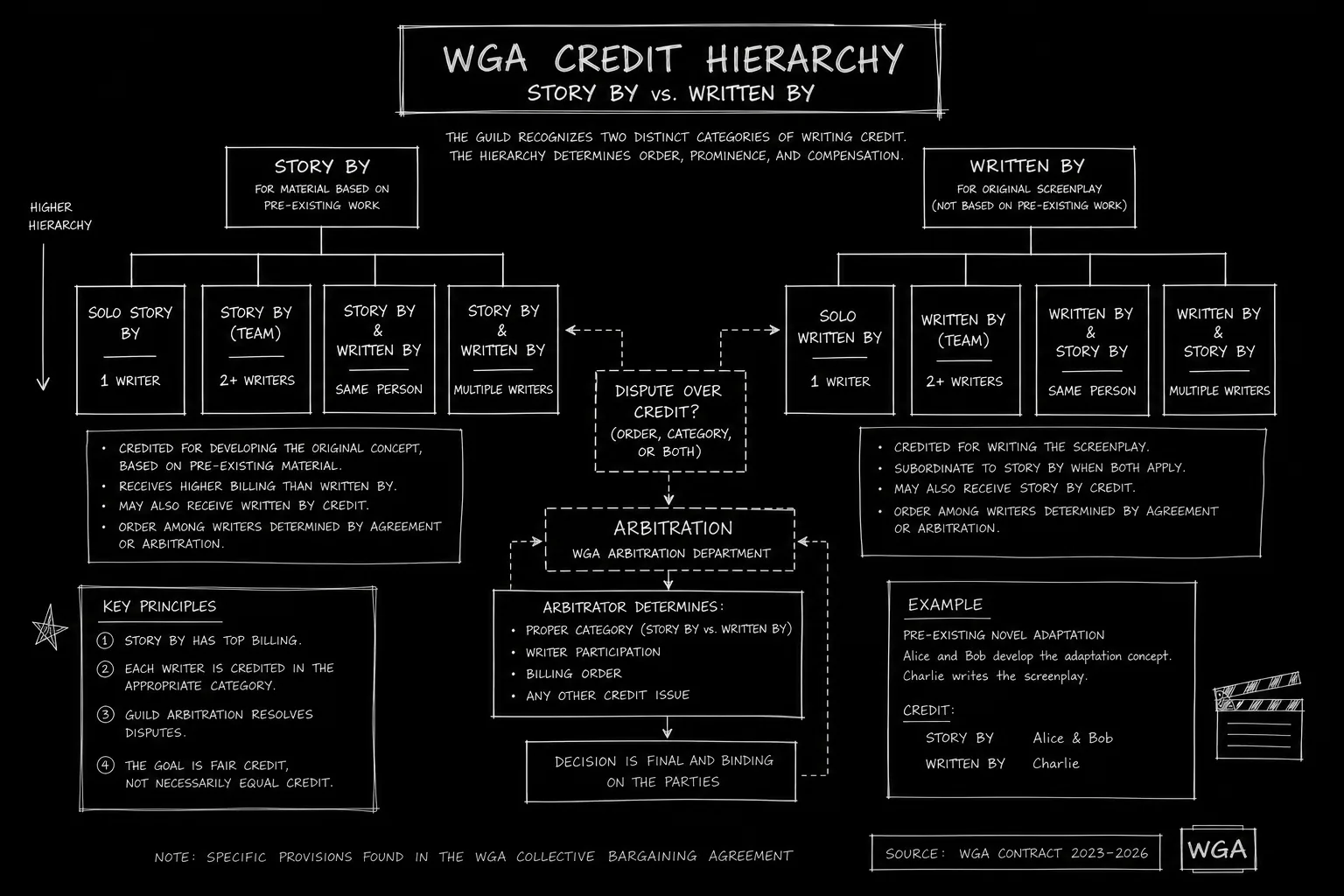
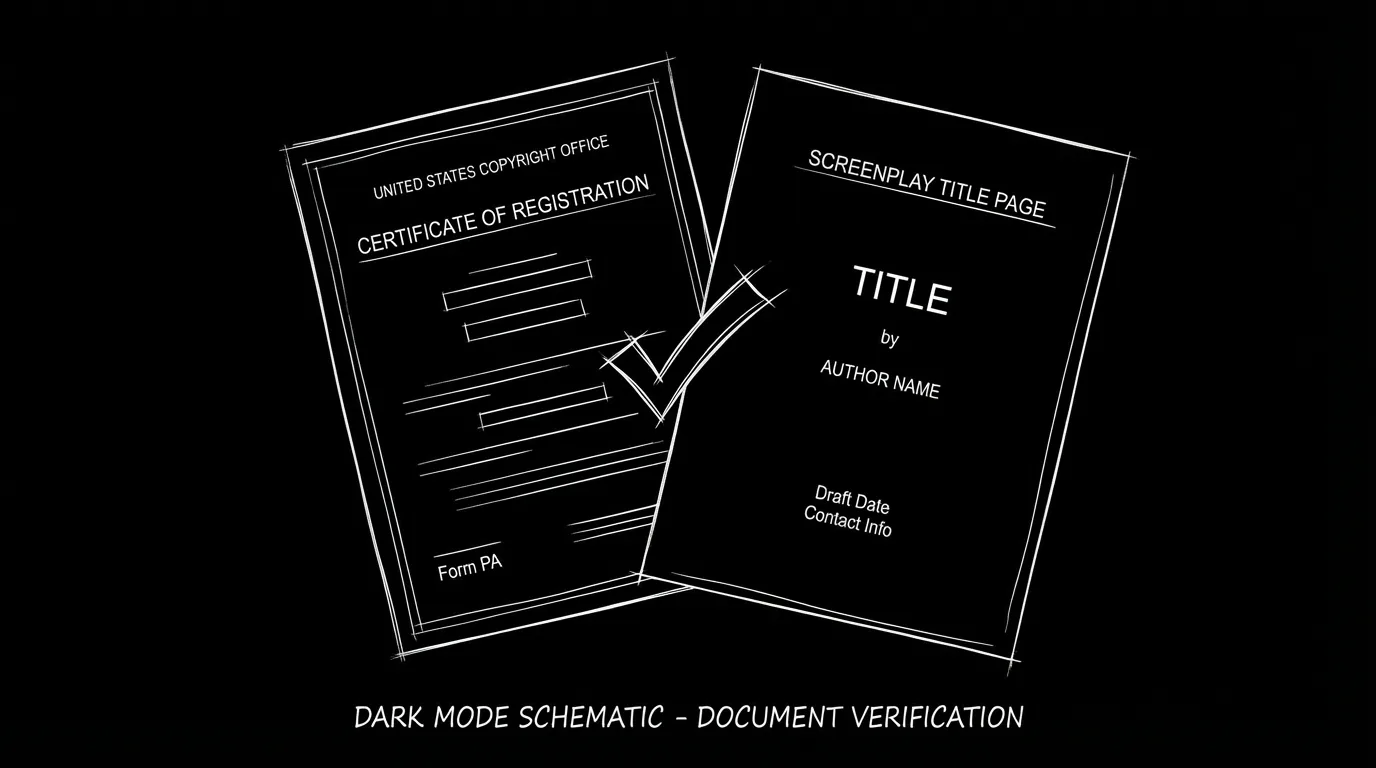
These two visuals work as a pair: the first shows Copyright Office website and application form; dark mode technical sketch, and the second shifts to Certificate of registration and script title page; dark mode technical sketch - compare them briefly, then move on.
Final Step
Build your next script with Screenweaver
Move from ideas to production-ready pages faster with timeline-native writing and AI-assisted story flow.
Try Screenweaver