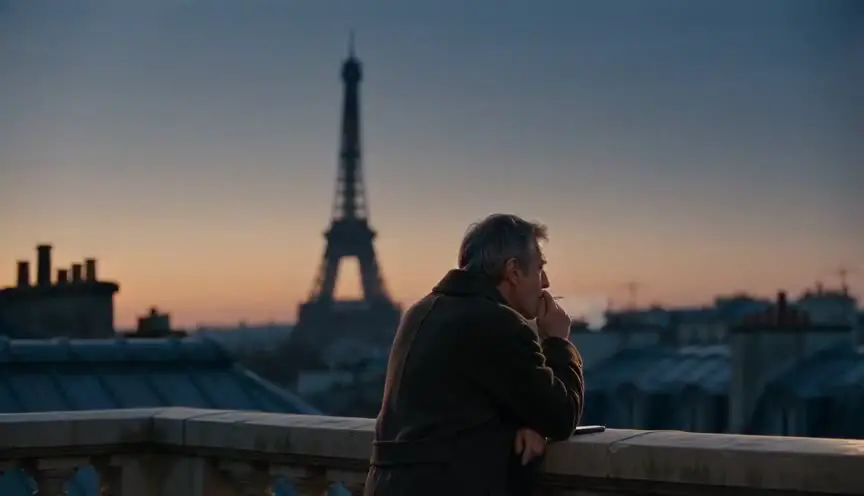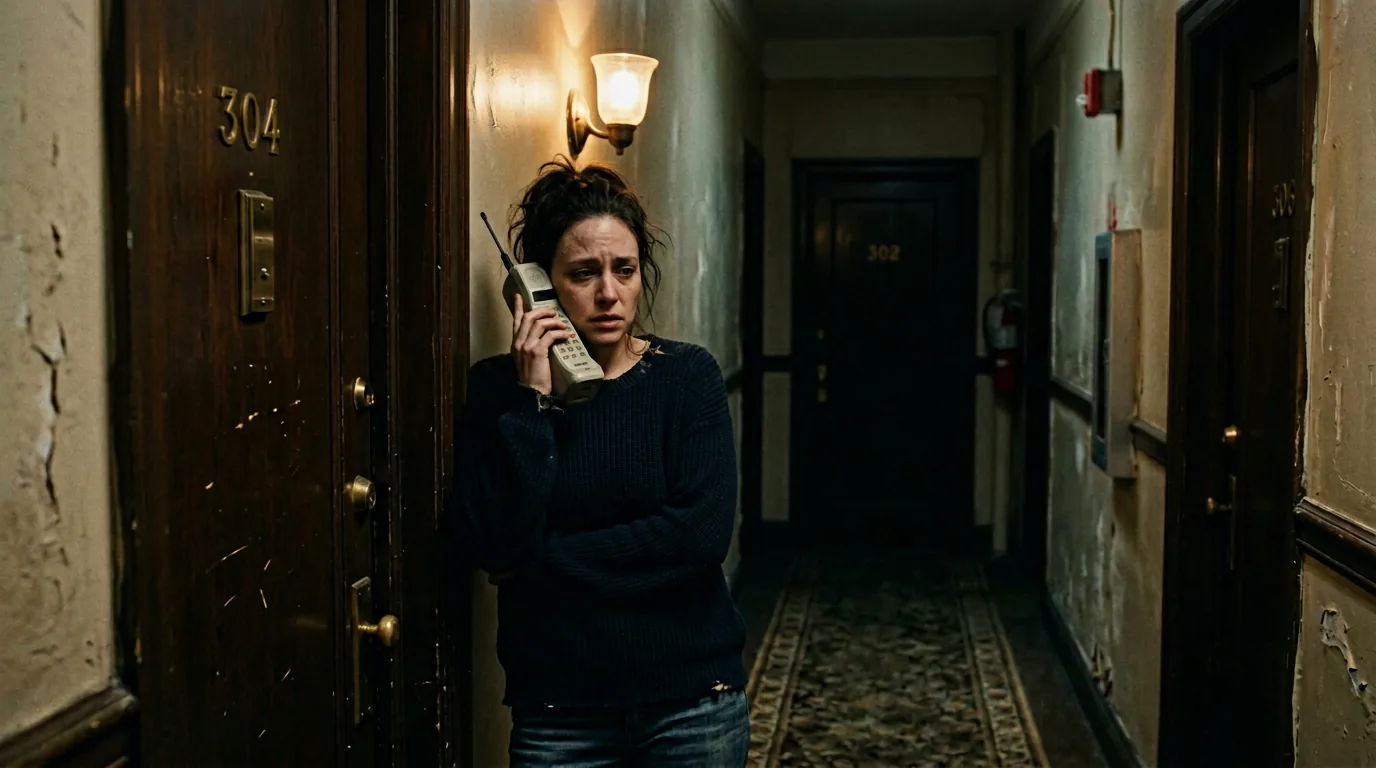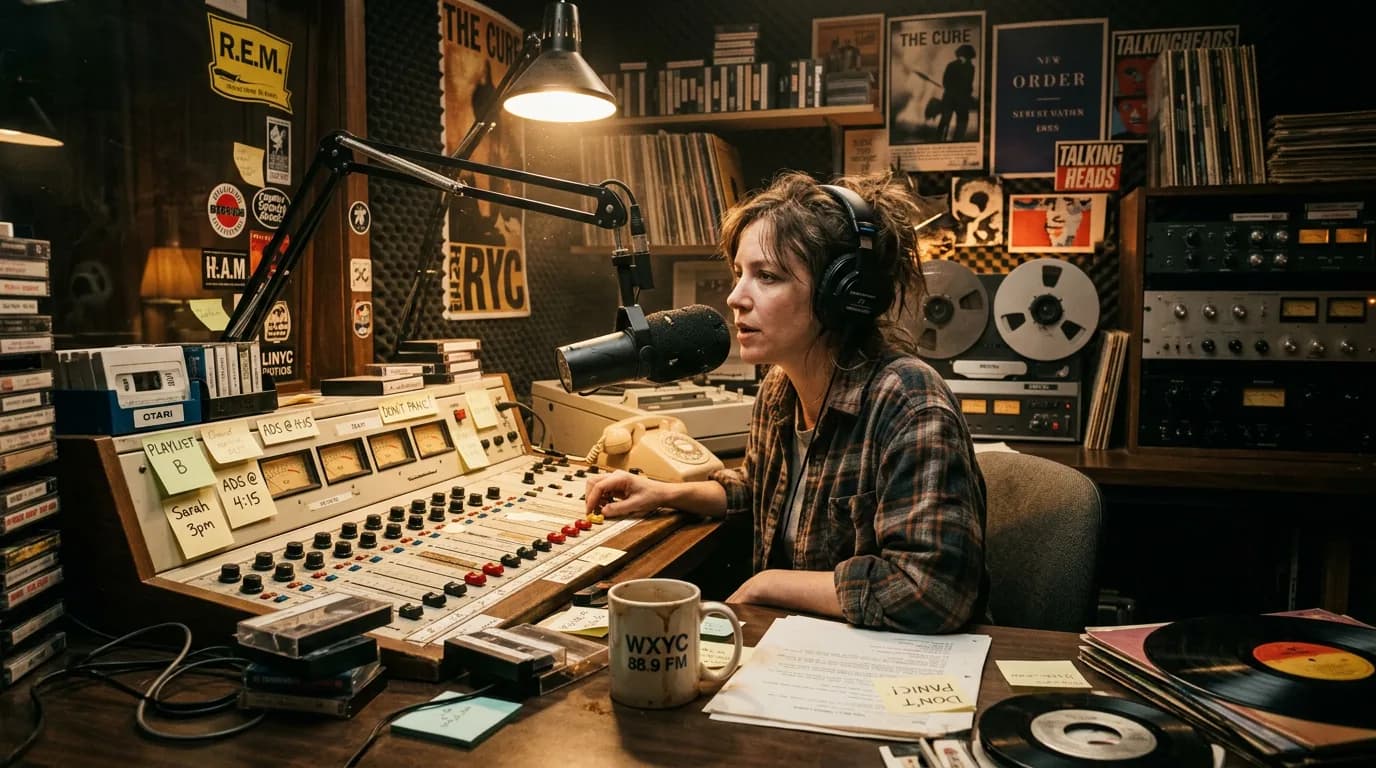

A character leans in and whispers, “Don’t turn around.”
Across the room, someone is listening.
Nobody raises their voice.
Yet the scene is louder than a gunfight.
That is what hushed writing can do when it is crafted well.
Most beginners treat whisper scenes as “regular dialogue but quieter.” That misses the point. Whispered scenes are built on access, proximity, audibility risk, and suppressed intent. If your formatting does not make those dynamics clear, the page becomes muddy and tension leaks out.
Here’s why that matters: in low-volume scenes, ambiguity multiplies. Who hears what? How much is audible? Is the whisper private, performative, or strategic? Readers need immediate orientation or they disengage.
Think about it this way: whisper scenes are pressure-cooker scenes. The lower the volume, the higher the stakes for precision.
Cinematic workflow frames

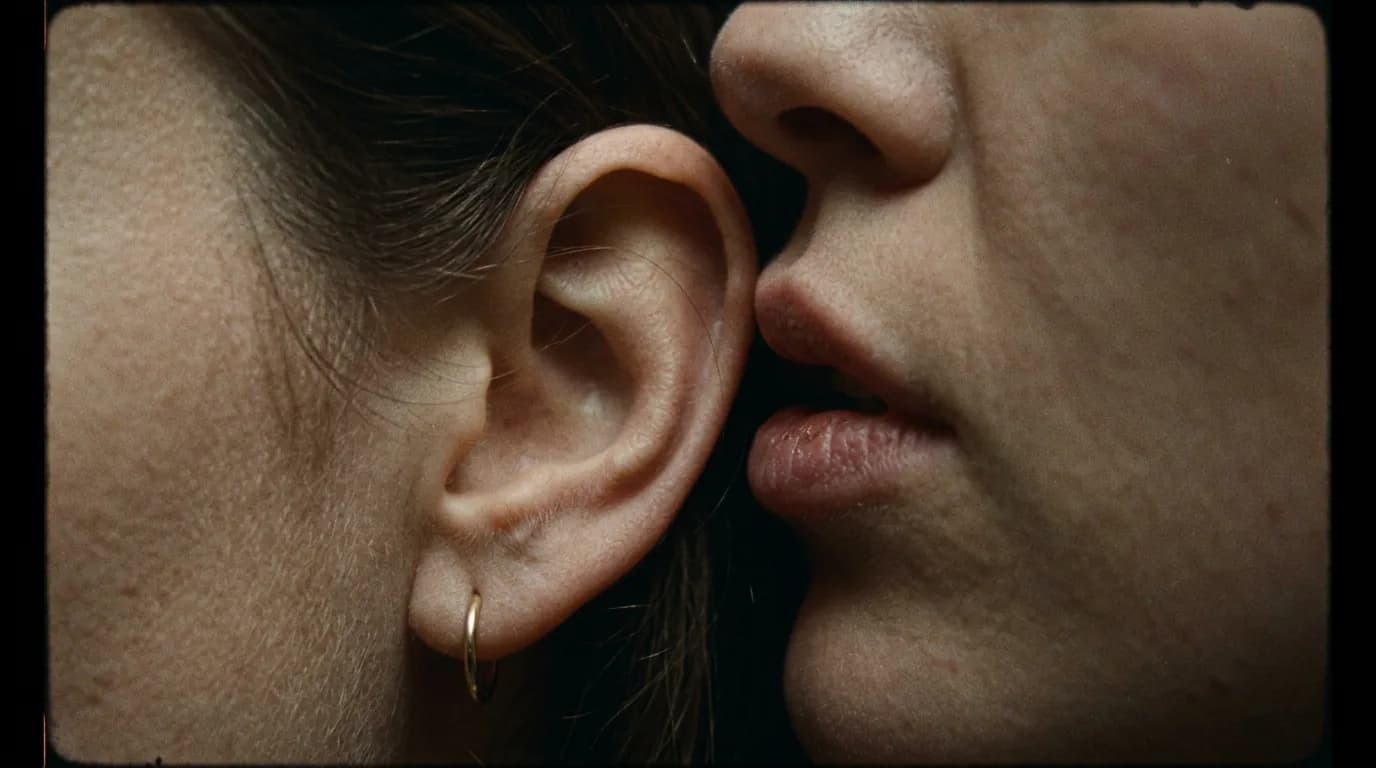
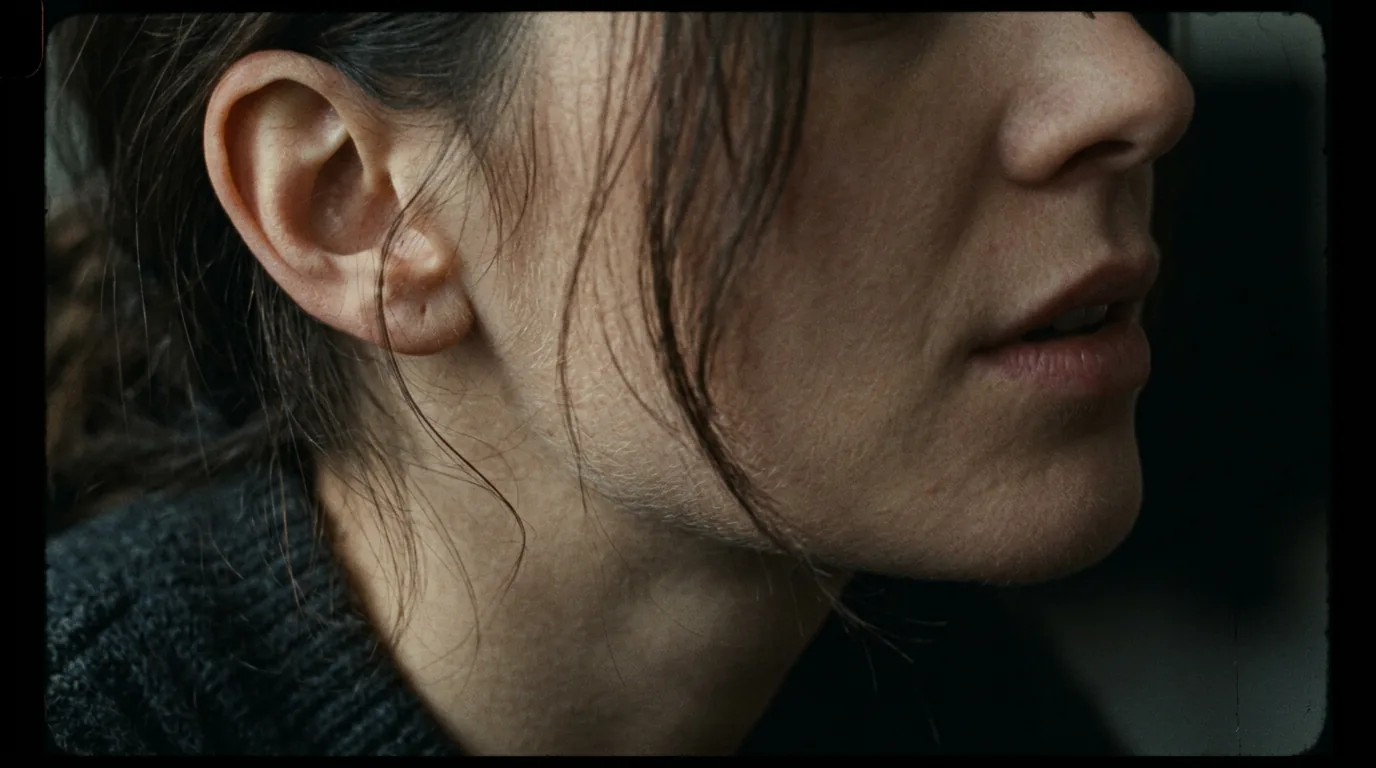
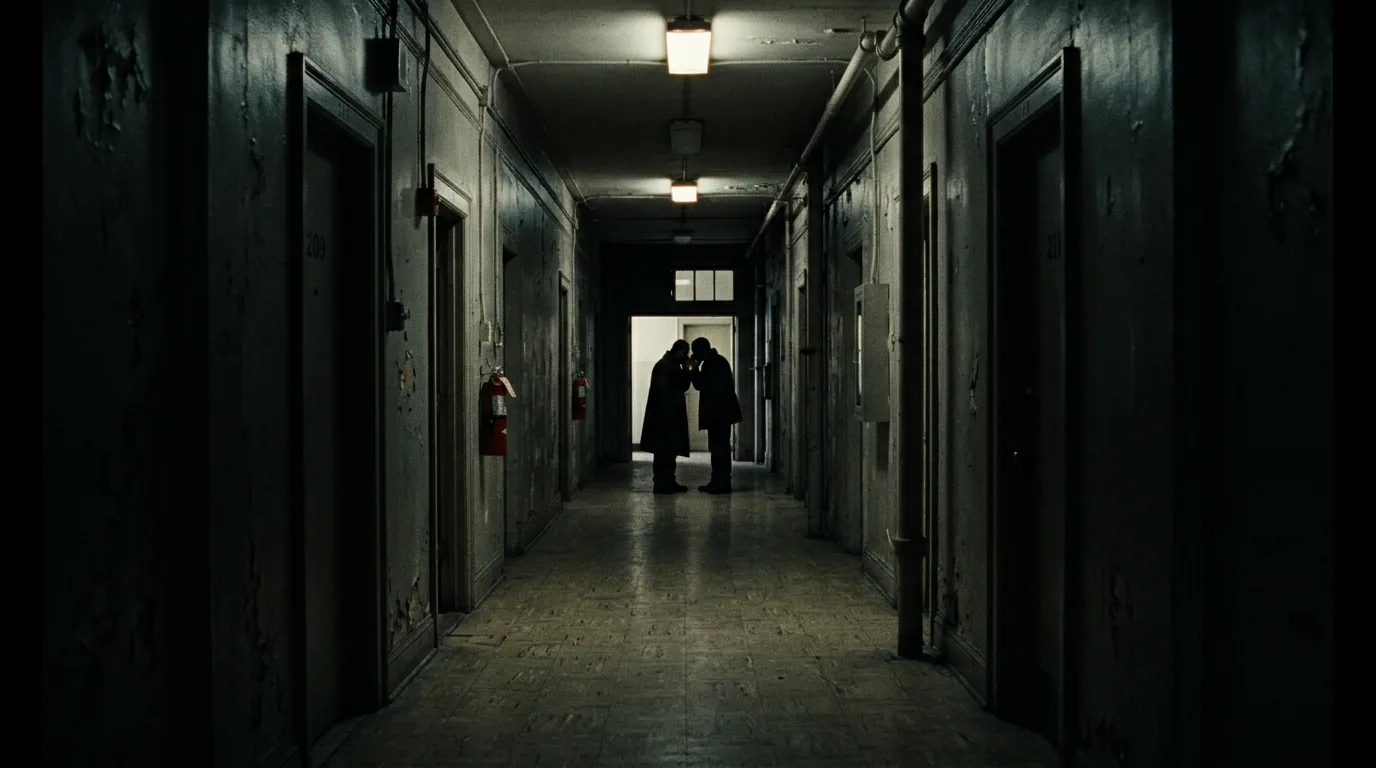
These two visuals work as a pair: the first shows Cinematic workflow still, first angle, 35mm film grain, and the second shifts to Cinematic workflow still, second angle, 35mm film grain - compare them briefly, then move on.
What Whispered Dialogue Is Doing Dramatically
Whispered dialogue usually appears when speech itself is risky:
hiding from threat,
sharing forbidden information,
maintaining deception in public,
controlling emotional spill,
or creating intimacy under constraint.
That means whispered lines are rarely neutral.
A whisper can be alliance.
It can be betrayal.
It can be manipulation disguised as tenderness.
It can be survival protocol.
Whispered scenes should not only sound quieter; they should change power geometry.
Core Formatting Patterns That Work
There is no one perfect standard, but consistency and audibility logic matter most.
Pattern 1: Parenthetical Whisper Marker
MARA
(whispering)
Don’t say his name.
Simple and effective when used selectively.
Pattern 2: Action-Line Audibility Anchor
Anchor hearing context once:
“They huddle behind the curtain, speaking just above breath.”
Then keep dialogue clean unless audibility shifts.
Pattern 3: Mixed Volume Contrast Cues
In scenes where whispers are interrupted by normal speech, explicitly mark volume shifts to prevent misreads.
Pattern 4: Eavesdropper Perspective Integration
If another character may overhear, format beats so reader can track who catches fragments and who misses them.
Comparison Table: Whisper Formatting Approaches
| Approach | Best Use Case | Strength | Risk |
|---|---|---|---|
Parenthetical (whispering) | Short, contained moments | Fast cue clarity | Repetition clutter if overused |
| Action audibility setup | Extended hushed scenes | Cleaner dialogue flow | Confusion if audibility conditions change unnoticed |
| Explicit volume shift cues | Mixed loud/quiet scenes | Prevents misattributed tone | Can feel mechanical when over-tagged |
| Eavesdropper-driven structure | Suspense and secrecy scenes | Strong tension from partial hearing | Requires careful spatial clarity |
Three Beginner Scenarios That Commonly Fail
Scenario 1: Whisper Marker on Every Line
Writer adds (whispering) to every character cue for two pages.
Result: visual clutter and reduced impact.
Fix: set hushed condition in action once, then only re-mark when volume changes.
Scenario 2: No Audibility Logic in Multi-Character Scene
Two characters whisper in crowded room, but script never clarifies who can hear fragments.
Result: reader uncertainty for wrong reasons.
Fix: anchor proximity and hearing constraints at key beats.
Scenario 3: Hushed Scene With No Escalation
Characters whisper quietly but nothing pressure-bearing changes.
Result: low-energy pacing.
Fix: pair whispers with rising risk: footsteps approaching, door handle movement, eavesdropper shift, time squeeze.
Step-by-Step Workflow for Hushed Scene Writing
Step 1: Define Why Silence Is Necessary
What makes full-volume speech dangerous or impossible in this scene?
If no clear reason, whispering may feel artificial.
Step 2: Map Audibility Zones
Who can hear clearly, partially, or not at all?
Use spatial logic: distance, barriers, ambient noise, orientation.
Step 3: Choose Formatting Strategy
For brief scenes, parenthetical cues may suffice.
For extended sequences, action-line setup + selective markers reads better.
Step 4: Design Whisper Content for Compression
Whisper lines should be concise and loaded.
Long explanatory whispers usually feel unnatural.
Step 5: Add Risk Beats
Every few lines, include an external pressure beat: floor creak, passing guard, phone vibration, nearby cough, sudden silence.
Risk beats keep hush scenes active.
Step 6: Track Power Through Proximity
Who controls distance controls scene power.
A step closer can be threat or intimacy.
A step back can be refusal or fear.
Write those shifts explicitly.
Step 7: Run an Audibility Pass
Read scene asking:
Who hears each crucial line?
If answer is unclear, revise action anchors.
Body Image: Audibility Zone Map
The Trench Warfare Section: What Beginners Get Wrong and Exact Fixes
This is where hushed scenes usually break.
Failure 1: Whispering as Style Instead of Necessity
No reason scene must be quiet.
Fix: define clear risk condition for low volume.
Failure 2: Parenthetical Saturation
Every line tagged (whispering).
Fix: establish hush mode once and reduce redundant tags.
Failure 3: Unrealistic Long Whisper Speeches
Characters deliver full monologues at whisper volume in dangerous proximity.
Fix: shorten lines and externalize context through action.
Failure 4: No Spatial Orientation
Reader cannot tell who is close enough to overhear.
Fix: anchor positions and movement at key points.
Failure 5: Flat Emotional Texture
All whispered lines carry same tone.
Fix: vary intent: urgent, pleading, manipulative, controlled, panicked.
Failure 6: Missing Sound Counterpoint
Hush exists in vacuum.
Fix: use environmental sounds as pressure markers.
Failure 7: Eavesdropping Logic Gaps
Scene depends on overhearing but setup is inconsistent.
Fix: establish hearing plausibility before payoff.
Failure 8: No Consequence for Broken Quiet
Characters accidentally get louder with no fallout.
Fix: volume breaches should trigger immediate scene change.
Failure 9: Overly Literary Action Prose
Writer compensates for low volume with dense poetic description.
Fix: keep action lines short and tactical.
Failure 10: Hushed Scene Ends Without Trigger
No decision or revelation after tension build.
Fix: end on concrete action pivot.
In hushed scenes, tension comes from what cannot be safely said out loud.
Advanced Craft: Whisper as Weapon, Whisper as Mercy
A whisper can serve opposite dramatic functions depending on context.
Weapon:
A character whispers threat in public so only target hears.
Mercy:
A character whispers truth to protect someone from public humiliation.
Ambiguity:
A character whispers “trust me” while positioning another for betrayal.
These dual uses make whisper scenes ideal for moral complexity.
You can also manipulate whisper reliability. A line heard in fragments can be misinterpreted, and that misinterpretation can drive plot. If you do this, be fair with setup: show what was actually audible and what wasn’t.
Another advanced technique is volume inversion.
Character starts whispering from fear.
Then whispers from control.
Then speaks normally only when stakes are already won or lost.
That shift can mark arc progression without overt declarations.
Try it free
Try Screenweaver for free on your script
It is free. Import your existing project, get a clearer view of your outline, and regain control of your story structure in minutes.
Start FreeWorkflow and Revision Discipline
Whisper scenes often degrade in rewrites when audibility assumptions change and markers drift.
Maintain a hush-scene ledger:
scene reason for low volume,
audibility map,
critical lines and who hears them,
risk beats,
trigger consequence.
Normalize cue labels (whispering, hushed, under breath) during final pass to avoid accidental inconsistency.
Read scene once without dialogue, only action lines. If tension disappears entirely, scene may rely too much on dialogue semantics and not enough on pressure design.
For comparative pacing references in contained tension scenes, the <a href="https://www.nyfa.edu/student-resources/10-great-websites-download-movie-scripts/" rel="nofollow">NYFA screenplay resources</a> can offer broad reading examples, but your own audibility clarity and consequence structure should govern final formatting choices.
As discussed in our guide on [how to write a prayer scene in a screenplay], low-volume emotional scenes land best when behavior carries the turn, not abstract language alone.
If your hushed scene unfolds under crowd pressure, pair with [how to write chanting crowds in a screenplay] to balance collective sound against private speech.
And when whispering happens over mediated channels, [screenplay formatting for FaceTime and video chat scenes] helps maintain source clarity under reduced volume conditions.
Body Image: Whisper Power Shift Ladder
YouTube Placeholder
Before-and-After Micro Example
Before:
“INT. BACKSTAGE CORRIDOR - NIGHT
Mara whispers to Eli that they need to leave now.
They whisper about the plan.
Someone walks by.
They whisper more.”
Vague, repetitive, low leverage.
After:
“INT. BACKSTAGE CORRIDOR - NIGHT
Mara pulls Eli behind stacked cases. Music thunders through the wall.
MARA (whisper) Exit door is chained.
Eli leans closer.
ELI (under breath) Then we take the loading ramp.
Footsteps approach. They freeze.
A SECURITY GUARD passes within arm’s reach.
MARA (barely audible) You still have the key?
Eli opens his palm. Empty.
Mara doesn’t whisper this time.
MARA Run.”
Same premise.
Now it has audibility logic, risk escalation, and payoff trigger.
Ending Perspective: Quiet Scenes, Loud Consequences
Whispered dialogue scenes are not inherently subtle. They are inherently dangerous.
Danger of being heard.
Danger of being misunderstood.
Danger of saying the wrong thing too softly or the right thing too late.
When formatted clearly and staged with pressure, hushed scenes become some of the most intense pages in a screenplay.
Set audibility rules.
Control repetition.
Track proximity power.
Escalate risk.
Land on action consequence.
Do this, and whisper scenes stop feeling like volume gimmicks.
They become precision engines for secrecy, intimacy, and irreversible choice.
One advanced framework can make these scenes dramatically sharper: audibility asymmetry.
In many hush scenes, not everyone hears the same information.
One character catches full sentence.
Another catches only one dangerous word.
A third hears tone but not content.
This asymmetry creates layered tension because each character acts on a different truth map.
When you design this intentionally, your scene gains complexity without adding extra dialogue volume.
To do this well, define hearing states by beat:
full hear,
fragment hear,
tone hear,
no hear.
Then mark any state changes caused by movement, ambient sound shift, or emotional escalation. If hearing states are random, audience confusion rises. If hearing states are designed, suspense rises.
Another powerful technique is hush inversion.
Start scene with forced whisper because threat is near.
Midway, one character deliberately whispers louder - a controlled breach to provoke reaction. End with normal volume line only after power has shifted.
That volume arc can encode character transformation with almost no exposition.
Practical Drill: Fragment Risk Pass
Take one hushed exchange and identify the single most dangerous word if overheard.
Then rewrite surrounding lines to increase pressure around that word’s possible leakage.
This creates precise stakes rather than generalized “don’t be heard” tension.
Practical Drill: Distance Reblock Test
Rewrite the same whisper scene in two blocking variants:
Version A at close proximity (within arm’s reach).
Version B with three meters separation and obstacles.
Keep dialogue mostly constant and compare tension clarity.
This reveals whether your scene depends on verbal content only or truly uses spatial mechanics.
Practical Drill: Ambient Sound Counterpoint
Insert one environmental noise source that intermittently masks speech (train rumble, music swell, HVAC roar, crowd burst). Map exactly which lines are fully heard versus masked.
If masking changes nothing in scene outcome, your hush architecture may be underbuilt.
Practical Drill: Broken Quiet Consequence Test
Force one accidental volume spike in the scene.
What immediate consequence follows?
If consequence is delayed or absent, broken-quiet beats may feel fake. In strong scripts, quiet breaches trigger instant tactical shifts.
One more high-value concept: whisper scenes are often scenes about consent.
Who decides what gets said?
Who grants physical proximity?
Who withholds volume as control?
Who is forced to lean in and therefore becomes vulnerable?
Treat these as power choices, not just staging details. The resulting scene often becomes richer and less cliche.
From a language perspective, whispered dialogue benefits from lexical compression. People whisper in nouns, verbs, and imperatives under pressure. They do not usually whisper elegant full-logic paragraphs when danger is near. Cut conjunction-heavy lines. Keep essential fragments. Let action carry connective tissue.
Operationally, maintain a whisper-scene checklist in late draft:
why quiet is necessary,
who can hear what,
where escalation occurs,
what happens if quiet breaks,
what action consequence closes scene.
If any item is unclear, fix before polishing prose.
Finally, design sequence-level variation if your script has multiple hush scenes. One can be intimacy-driven, another paranoia-driven, another tactical stealth, another moral coercion. Distinct intent prevents repetition fatigue and keeps quiet scenes from blending together.
When quiet scenes are varied by purpose and precise in audibility logic, they become some of the most memorable beats in a script. The audience leans in physically, and that embodied attention is one of the most valuable resources you can create on the page.
One final sequence-level strategy can raise quality quickly: hush-arc progression across the whole script.
If every quiet scene is written at identical intensity, they blur together. Instead, design a progression.
Early hush scene: secrecy from external threat.
Midpoint hush scene: secrecy from trusted ally.
Late hush scene: secrecy from self collapses, and truth breaks volume constraints.
This arc gives your whisper scenes narrative memory and prevents tonal repetition.
Practical Drill: Volume Escalation Matrix
Create a simple matrix for all hush scenes:
scene index,
reason for low volume,
dominant intent (fear, intimacy, manipulation, restraint),
audibility complexity (low/medium/high),
consequence severity.
If the matrix shows repeated values across multiple scenes, redesign one variable in each repeated beat. This keeps progression alive without forcing artificial twists.
Practical Drill: Last-Line Pressure Test
Take the final line of each hush scene and ask:
Does this line increase risk in the next beat, decrease risk, or redirect risk?
If answer is “none,” ending may be atmospheric rather than dramatic. Add a consequence trigger or decision pivot. Quiet scenes need endings with bite.
In production contexts, this matters because whispered scenes are often vulnerable to on-set improvisation and sound constraints. If your script’s structural pressure is clear, scene can survive performance variation. If pressure depends only on one exact line reading, scene becomes fragile.
That is why formatting discipline is not pedantic here. It is resilience engineering for narrative intent.
If you carry this rigor into the rest of your screenplay, you will notice a broader benefit: all dialogue scenes get cleaner because you start thinking in audibility, intention, and consequence rather than line volume alone. Whisper craft teaches economy. Economy teaches power. And power is what readers remember when the page goes quiet, especially in scenes where one breath changes everything. Quiet precision scales to every genre in modern cinema today.
Final Step
Build your next script with Screenweaver
Move from ideas to production-ready pages faster with timeline-native writing and AI-assisted story flow.
Try Screenweaver