ตัวสร้างแบบฟอร์มสตอรีบอร์ด
แผ่นพร้อมพิมพ์ในอัตราส่วนภาพที่คุณใช้จริง
เลือกรูปแบบที่คุณจะส่งมอบ กำหนดจำนวนช่องต่อหน้า แล้วดาวน์โหลด PDF สตอรีบอร์ดที่สะอาดพร้อมพิมพ์ ไม่ต้องสมัคร ไม่มีลายน้ำ และช่องภาพวาดตามอัตราส่วนจริงของโปรเจกต์คุณ ไม่ใช่สี่เหลี่ยมทั่วไป
สตอรีบอร์ดจะช่วยได้ก็ต่อเมื่อช่องภาพตรงกับสิ่งที่กล้องจะจับจริง องค์ประกอบภาพที่วางไว้ในอัตราส่วน 4:3 จะพังใน 2.39:1 และคลิปแนวตั้งสำหรับ TikTok ที่วางในอัตราส่วน 16:9 จะเสียการจัดเฟรมไปทั้งหมด ตัวสร้างนี้วาดทุกช่องในอัตราส่วนจริงของคุณ บนกระดาษ Letter หรือ A4 พร้อมช่องโน้ตสำหรับแอ็กชันและบทสนทนาแบบเลือกได้
PDF ถูกสร้างในเบราว์เซอร์ของคุณทั้งหมด ไม่มีอะไรถูกอัปโหลดไปยังเซิร์ฟเวอร์ใด
ตัวอย่างแบบสด
2 คอลัมน์ x 3 แถวของช่องภาพอัตราส่วน 16:9 พร้อมหมายเลขช็อตบนทุกช่อง
วิธีการทำงาน
ตัวสร้างจะคำนวณเลย์เอาต์สำหรับพิมพ์ที่ทุกช่องรักษาอัตราส่วนที่คุณเลือกไว้ตรงเป๊ะ มันเลือกกริดคอลัมน์ที่ให้ช่องใหญ่ที่สุดเท่าที่เป็นไปได้ ตั้งหน้าเป็นแนวนอนสำหรับอัตราส่วนกว้างและแนวตั้งสำหรับอัตราส่วนสูง ใส่หมายเลขให้ทุกช็อต และเพิ่มเส้นบรรทัดโน้ตเมื่อคุณเปิดใช้ ตัวอย่างแบบสดกับ PDF ที่ดาวน์โหลดใช้การคำนวณเดียวกัน สิ่งที่คุณเห็นจึงคือสิ่งที่พิมพ์ออกมา
การเลือกรูปแบบสตอรีบอร์ดที่ถูกต้อง
จับแบบฟอร์มให้ตรงกับรูปแบบส่งมอบ ไม่ใช่ทางกลับกัน YouTube และทีวีอยู่ที่ 16:9 งานเชิงภาพยนตร์อยู่ที่ 1.85:1 หรือ 2.39:1 ส่วน TikTok, Reels และ Shorts อยู่ที่ 9:16 การวาดสตอรีบอร์ดในอัตราส่วนที่ผิดให้องค์ประกอบภาพที่พังทันทีที่ถูกจัดเฟรมใหม่
จำนวนช่องเป็นตัวกำหนดจังหวะของแผ่น งานภาพยนตร์อ่านดีที่สุดที่ 3 ถึง 6 ช่องต่อหน้า ซึ่งแต่ละภาพมีน้ำหนักและมีที่ให้คิด ส่วนโฆษณาและคอนเทนต์โซเชียลที่ตัดถี่มักใช้ 8 ถึง 12 ช่องเล็กต่อหน้า เพื่อแสดงจังหวะข้ามการตัดที่รวดเร็ว
ช่องโน้ตเล็ก ๆ คุ้มค่าที่ให้ที่มันบนกองถ่าย หมายเลขช็อต แอ็กชันหนึ่งบรรทัด บทพูดหรือคิวเสียง และโน้ตเรื่องกล้องต่อหนึ่งช่อง คือความต่างระหว่างสตอรีบอร์ดที่กองถ่ายใช้ถ่ายได้จริง กับกองภาพสวย ๆ ที่ไม่มีใครทำตามได้
เหมาะกับใคร
- ผู้กำกับและผู้กำกับภาพ ร่างการถ่ายคลุมในช่องภาพที่ตรงกับอัตราส่วนส่งมอบจริงก่อนถ่ายทำ ไม่ใช่หลังจากถูกครอปแล้ว
- นักศึกษาภาพยนตร์ ส่งสตอรีบอร์ดที่ดูเป็นมืออาชีพโดยไม่ต้องสู้กับเครื่องมือตารางในโปรแกรมเอกสารตอนกลางดึกก่อนกำหนดส่ง
- ทีมโซเชียลและโฆษณา วางแผนคลิปแนวตั้ง 9:16 ได้ตั้งแต่ต้น ด้วยช่องภาพที่ขนาดพอดีกับรูปแบบ ไม่ใช่ครอปมาจากแผ่นแนวนอน
เริ่มจากบทภาพยนตร์แล้วได้สตอรีบอร์ด
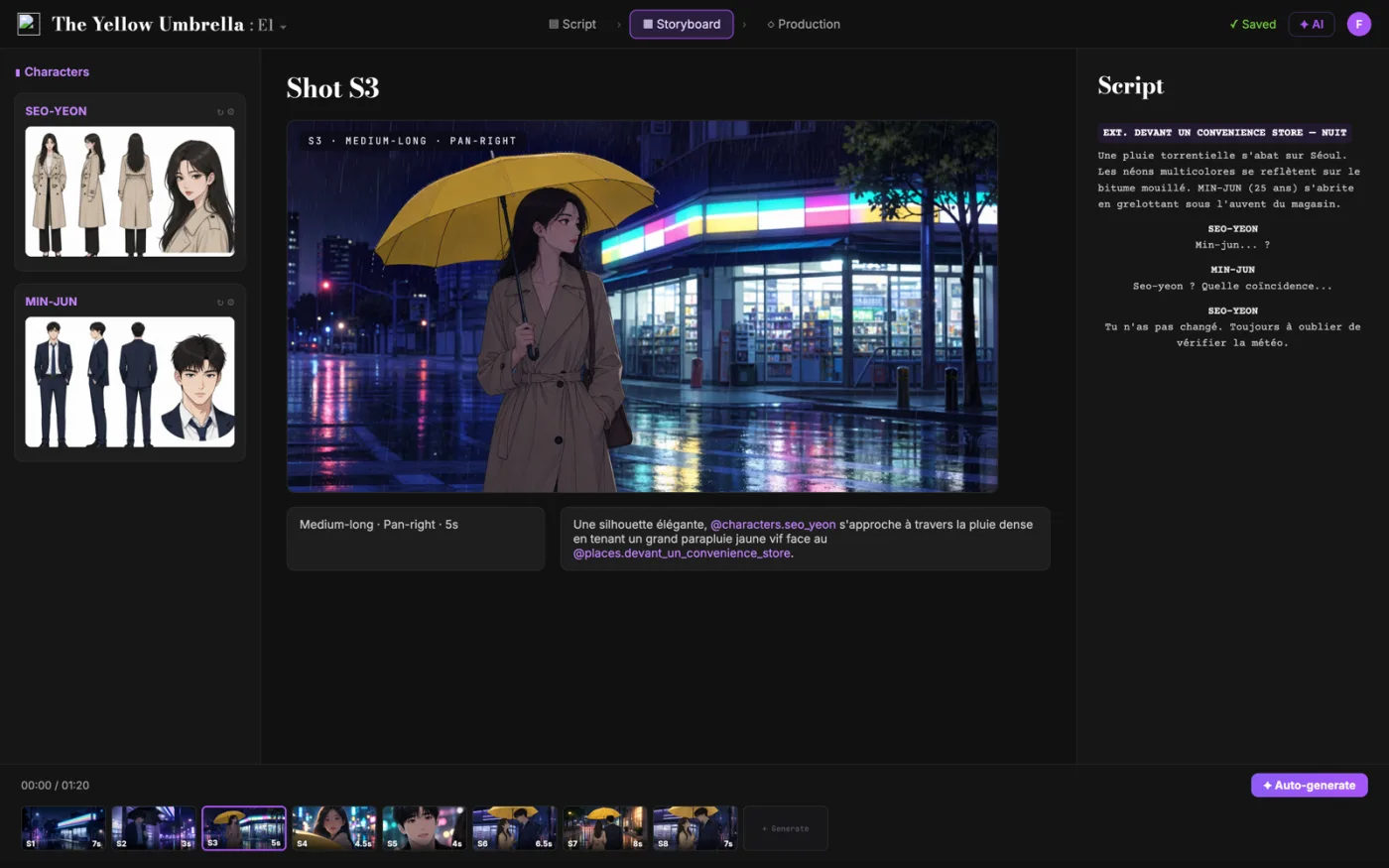
ScreenWeaver แบ่งบทของคุณออกเป็นช็อต แล้วสร้างสตอรีบอร์ดจากบทนั้น คุณกำหนดขนาดภาพ มุมกล้อง การเคลื่อนกล้อง และความยาวได้เอง ตัวละครคงเดิมในทุกช็อต
- 0 ดอลลาร์ ไม่มีวันหมดอายุ
- ส่งออกเป็น PDF และ Final Draft
- Mac, Windows, Linux, iPad
ตัวสร้างแม่แบบสตอรีบอร์ด: คู่มือฉบับเต็ม
มันสร้างแผ่นสตอรีบอร์ด PDF สำหรับพิมพ์ โดยวาดกรอบตามสัดส่วนภาพจริงของคุณ ตั้งแต่ 2.39:1 แบบภาพยนตร์ ไปจนถึง 9:16 แนวตั้ง พร้อมช่องจดแอ็กชันและบทพูดใต้แต่ละกรอบถ้าต้องการ
ในงานแบบนี้ ปัญหาหลักชัดเจนอยู่แล้ว: แม่แบบสตอรีบอร์ดที่ดาวน์โหลดได้ส่วนใหญ่เป็น PDF ตายตัว มีสัดส่วนภาพเดียวและเลย์เอาต์เดียว คนทำจึงวาดกรอบที่ไม่ตรงกับรูปแบบที่จะส่งจริง ถ้าปล่อยไว้ มันจะไปสร้างความติดขัดในขั้นถัดไปและทำให้ตัดสินใจช้าลง เป้าหมายที่จับต้องได้คือ แผ่นสตอรีบอร์ดที่สะอาด พร้อมพิมพ์ ตรงกับสัดส่วนภาพ จำนวนกรอบ และวิธีจดของคุณ
ข้อจำกัดที่ควรจำไว้: มันให้แผ่นเปล่าไว้วาดและวางแผน ไม่ใช่ภาพสำเร็จ ภาพวาด ลูกศร และโน้ตกล้องยังเป็นงานของคุณ
การใช้งานขั้นสูง: ผู้กำกับที่เริ่มจากสตอรีบอร์ดจะพิมพ์แผ่นแบบกว้างไว้ทำเวอร์ชันหนัง และแผ่นแนวตั้งไว้ทำเวอร์ชันโซเชียลของฉากเดียวกัน ทั้งสองการจัดเฟรมจึงถูกวางแผนก่อนถ่าย ไม่ใช่ครอปทีหลัง
วิธีทำทีละขั้น
- เลือกสัดส่วนภาพที่งานของคุณจะออกจริง ไม่ใช่สัดส่วนที่แม่แบบบังเอิญมีมาให้
- เลือกจำนวนกรอบต่อหน้า กรอบน้อยและใหญ่สำหรับบอร์ดหนังที่ละเอียด กรอบมากสำหรับจังหวะแบบงานโฆษณา
- เปิดช่องจดถ้าคุณเขียนแอ็กชันและบทพูดใต้แต่ละกรอบ ปิดถ้าต้องการแค่ภาพย่อ
- ดาวน์โหลด PDF แล้วพิมพ์ตามจำนวนที่ฉากต้องการ หรือสร้างใหม่ทีละซีเควนซ์
ตัวอย่างการใช้งานตามบทบาท
- ผู้กำกับ: ร่างคัฟเวอเรจในกรอบที่ตรงกับสัดส่วนที่จะส่งจริง ไม่ใช่สี่เหลี่ยมกลาง ๆ
- นักศึกษา: ส่งบอร์ดที่ดูเป็นมืออาชีพ โดยไม่ต้องไปสู้กับเครื่องมือตารางในโปรแกรมพิมพ์งาน
- ทีมวิดีโอโซเชียล: วางแผน 9:16 แบบตรง ๆ แทนที่จะครอปบอร์ด 16:9 แล้วเสียพื้นที่เหนือหัว
ข้อผิดพลาดที่พบบ่อย
- วาดบอร์ดใน 4:3 หรือสี่เหลี่ยมกลาง ๆ แล้วมาพบว่าองค์ประกอบพังใน 2.39:1
- ยัดสิบสองกรอบเล็ก ๆ ต่อหน้า ทั้งที่หนังดราม่าเรื่องนี้ต้องการหกกรอบที่อ่านออก
- ไม่ใส่ช่องจด แล้วไปเขียนคำสั่งกล้องตรงขอบกระดาษที่ไม่มีใครอ่านออกที่กอง
แนวปฏิบัติของมืออาชีพ
- บอร์ดหนังอ่านง่ายที่สุดที่ 3 ถึง 6 กรอบต่อหน้า บอร์ดโฆษณาและโซเชียลไปได้ถึง 8 ถึง 12
- ใส่เลขกรอบตามฉากและช็อต (3A, 3B) แผ่นจะยังเรียงได้แม้ถูกสลับที่กอง
- พิมพ์แผ่นเปล่าเพิ่มอีกหนึ่งแผ่นต่อฉาก ไอเดียที่ดีที่สุดมักโผล่ตอนกำลังวาด
ให้ถือว่าผลลัพธ์จากเครื่องมือนี้เป็นตัวช่วยตัดสินใจ ไม่ใช่ตัวแทนการเขียน บทที่ดีถูกจดจำจากการเลือกที่เฉพาะเจาะจง ความแม่นยำทางอารมณ์ และความชัดเจนของการเคลื่อนของเรื่อง เครื่องมือช่วยตัดเสียงรบกวนออก เพื่อให้แรงของคุณไปลงตรงที่สำคัญจริง ๆ คือตัวละคร ความขัดแย้ง การยกระดับ และการจ่ายคืน ถ้าคุณทบทวนผลลัพธ์หลังทุกรอบและจดบันทึกสิ่งที่ยอมรับไว้ วิธีทำงานของคุณจะเร็วขึ้นและคาดเดาได้มากขึ้นจากร่างหนึ่งไปอีกร่างหนึ่ง ความสม่ำเสมอแบบนี้คือสิ่งที่คนทำงานมืออาชีพให้ค่า คือเซอร์ไพรส์น้อยลง เหตุผลชัดขึ้น และบทที่พัฒนาไปอย่างมีเจตนา
คำถามเชิงลึก
สตอรีบอร์ดควรใช้สัดส่วนภาพอะไร
สัดส่วนเดียวกับที่วิดีโอจะออกจริง 16:9 สำหรับ YouTube และทีวี 2.39:1 หรือ 1.85:1 สำหรับงานภาพยนตร์ และ 9:16 สำหรับ TikTok, Reels และ Shorts วาดผิดสัดส่วนจะได้องค์ประกอบที่พังตอนจัดเฟรมใหม่
กี่กรอบต่อหน้าถึงเรียกว่ามาตรฐาน
งานหนังมักใช้ 3 ถึง 6 กรอบต่อหน้า เพื่อให้แต่ละกรอบยังอ่านออก งานโฆษณาและคอนเทนต์โซเชียลที่ตัดเร็วมักใช้ 8 ถึง 12 กรอบเล็กลง เพื่อแสดงจังหวะการตัด
แม่แบบสตอรีบอร์ดนี้ฟรีจริงไหม
ฟรีจริง ตั้งค่าแผ่น ดาวน์โหลด PDF แล้วพิมพ์ ไม่ต้องสมัคร ไม่มีลายน้ำ ทุกอย่างสร้างในเบราว์เซอร์ของคุณ
ทำสตอรีบอร์ดแนวตั้ง 9:16 ได้ไหม
ได้ เลือก 9:16 แล้วตัวสร้างจะวางกรอบแนวตั้งบนหน้ากระดาษแนวตั้ง ขนาดพอดีสำหรับวางแผน TikTok, Reels และ Shorts แทนที่จะยัดเฟรมแนวตั้งลงในกล่องแนวนอน
ใต้แต่ละกรอบควรเขียนอะไร
ช่องมาตรฐานคือเลขช็อต คำบรรยายแอ็กชันหนึ่งบรรทัด บทพูดหรือเสียงประกอบ และโน้ตกล้องอย่างการเคลื่อนหรือเลนส์ พื้นที่จดใต้แต่ละกรอบออกแบบมาเผื่อสิ่งเหล่านี้พอดี
วาดสตอรีบอร์ดบนกระดาษหรือดิจิทัลดี
กระดาษยังเป็นวิธีคิดเป็นช็อตที่เร็วที่สุด โดยเฉพาะภาพร่างเร็ว ๆ ผู้กำกับหลายคนร่างบนแผ่นที่พิมพ์ก่อน แล้วค่อยทำอันที่เก็บไว้ใหม่ในดิจิทัล ที่ซึ่งกรอบเชื่อมกับบทและลิสต์ช็อตได้
คำถามที่พบบ่อย
อัตราส่วนที่วิดีโอสุดท้ายของคุณจะส่งมอบ 16:9 สำหรับ YouTube และทีวี 1.85:1 หรือ 2.39:1 สำหรับงานเชิงภาพยนตร์ 9:16 สำหรับ TikTok, Reels และ Shorts และ 4:3 หรือ 1:1 สำหรับรูปแบบเฉพาะแพลตฟอร์มและงานจดหมายเหตุ
3 ถึง 6 ช่องสำหรับสตอรีบอร์ดหนังที่แต่ละช่องต้องมีรายละเอียดและที่ให้จดโน้ต และ 8 ถึง 12 ช่องสำหรับโฆษณากับคอนเทนต์โซเชียลที่ตัดถี่ ซึ่งจังหวะข้ามการตัดสำคัญกว่ารายละเอียดในแต่ละช่อง
ใช่ ตั้งค่าแผ่น ดาวน์โหลด แล้วพิมพ์กี่ชุดก็ได้ตามต้องการ การสร้างเกิดขึ้นในเบราว์เซอร์ของคุณ ไม่ต้องสมัคร และไม่มีตราสินค้าบนแผ่น
ได้ เลือก 9:16 แล้วตัวสร้างจะวางช่องภาพแนวตั้งบนหน้ากระดาษแนวตั้ง ขนาดพอดีกับรูปแบบ แทนที่จะยัดการจัดเฟรมแนวตั้งลงในกล่องแนวนอน
ชุดมาตรฐาน แอ็กชันหนึ่งบรรทัด บทพูดหรือคิวเสียงถ้ามี และโน้ตเรื่องกล้องอย่างการเคลื่อนกล้องหรือเลนส์ ส่วนหมายเลขช็อตพิมพ์ไว้เหนือแต่ละช่องให้แล้ว
Related tools
ตัวแบ่งฉากเป็นคลิป
แบ่งฉากเป็นคลิปวิดีโอ AI ที่พอดีกับข้อจำกัดความยาวของโมเดลคุณ
ตัวสร้างพรอมป์ตวิดีโอ AI
สร้างพรอมป์ตเชิงภาพยนตร์สำหรับ Veo, Sora, Runway และ Kling
เครื่องคำนวณวันถ่ายทำ
ประเมินว่าบทของคุณต้องใช้กี่วันถ่าย
ตัวสร้างการ์ดฉาก
สร้างและส่งออกการ์ดฉากที่มีโครงสร้าง
You can also browse the full library on /tools.
Core blog guides
- Idea → first draft (process hub)
- Screenplay format guide 2026
- Hidden costs of “free” software
- Affordable software & TCO
- Revision passes (structure → dialogue)
เทคนิคการถ่ายหนัง
เทคนิคภาพยนตร์ที่น่าสำรวจ
แต่ละเทคนิคมีคลิปสั้น ตัวอย่างบทภาพยนตร์ และบรรทัดในช็อตลิสต์