ตัววางแผนคลิปวิดีโอ AI
แบ่งฉากใดก็ได้เป็นคลิปที่พอดีกับข้อจำกัดของโมเดลคุณ
วางฉาก เลือกความยาวคลิปสูงสุดของโมเดลคุณ แล้วตัววางแผนนี้จะแบ่งมันเป็นพรอมป์ตที่มีหมายเลข พร้อมวางได้ทันที และต่อกันเป็นซีเควนซ์เดียวที่ลื่นไหล สร้างมาเพื่อคนทำหนังด้วย AI ที่โมเดลจำกัดอยู่ที่ 8 หรือ 10 วินาที ขณะที่ฉากยาว 45 วินาที
โมเดลข้อความสู่วิดีโอทุกตัวสร้างเป็นช่วงสั้น ๆ Veo 3 สูงสุดราว 8 วินาที ส่วน Sora 2 กับ Kling 2.x ราว 10 วินาที ฉากที่ยาวกว่านั้นมีอยู่ได้ในรูปของสายคลิปที่ใช้บล็อกความต่อเนื่องร่วมกันและส่งต่อสถานะกันในทุกจุดตัด ตัววางแผนจะประเมินเวลาบนจอของแต่ละบีต (แอ็กชันราว 3 คำต่อวินาที บทสนทนาราว 2.5 คำต่อวินาทีที่พูดออกมาบวกอีก 20 เปอร์เซ็นต์เผื่อหายใจ) แล้วจัดบีตที่ต่อเนื่องกันลงในคลิปที่ไม่เกินข้อจำกัดของคุณ
ทุกอย่างทำงานในเบราว์เซอร์ของคุณ ตัวบทฉากของคุณไม่เคยออกจากที่นี่และไม่มีอะไรถูกส่งไปยังเซิร์ฟเวอร์ใด
ค่าตั้งไว้ของแต่ละโมเดลกำหนดแค่จำนวนวินาที ตามข้อจำกัดของโมเดลนั้น ณ ปลายปี 2026
วินาทีต่อคลิปถูกทำซ้ำคำต่อคำที่หัวของทุกพรอมป์ตคลิป ยิ่งเจาะจงเท่าไร ตัวละครกับสถานที่ของคุณก็ยิ่งเพี้ยนข้ามคลิปน้อยลง
ตัวละครแผนคลิปของคุณ
วางฉากของคุณด้านบนเพื่อดูแผนคลิป
วิธีการทำงาน
ตัววางแผนจะซอยฉากของคุณเป็นบีต ทุกประโยคแอ็กชันและทุกช่วงบทสนทนา (บรรทัด ชื่อ: หรือประโยคในเครื่องหมายคำพูด) กลายเป็นหนึ่งบีต มันประเมินวินาทีบนจอของแต่ละบีตด้วยธรรมเนียมจังหวะการอ่าน แอ็กชันราว 3 คำต่อวินาที และบทสนทนาราว 2.5 คำต่อวินาทีที่พูดออกมาบวกอีก 20 เปอร์เซ็นต์เผื่อการหายใจกับปฏิกิริยา จากนั้นจัดบีตที่ต่อเนื่องกันตามลำดับลงในคลิปที่ไม่เกินความยาวสูงสุดของคุณ พรอมป์ตของแต่ละคลิปมีหัวข้อความต่อเนื่องชุดเดียวกัน บรรทัด ENTRY STATE ที่รับมาจาก EXIT STATE ของคลิปก่อนหน้า ตัวบทของบีต และความยาวเป้าหมาย สายคลิปจึงตัดต่อเข้าด้วยกันเป็นฉากเดียว
วิธีแบ่งฉากเป็นคลิปวิดีโอ AI
โมเดลจำกัดความยาวด้วยเหตุผลสองข้อ ต้นทุนการประมวลผลพุ่งสูงตามความยาวคลิป และความสอดคล้องจะเพี้ยนมากขึ้นเมื่อการเจนยาวขึ้น (ใบหน้าบิดเบี้ยว ของเปลี่ยนที่ แสงเลื่อน) นั่นคือเหตุผลที่ไม่มีการตั้งค่าใดทำให้ Veo 3 ยาวเกิน 8 วินาทีหรือทำให้ Sora 2 ยาวขึ้นในรอบเดียว วิธีเดียวที่เชื่อถือได้ในการขยายความยาววิดีโอ AI คือการทำงานหลายคลิป แบ่งฉากเป็นบีต เจนแต่ละคลิปแยกกัน แล้วตัดต่อเข้าด้วยกัน
วิธีการต่อคลิปที่ได้ผลจริงนั้นน่าเบื่อและทำซ้ำได้ ใช้เฟรมสุดท้ายของคลิปหนึ่งเป็นเฟรมแรกของคลิปถัดไปเมื่อโมเดลของคุณรองรับการป้อนภาพ และทำซ้ำคำบรรยายความต่อเนื่องแบบเต็มในทุกพรอมป์ต การเขียนว่า «ตัวละครคนเดิมกับเมื่อกี้» ไม่ช่วยอะไร เพราะโมเดลไม่มีความจำของการเจนครั้งก่อน ส่วนการทำซ้ำว่า «เสื้อกันฝนสีแดง ผมดำสั้น» ช่วยได้ การทำซ้ำนั่นแหละที่รักษาความต่อเนื่องระหว่างคลิป และมันคือสิ่งที่ตัววางแผนควรทำให้อัตโนมัติ
รอยต่อระหว่างคลิปจะหายไปเมื่อคุณตัดบนแอ็กชัน ซึ่งเป็นธรรมเนียมการตัดต่อที่เก่าแก่พอ ๆ กับการตัดต่อแบบต่อเนื่องเอง จบคลิปกลางการเคลื่อนไหว (ประตูที่กำลังเปิด หัวที่กำลังหัน) แล้วเริ่มคลิปถัดไปด้วยการทำการเคลื่อนไหวนั้นให้จบ สายตาคนดูจะข้ามรอยตัดไปเอง บรรทัด EXIT STATE กับ ENTRY STATE ในแต่ละพรอมป์ตมีไว้เตรียมการส่งไม้ต่อเหล่านั้น และมันคือสิ่งที่ทำให้ต่อคลิปจาก Veo 3, Sora 2 หรือ Kling เป็นฉากที่ไหลเป็นชิ้นเดียวได้ แทนที่จะเป็นสไลด์โชว์
เมื่อวางแผนเสร็จแล้ว ปรับภาษากล้องและแสงของแต่ละคลิปด้วย ตัวสร้างพรอมป์ตวิดีโอ AI ฟรีของเรา เพื่อให้ทุกพรอมป์ตในสายพูดไวยากรณ์หนังเดียวกัน
เหมาะกับใคร
- คนทำหนังสั้นด้วย AI ใช้มันเป็นตัววางแผนฉาก เปลี่ยนแต่ละฉากของบทเป็นแผนช็อตที่มีหมายเลขก่อนจะเผาเครดิตการเจน
- คนทำงานคนเดียวบน Veo 3 หรือ Sora 2 เลิกตัดฉากให้เหลือ 8 วินาที แล้วเริ่มวางแผนการต่อคลิปด้วยสถานะเข้าและออกที่ตัดต่อเข้ากันได้จริง
- เอเจนซีและทีมโซเชียล บรีฟโฆษณา 30 วินาทีเป็นสายคลิปที่ทั้งทีมอ่านได้ โดยล็อกความต่อเนื่องไว้ก่อนการเจนครั้งแรก
เริ่มจากบทภาพยนตร์แล้วได้สตอรีบอร์ด
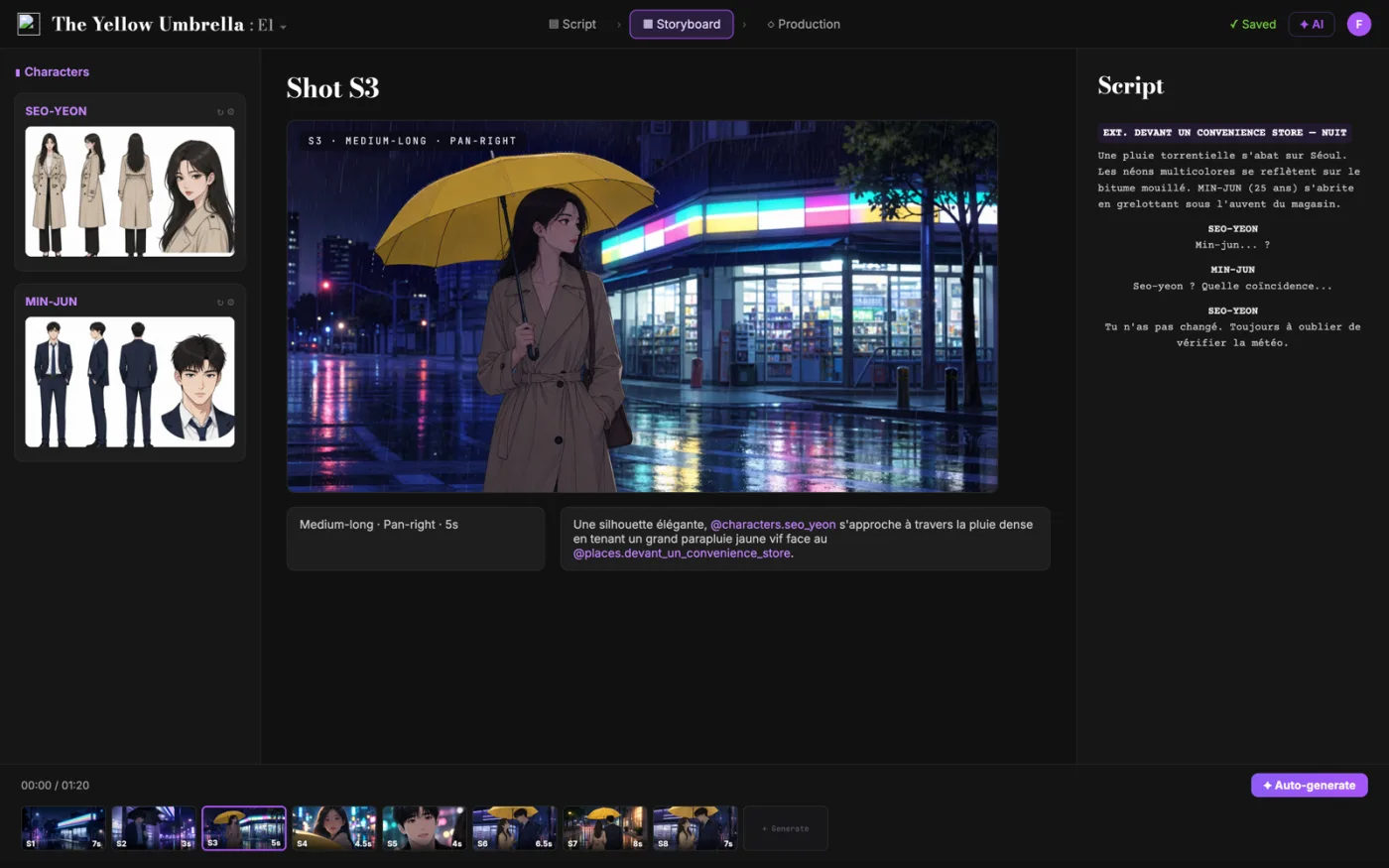
ScreenWeaver แบ่งบทของคุณออกเป็นช็อต แล้วสร้างสตอรีบอร์ดจากบทนั้น คุณกำหนดขนาดภาพ มุมกล้อง การเคลื่อนกล้อง และความยาวได้เอง ตัวละครคงเดิมในทุกช็อต
- 0 ดอลลาร์ ไม่มีวันหมดอายุ
- ส่งออกเป็น PDF และ Final Draft
- Mac, Windows, Linux, iPad
ตัวแบ่งฉากเป็นคลิป: คู่มือฉบับเต็ม
มันตัดฉากที่วางไว้เป็นบีต ประมาณวินาทีบนจอของแต่ละบีตจากจำนวนคำ จัดบีตเข้าคลิปให้อยู่ใต้ความยาวสูงสุดของคุณ แล้วเขียนพรอมป์ที่พร้อมวางหนึ่งชุดต่อหนึ่งคลิป พร้อมหัวเรื่องความต่อเนื่องที่เหมือนกันทุกคลิป
ในงานแบบนี้ ปัญหาหลักชัดเจนอยู่แล้ว: โมเดลข้อความเป็นวิดีโอจำกัดการเจนไว้ที่ 8 ถึง 12 วินาที ฉากเต็มจึงต้องวางแผนเป็นสายคลิป และการทำเองด้วยมือทำให้ความต่อเนื่องกับการคิดเวลาบนจอหลุดหาย ถ้าปล่อยไว้ มันจะไปสร้างความติดขัดในขั้นถัดไปและทำให้ตัดสินใจช้าลง เป้าหมายที่จับต้องได้คือ แผนคลิปที่ใส่เลขไว้ พร้อมพรอมป์รายคลิป สถานะเข้าและออกที่ต่อกัน และเวลาประมาณที่ไม่เกินเพดานของโมเดล
ข้อจำกัดที่ควรจำไว้: จังหวะที่คิดจากจำนวนคำเป็นการประมาณ ไม่ใช่การจับเวลา การแสดง ความเร็วกล้อง และการตีความของโมเดลทำให้เวลาจริงขยับ ให้ถือเวลาของคลิปเป็นเป้าสำหรับวางแผน และเผื่อไว้ว่าต้องตัดในขั้นตัดต่อ
การใช้งานขั้นสูง: ผู้ใช้ระดับสูงจะจับคู่พรอมป์แต่ละคลิปกับการใช้เฟรมสุดท้ายเป็นเงื่อนไข คือเจนคลิป 1 ส่งออกเฟรมสุดท้าย ป้อนเป็นภาพเริ่มของคลิป 2 และรักษาหัวเรื่องความต่อเนื่องที่เขียนไว้ให้เหมือนเดิม โมเดลจะได้มีทั้งหมุดทางภาพและหมุดทางข้อความ
วิธีทำทีละขั้น
- วางข้อความของฉากรวมบทพูด แล้วเลือกพรีเซ็ตของโมเดลหรือกำหนดความยาวสูงสุดเอง
- กรอกบล็อกความต่อเนื่องด้วยหน้าตาตัวละครที่แน่นอน สถานที่ แสง และสไตล์ เพราะมันจะถูกซ้ำในทุกพรอมป์
- ไล่ดูการ์ดของแต่ละคลิป เช็กเวลา ดูคำเตือนที่เกินเพดาน และปรับบีตที่ตัดออกมาไม่สวย
- คัดลอกพรอมป์ทีละคลิป (หรือส่งออกเป็น .txt) เจนตามลำดับ แล้วตัดผลลัพธ์ต่อกันบนบีตแอ็กชัน
ตัวอย่างการใช้งานตามบทบาท
- คนทำหนังสั้น AI: เปลี่ยนฉากในบทเป็นแผนการเจนทีละช็อตก่อนจะเสียเครดิต
- ครีเอเตอร์เดี่ยวบน Veo 3: วางสายคลิป 8 วินาทีที่ส่งต่อกันด้วยการตัดบนแอ็กชัน แทนที่จะรีเซ็ตแบบสะดุด
- หัวหน้าทีมโซเชียล: บรีฟงานยาว 30 วินาทีเป็นสายคลิปที่อ่านเข้าใจ พร้อมล็อกความต่อเนื่องไว้ตั้งแต่ต้น
ข้อผิดพลาดที่พบบ่อย
- เขียนว่า 'ตัวละครเดิมกับเมื่อกี้' แทนที่จะเขียนคำบรรยายเต็มซ้ำ ซึ่งโมเดลจำไม่ได้
- อัดคลิปให้ชนเพดานพอดีโดยไม่เหลือหาง พอเจนแล้วสั้นกว่าที่คิดก็ไม่มีอะไรให้ตัด
- ตัดกลางประโยคของบทพูด ซึ่งทำให้การเข้าปากและความต่อเนื่องของการแสดงแทบเป็นไปไม่ได้
แนวปฏิบัติของมืออาชีพ
- วางคลิปให้ต่ำกว่าเพดานหนึ่งถึงสองวินาที ทุกการเจนจะได้มีที่ให้ตัดในขั้นตัดต่อ
- จบคลิปกลางการเคลื่อนไหวแล้วเริ่มคลิปถัดไปด้วยการทำให้จบ การตัดบนแอ็กชันช่วยกลบรอยต่อระหว่างสองการเจน
- เก็บบล็อกความต่อเนื่องหลักไว้หนึ่งชุดต่อโปรเจกต์ แล้ววางแบบไม่แก้อะไรในทุกฉากที่คุณแบ่ง
ให้ถือว่าผลลัพธ์จากเครื่องมือนี้เป็นตัวช่วยตัดสินใจ ไม่ใช่ตัวแทนการเขียน บทที่ดีถูกจดจำจากการเลือกที่เฉพาะเจาะจง ความแม่นยำทางอารมณ์ และความชัดเจนของการเคลื่อนของเรื่อง เครื่องมือช่วยตัดเสียงรบกวนออก เพื่อให้แรงของคุณไปลงตรงที่สำคัญจริง ๆ คือตัวละคร ความขัดแย้ง การยกระดับ และการจ่ายคืน ถ้าคุณทบทวนผลลัพธ์หลังทุกรอบและจดบันทึกสิ่งที่ยอมรับไว้ วิธีทำงานของคุณจะเร็วขึ้นและคาดเดาได้มากขึ้นจากร่างหนึ่งไปอีกร่างหนึ่ง ความสม่ำเสมอแบบนี้คือสิ่งที่คนทำงานมืออาชีพให้ค่า คือเซอร์ไพรส์น้อยลง เหตุผลชัดขึ้น และบทที่พัฒนาไปอย่างมีเจตนา
คำถามเชิงลึก
ทำไมโมเดลวิดีโอ AI ถึงจำกัดคลิปไว้ที่ 8 หรือ 10 วินาที
สองเหตุผล ต้นทุนการประมวลผลเพิ่มขึ้นเร็วมากตามความยาว และความสอดคล้องตามเวลาจะเพี้ยนมากขึ้นเมื่อการเจนยาวขึ้น หน้าตาและอุปกรณ์จึงกลายร่าง เพดานสั้นช่วยรักษาคุณภาพ นี่คือเหตุผลที่ฉากยาวถูกสร้างเป็นสายคลิปแทน
วิธีวางแผนทั้งฉากเป็นคลิปที่ดีที่สุดคืออะไร
แบ่งฉากเป็นบีต จัดบีตเข้าคลิปให้อยู่ใต้เพดานของโมเดล ซ้ำบล็อกความต่อเนื่องชุดเดียวในทุกพรอมป์ ต่อสถานะเข้าและออกให้เป็นสาย แล้วเจนตามลำดับ เครื่องมือนี้ทำการแบ่ง การคิดเวลา และการประกอบพรอมป์ให้อัตโนมัติ
การต่อเฟรมสุดท้ายไปเฟรมแรกทำงานยังไง
คุณส่งออกเฟรมสุดท้ายของคลิป N แล้วป้อนให้คลิป N+1 เป็นภาพเริ่ม ในโมเดลที่รองรับ เมื่อใช้คู่กับบล็อกความต่อเนื่องที่ซ้ำเป็นข้อความ มันจะยึดตัวละคร เสื้อผ้า และแสง ไว้ทั้งสองฝั่งของรอยตัด
ใช้กับ Kling หรือ Runway แทน Veo ได้ไหม
ได้ พรีเซ็ตแค่ตั้งค่าวินาทีสูงสุด (10 วินาทีสำหรับ Kling 2.x และ Runway Gen-4 ณ ปลายปี 2026) พรอมป์เป็นข้อความธรรมดา จึงวางลงช่องพรอมป์ของโมเดลไหนก็ได้
ความยาวคลิปถูกประมาณจากข้อความยังไง
แอ็กชันประมาณที่ราว 3 คำต่อหนึ่งวินาทีของเวลาบนจอที่นึกเห็น และบทพูดประมาณที่ราว 2.5 คำต่อหนึ่งวินาทีที่พูด บวกหาง 20 เปอร์เซ็นต์ บีตมีขั้นต่ำ 1 วินาที และคลิปไม่มีทางเกินเพดานของคุณ
ถ้าบีตเดียวยาวเกินเพดานต้องทำยังไง
เครื่องมือจะตัดที่ขอบคำและติดธงคลิปที่ได้รับผลกระทบ ทางแก้ที่ดีกว่าคือเขียนใหม่ ให้แบ่งบีตยาวนั้นเป็นสองแอ็กชันที่มีจุดตัดตามธรรมชาติ แล้วรันการแบ่งอีกครั้ง
คำถามที่พบบ่อย
ในการเจนครั้งเดียวทำไม่ได้ วิธีคือแบ่งฉากเป็นคลิปที่ยาวไม่เกิน 8 วินาที ทำซ้ำบล็อกความต่อเนื่องชุดเดิมในทุกพรอมป์ต ป้อนเฟรมสุดท้ายของแต่ละคลิปเป็นเฟรมแรกของคลิปถัดไปเมื่อทำได้ แล้วตัดต่อผลลัพธ์เข้าด้วยกัน ตัววางแผนนี้สร้างสายคลิปนั้นให้คุณ
ราว 24 คำสำหรับแอ็กชัน (ที่ราว 3 คำต่อวินาที) หรือราว 16 คำสำหรับบทสนทนาที่พูดออกมา (ที่ราว 2.5 คำต่อวินาทีบวกอีก 20 เปอร์เซ็นต์เผื่อการหายใจกับปฏิกิริยา) นั่นคือเหตุผลที่ฉากครึ่งหน้าต้องใช้หลายคลิป
เพราะการเจนแต่ละครั้งเริ่มจากศูนย์ โมเดลไม่มีความจำของคลิปก่อนหน้าคุณ ทางแก้คือทำซ้ำคำบรรยายตัวละครและสถานที่แบบเต็มคำต่อคำในทุกพรอมป์ต ซึ่งเป็นสิ่งที่หัวข้อความต่อเนื่องในการ์ดของแต่ละคลิปทำอยู่
มันต่อคลิปเข้าด้วยกัน EXIT STATE ของแต่ละคลิปบรรยายเฟรมสุดท้าย และ ENTRY STATE ของคลิปถัดไปทำซ้ำมัน โมเดลจึงเริ่มจากจุดที่คลิปก่อนหน้าจบ ถ้าโมเดลของคุณรับภาพเริ่มต้นได้ ให้จับคู่สิ่งนี้กับการป้อนเฟรมสุดท้ายของคลิปก่อนหน้าเข้าไปด้วย
ข้อจำกัดของโมเดลคุณคือเพดาน 8 วินาทีสำหรับ Veo 3 ราว 10 วินาทีสำหรับ Sora 2, Kling 2.x และ Runway Gen-4 ณ ปลายปี 2026 คนทำหนังหลายคนตั้งใจวางแผนคลิปให้สั้นกว่านั้น (4 ถึง 6 วินาที) เพราะการเจนสั้น ๆ เพี้ยนน้อยกว่าและให้จุดตัดในการตัดต่อมากกว่า
Related tools
ตัวสร้างพรอมป์ตวิดีโอ AI
สร้างพรอมป์ตเชิงภาพยนตร์สำหรับ Veo, Sora, Runway และ Kling
แผ่นคุมความคงเส้นคงวาของตัวละคร AI
สร้างบล็อกตัวละครที่ใช้ซ้ำได้ เพื่อกันตัวละครเพี้ยนข้ามคลิป
พรอมป์ตการเคลื่อนกล้อง
คลังการเคลื่อนกล้องแบบเคลื่อนไหวพร้อมพรอมป์ตให้คัดลอก
ตัวสร้างแบบฟอร์มสตอรีบอร์ด
สร้างแผ่นสตอรีบอร์ดพร้อมพิมพ์ในอัตราส่วนภาพใดก็ได้
You can also browse the full library on /tools.
Core blog guides
- Idea → first draft (process hub)
- Screenplay format guide 2026
- Hidden costs of “free” software
- Affordable software & TCO
- Revision passes (structure → dialogue)
เทคนิคการถ่ายหนัง
เทคนิคภาพยนตร์ที่น่าสำรวจ
แต่ละเทคนิคมีคลิปสั้น ตัวอย่างบทภาพยนตร์ และบรรทัดในช็อตลิสต์