
A character says, “I’m fine.”
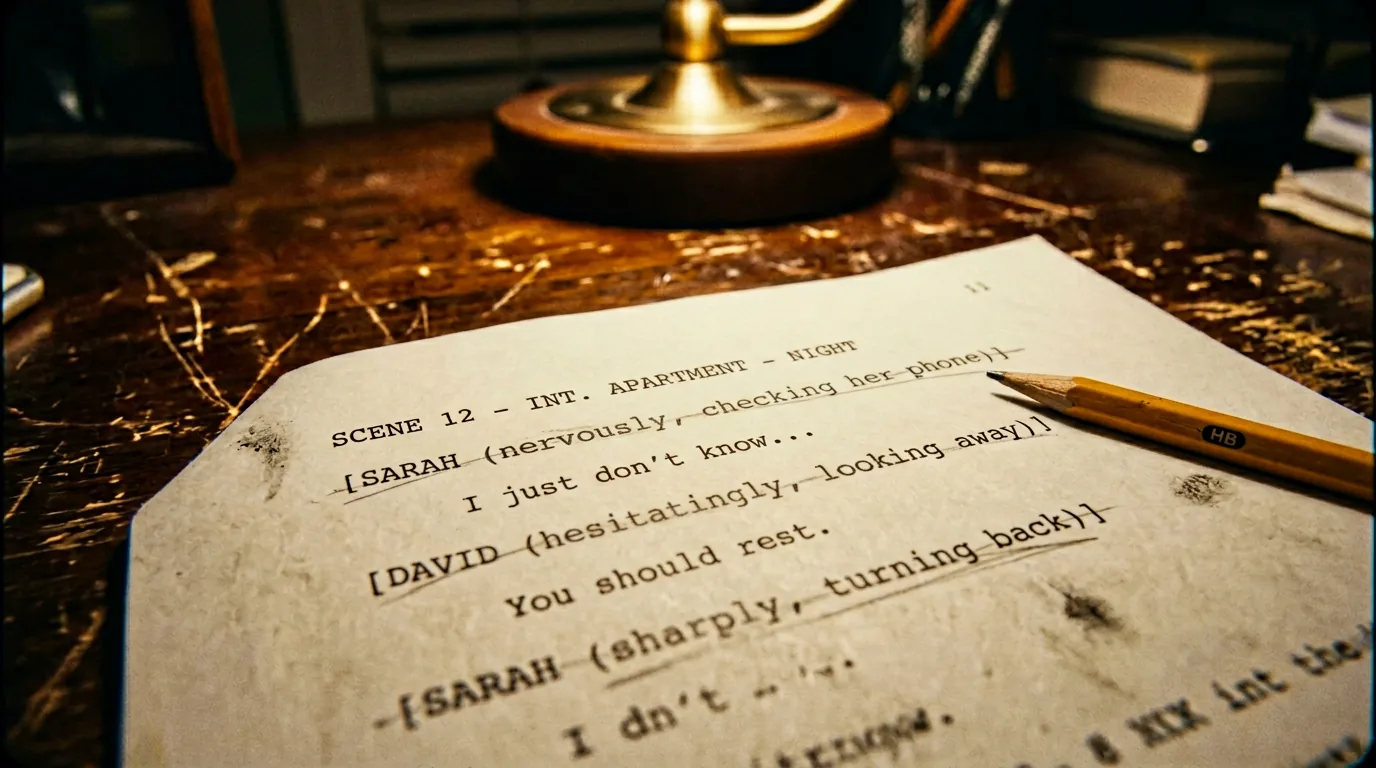
Under it, the writer adds (angry). Then another line, (sarcastic). Then (beat). Then (trying not to cry). Then (whispers). Then (more intensely). By page twelve, the dialogue reads like a traffic report.
You can feel the fear behind it. The writer is trying to protect intention.
But there is a hidden cost.
When parentheticals multiply, two bad things happen at once: actors feel managed instead of trusted, and readers feel the rhythm of the page choke. Dialogue should feel like live current. Overused parentheticals make it feel like a script with the parking brake on.
Here’s why that matters: in professional reads, page flow is not decoration. It is persuasion. If your dialogue block looks overcontrolled, readers infer overcontrol in your storytelling instincts too. Fair or not, that inference happens fast.
Parentheticals are not the villain. They are a precision tool. Used sparingly, they prevent misread intention, protect story logic, and save a scene from tonal derailment. Used constantly, they signal weak subtext and mistrust of performance.
Think about it this way: adding a parenthetical should feel like adding salt to food. Necessary in moments. Catastrophic as a habit.
This guide goes deep into the craft, workflow, and repair process for parenthetical overuse. Not generic “use fewer.” You will get the technical diagnosis, scene-level rewrites, and a trench-level breakdown of where beginners usually lose control.
Cinematic workflow frames
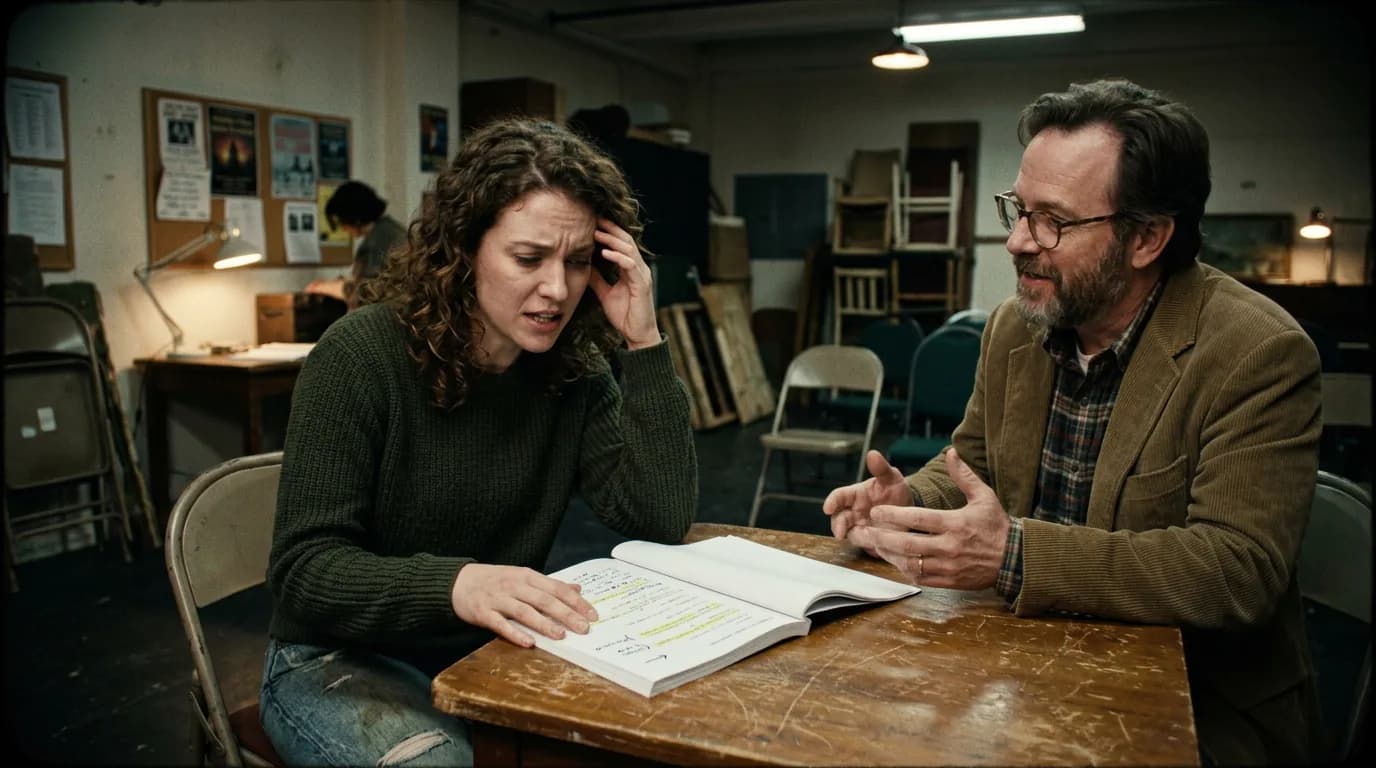
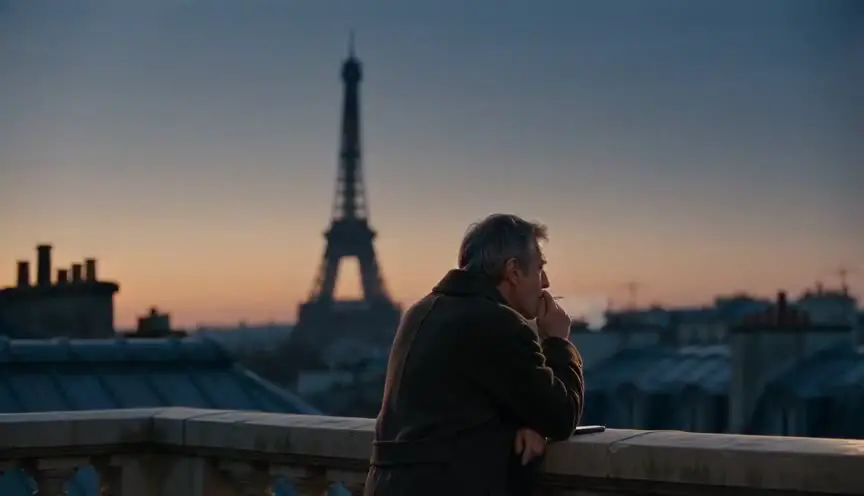
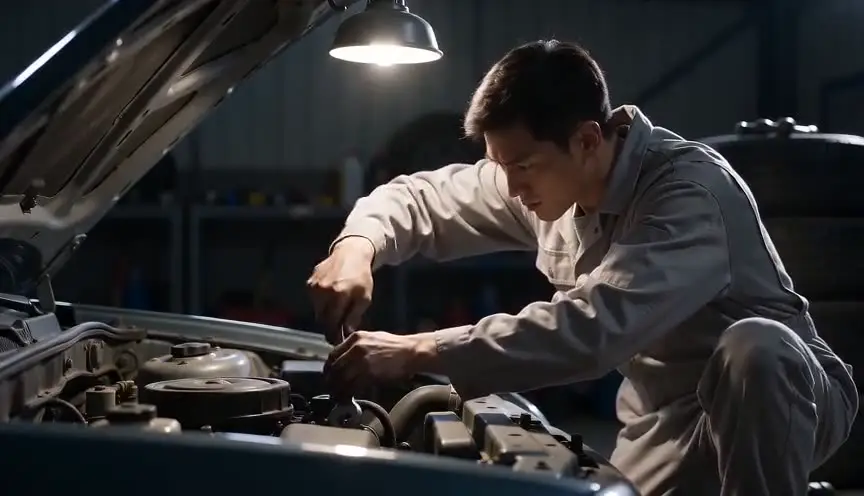
These two visuals work as a pair: the first shows Cinematic workflow still, first angle, 35mm film grain, and the second shifts to Cinematic workflow still, second angle, 35mm film grain - compare them briefly, then move on.
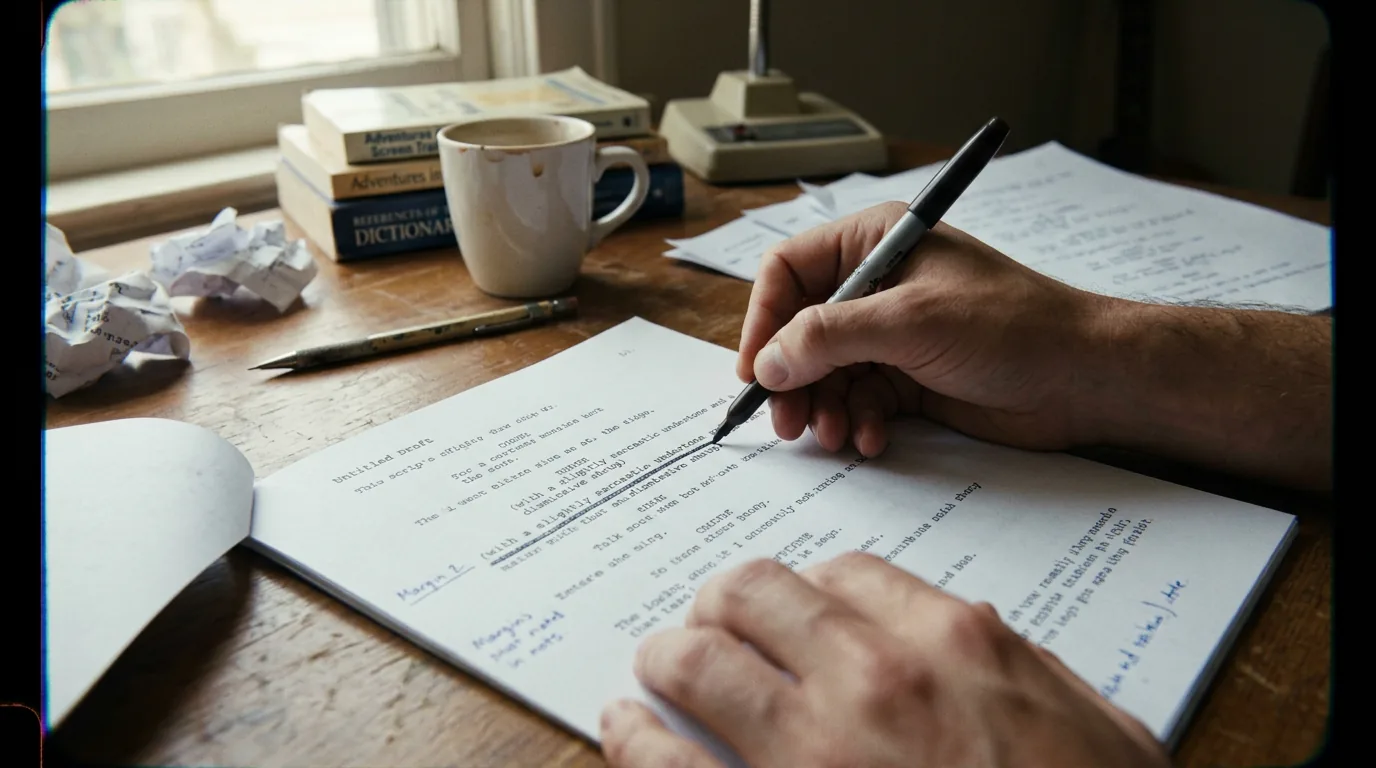
What Parentheticals Are Actually For
Most writers learn a simplistic rule early: avoid parentheticals. That rule is useful as a guardrail, but it is incomplete.
Parentheticals exist to disambiguate intention where ambiguity would produce a wrong read that harms story meaning. That’s it.
If the line “Nice work” could be sincere, passive-aggressive, devastated, flirtatious, or terrified, a parenthetical may be justified only when one specific interpretation is required for plot or character continuity in that moment.
If the scene already communicates intention through context, stakes, and preceding action, the parenthetical is often redundant.
This is the key shift advanced writers make: they stop asking “Can I add one?” and start asking “What breaks if I remove it?”
If nothing breaks, cut it.
Why Beginners Overuse Parentheticals
The impulse is rarely vanity. It is usually anxiety.
A beginner worries the reader will not “get it,” so they explain the delivery manually. They do not trust subtext yet. They do not trust scene design yet. They do not trust silence yet.
That insecurity produces clutter that looks like control.
But there’s a catch: explanatory parentheticals do not compensate for weak setup. They only postpone the underlying craft problem.
When intention is unclear, the fix usually lives upstream: better objective, clearer power shift, stronger contradiction in action, or a more specific line choice.
Parenthetical overuse is often a symptom, not the disease.
If you need to label every line’s emotion, your scene is carrying information but not force.
The Fast Diagnostic: Harmless vs Harmful Parentheticals
Not all parentheticals are equal. Some are operationally essential.
A practical way to diagnose is to separate parentheticals into four classes: physical mechanics, vocal mechanics, intention correction, and emotional instruction.
Physical mechanics can be necessary. (into phone), (to guard), (re: file) in dense multi-character moments can prevent confusion.
Vocal mechanics can be useful in rare precision moments. (whispering) may matter if nearby characters must not hear key information.
Intention correction may be valid if a line would otherwise be misread in a way that breaks causal logic.
Emotional instruction is where most overuse happens. (angry), (sad), (hurt), (frustrated) line after line becomes directing from the page and weakens readability.
Craft Comparison Table
| Parenthetical Type | Typical Example | Keep or Cut Tendency | Why |
|---|---|---|---|
| Physical targeting | (to Maya) | Usually keep in crowded scenes | Clarifies addressee and prevents dialogue confusion |
| Essential vocal condition | (whispering) | Keep only if plot-dependent | Affects who can hear and what happens next |
| Timing marker | (beat) | Use rarely | Useful for rhythm pivots, noisy if repeated |
| Emotional label | (angry) | Usually cut | Better carried by context, action, and word choice |
| Adverbial delivery | (sarcastically) | Usually cut | Often duplicates what line content already implies |
| Performance micromanage | (more broken now, trying to smile through rage) | Cut and rewrite scene | Signals insecure control rather than clear dramatic design |
Three Realistic Beginner Scenarios
Scenario 1: The Courtroom Scene That Reads Like Stage Directions
A new writer drafts a cross-examination sequence. The prosecutor has urgency, the witness has fear, the defense has strategic contempt. Great ingredients.
On page, every single line has a parenthetical: (confident), (coldly), (defensive), (annoyed), (raising voice), (cuts in), (smirks). The rhythm dies.
What went wrong? The writer tried to encode emotional movement line by line instead of designing power movement beat by beat.
Fixing it means extracting the emotional labels, then rebuilding the scene around tactical shifts. Give the prosecutor a specific trap question. Give the witness a visible physical tell in action lines. Give the defense one strategic interruption point that changes momentum.
Now the scene carries force without emotional subtitles under each line.
Scenario 2: The Romantic Argument That Needs Less “(beat)” and More Stakes
Another common one: two lovers arguing at 2 a.m. The writer uses (beat) every three lines to manufacture tension pauses.
It reads mechanical because pauses are not tension by themselves. Stakes and contradiction are tension.
The repair pass removes 80% of (beat) tags and introduces concrete action friction: one character packs a bag while insisting they are staying. The other keeps asking about a text message but avoids the one question that matters.
Suddenly silence becomes loaded because the scene has pressure, not because the page says “beat.”
Scenario 3: The Thriller Interrogation That Overlabels Tone
In an interrogation scene, a detective alternates charm and threat. The writer marks nearly every line with (friendly) or (hard) to force tonal contrast.
But tonal contrast should be legible in behavior and lexical choice.
When the detective says, “Would you like water?” immediately followed by “You can still walk out of here clean if we move now,” tone is already clear. Marking both lines with delivery notes is redundant.
The cleaner version keeps one parenthetical where needed, maybe (quietly) before a line that should land as unnerving calm, and lets the rest of the sequence breathe.
How to Fix Parenthetical Overuse Step by Step
You need a method, not vibes. Here is the workflow that works in professional rewrite conditions.
Step 1: Run a Parenthetical Count Pass
Before rewriting anything, count them.
In most screenwriting software, you can search for ( within dialogue blocks and quickly assess concentration by page range. You are not hunting a perfect number. You are hunting density spikes.
If you see 20+ parentheticals in ten pages of dialogue-heavy material, you likely have a control problem.
Step 2: Classify Every Parenthetical by Function
Create a temporary margin note system: PHYS, VOCAL, INTENT, EMO.
This classification reveals patterns. Many scripts show 60-80% emotional labels. That is your rewrite target.
Do not cut blindly yet. Label first. Diagnosis before surgery.
Step 3: Delete All Emotional Labels in a Duplicate Draft
Make a clean duplicate and remove all EMO parentheticals in one pass.
Yes, all of them.
This feels terrifying and is exactly why it works. It forces you to confront whether the scene architecture carries meaning without crutches.
Step 4: Repair Meaning Through Action and Line Specificity
Now rewrite only where meaning becomes genuinely ambiguous.
If sarcasm disappeared, sharpen lexical contrast.
If grief disappeared, place one physical action in the line’s orbit.
If intimidation disappeared, alter objective pressure and turn design.
The goal is to put intention back into the scene itself, not beneath dialogue as instruction.
Step 5: Reinsert Only Mission-Critical Parentheticals
After repair, add back only parentheticals that prevent a harmful misread.
Not “better read.” Harmful misread.
Common valid reinserts include addressing confusion in multi-character exchanges, critical whisper volume in surveillance scenes, and one timing marker before a line that inverts the scene’s power balance.
Step 6: Run a Read-Aloud With Two Actors (or Two Friends)
No table read, no certainty.
Have two people read the scene cold. Ask what intention they inferred at each turn. If they land close to what you intended without heavy parenthetical scaffolding, your rewrite is working.
Step 7: Lock a House Rule for the Project
Set a private standard like this: “No emotional parenthetical unless removal causes objective story confusion.”
A rule like that stops drift during late rewrites when deadline stress tempts you to annotate performance instead of strengthening scene logic.
Try it free
Try Screenweaver for free on your script
It is free. Import your existing project, get a clearer view of your outline, and regain control of your story structure in minutes.
Start FreeBody Image: Rewrite Mechanics Snapshot
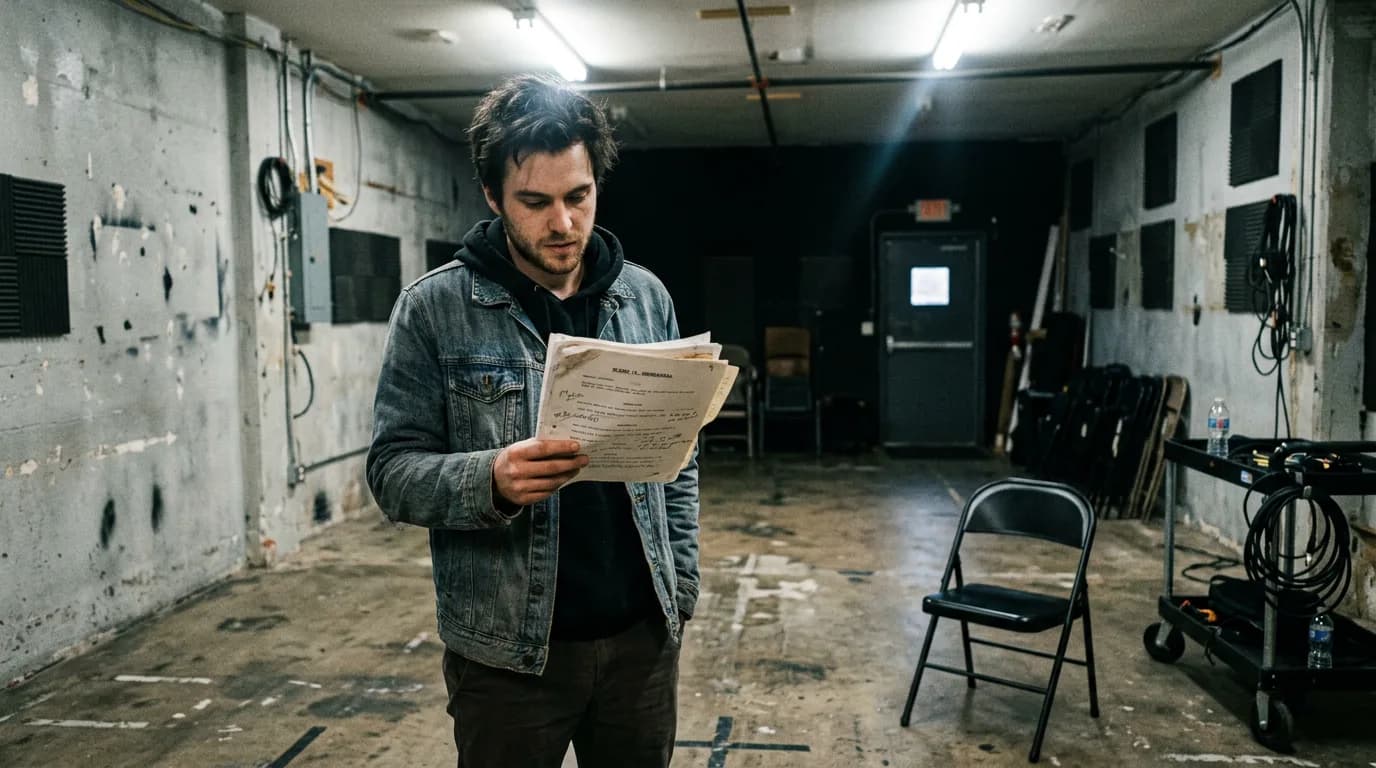
The Trench Warfare Section: What Beginners Get Wrong and How to Correct It Precisely
This is where scripts usually stall in development notes.
Mistake 1: Treating Parentheticals as Emotional Insurance
Writers fear emotional misfire, so they insure every line with a label.
Fix: identify where scene context already carries emotion. If previous action and objective conflict make the tone obvious, cut the label. Save parentheticals for genuinely ambiguous turns.
Mistake 2: Writing Generic Dialogue Then Forcing Specific Delivery
A weak line plus (furious) is still a weak line.
Fix: rewrite the line to embody fury through lexical choice, syntax pressure, or tactical threat. Let the language do the acting work.
Mistake 3: Using (beat) as a Substitute for Scene Rhythm
Frequent (beat) tags create metronome writing. Predictable, lifeless.
Fix: engineer rhythm through interruption, unfinished thoughts, redirected objectives, and action collisions. Pause markers become rare punctuation, not tempo control.
Mistake 4: Micromanaging Actors Instead of Writing Playable Intent
Long parentheticals describing inner psychology can feel like prose notes pasted under dialogue.
Fix: give actors playable verbs through scene design: provoke, evade, bait, confess, deflect. If the intent is playable, less annotation is needed.
Mistake 5: Forgetting Reader Eye Fatigue
Dense dialogue with constant parenthetical inserts creates visual drag. Coverage readers feel this before they can articulate it.
Fix: prioritize clean vertical flow. Keep dialogue blocks readable. Use action lines to externalize emotional turns so eye movement stays dynamic.
Mistake 6: Keeping Parentheticals Added During Panic Drafts
Many are inserted in sprint mode and never audited.
Fix: make parenthetical audit a mandatory pass between structure rewrite and dialogue polish. Treat it like continuity check, not optional grooming.
Mistake 7: Confusing Clarification With Overexplanation
A targeted (to Sam) can save clarity. (angrily, through gritted teeth, trying to maintain control) often overexplains what the line and context should already imply.
Fix: if clarification is needed, use the shortest form that solves the ambiguity.
Mistake 8: Ignoring Genre Differences While Copying Rules Blindly
Comedy, thriller, and period drama do not carry dialogue pressure the same way. Parenthetical tolerance varies by scene function.
Fix: calibrate by effect, not dogma. In fast farce, occasional targeting parentheticals may preserve timing. In psychological drama, overlabeling often kills subtext.
Mistake 9: Not Distinguishing “Reader Draft” vs “Production Draft” Needs
Writers sometimes defend cluttered parentheticals by saying directors need detail.
Fix: first job is readable story transmission. Production nuance can be handled later in collaboration. Spec readability comes first unless you are already in a production-specific context demanding technical annotation.
Mistake 10: Refusing to Test the Scene Without Parentheticals
Some writers never run the naked scene test.
Fix: force the experiment. Remove them all in one duplicate draft and read aloud. You will instantly see where craft carries and where annotation was compensating.
The strongest dialogue scenes usually need fewer parentheticals than the writer’s first instinct allows.
How Parenthetical Discipline Improves Actor Collaboration
Actors are pattern readers. When every line is tagged, they perceive low trust.
That does not mean actors hate all parentheticals. They appreciate precision when it protects crucial interpretation.
The difference is proportion.
One targeted parenthetical can feel like useful partnership. Fifteen in a page can feel like a performance cage.
If your script invites actors into subtext rather than dictating each beat, they often bring richer, less predictable choices that still honor your intended arc.
That is not surrendering control. It is choosing the level of control that preserves vitality.
Where Parentheticals Are Legitimately Helpful
Let’s be honest: there are contexts where parentheticals prevent expensive misunderstanding.
In multi-party dialogue where addressee confusion would break logic, short target markers are practical.
In low-audio scenes where volume affects plot mechanics, a sparse vocal marker can protect causality.
In irony-dependent lines where the literal reading inverts meaning, one intention correction may be warranted if context alone cannot carry it.
The test stays the same: does this line-level note prevent a material misread, or merely reassure the writer?
If it only reassures you, cut it.
Body Image: Actor-Friendly Script Design
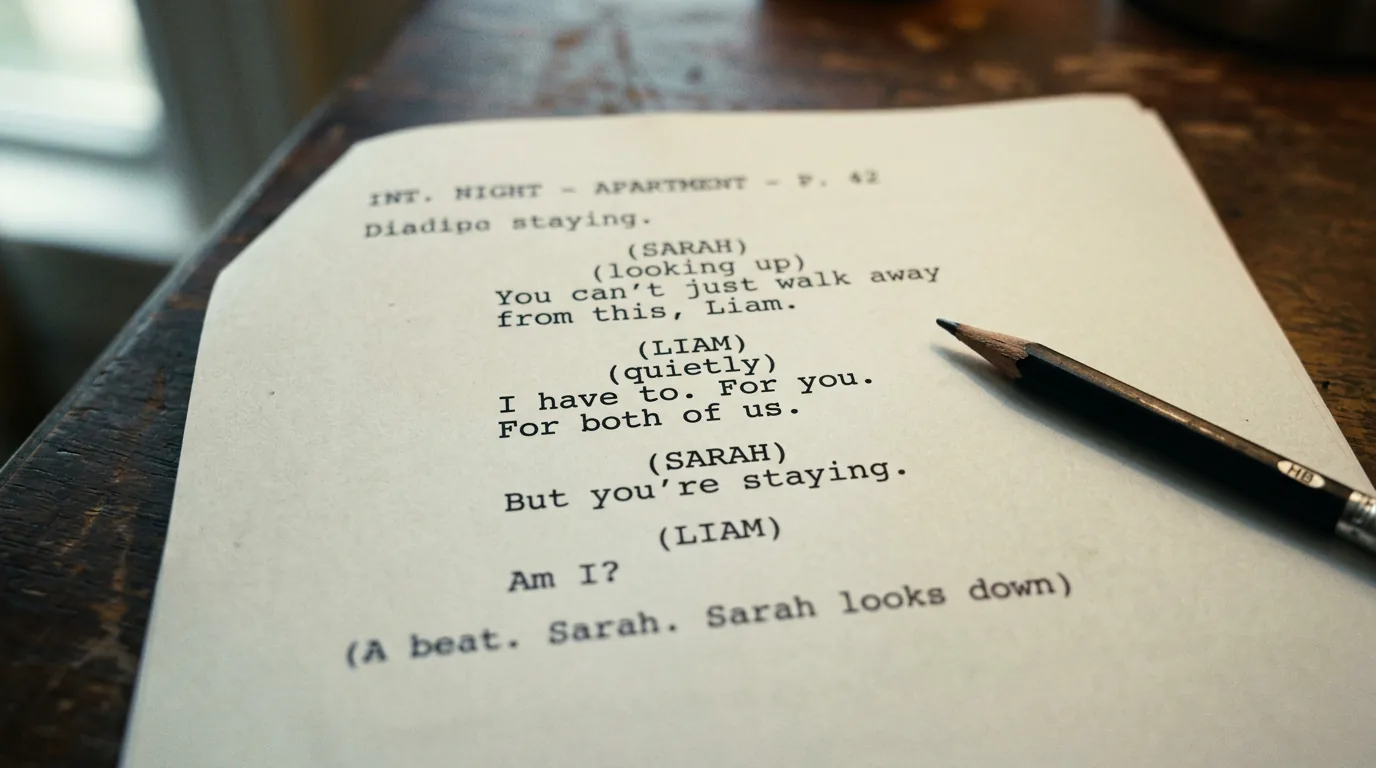
A YouTube Breakdown That Belongs Here
A Practical Rewrite Drill You Can Run Tonight
Take one five-page dialogue sequence from your current draft. Duplicate it.
Remove all emotional parentheticals. Leave only physical targeting and plot-critical vocal conditions.
Now read both versions out loud, alternating page by page.
Version A will probably feel controlled.
Version B, if well-repaired, should feel alive.
If B falls apart, that is useful data. It means your scene is underbuilt in objective conflict or subtext architecture. Repair there, not with extra labels.
For professional script presentation baseline references, the <a href="https://www.oscars.org/nicholl/about" rel="nofollow">Academy Nicholl Fellowship resources</a> are a practical benchmark for readable spec habits, though your biggest gains will come from scene engineering, not cosmetic formatting debates.
As discussed in our guide on [how to write an argument scene without repetitive dialogue], conflict movement at the objective level usually solves problems writers try to patch with delivery notes.
You can also cross-reference [screenplay formatting for whispered dialogue and hushed scenes] when volume mechanics truly matter to plot logic.
And if your issue is page density and readability, the same clean-page principles in [micro-pacing and white space in action lines] apply directly to dialogue formatting.
The Ending Perspective: Trust the Scene, Not the Label
Parentheticals are not forbidden.
They are expensive.
Each one spends a bit of reader attention, a bit of actor latitude, and a bit of page momentum. Spend that currency with intent.
When writers overuse parentheticals, they are often trying to secure the emotional meaning of a scene at line level. The irony is brutal: the more they secure, the less alive the scene feels.
Great dialogue scenes do not succeed because every feeling is labeled. They succeed because objectives collide, subtext leaks, and behavior reveals what words try to hide.
Use parentheticals to protect meaning where meaning would truly be lost.
Then step back.
Let the scene do its job.
Let the actor do theirs.
Let the reader move.
That is where professional scripts start to feel like cinema again, even before a single frame is shot.
Final Step
Build your next script with Screenweaver
Move from ideas to production-ready pages faster with timeline-native writing and AI-assisted story flow.
Try Screenweaver