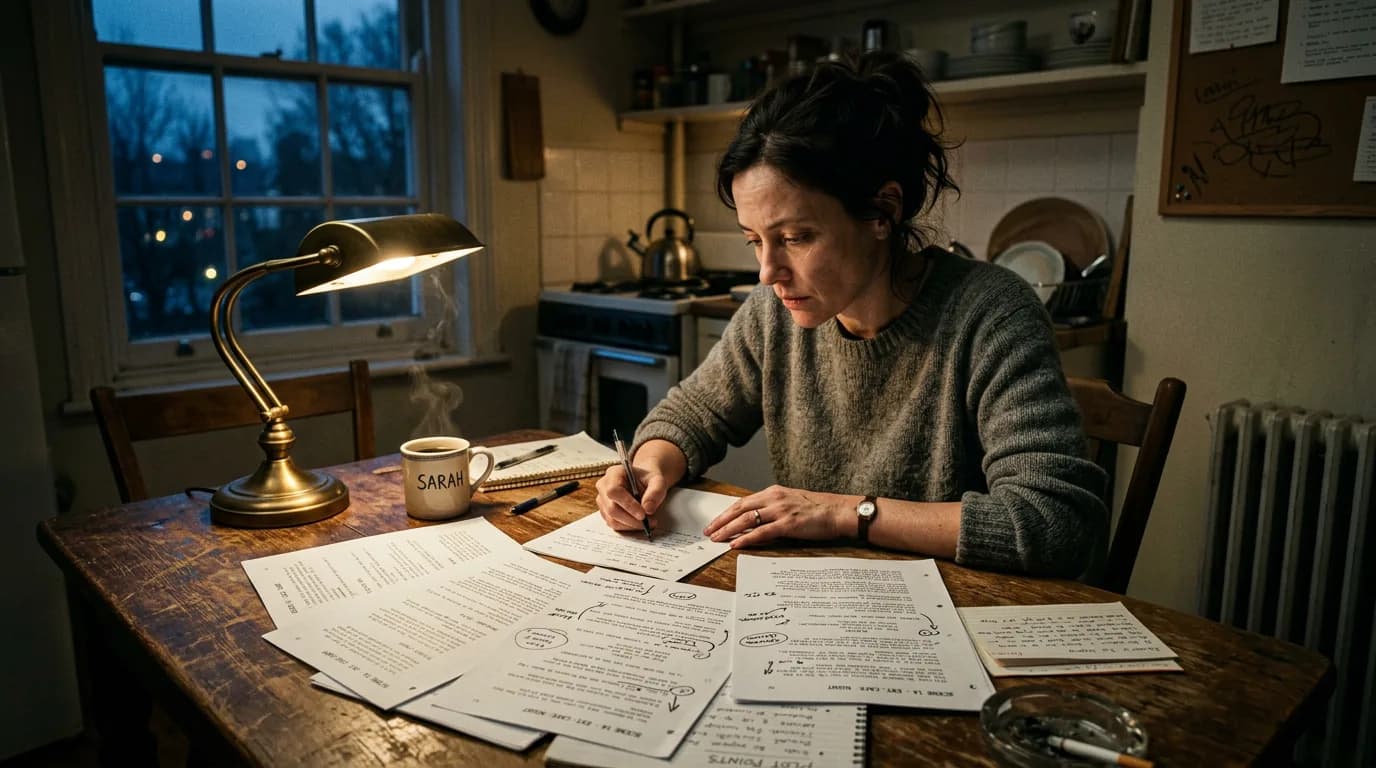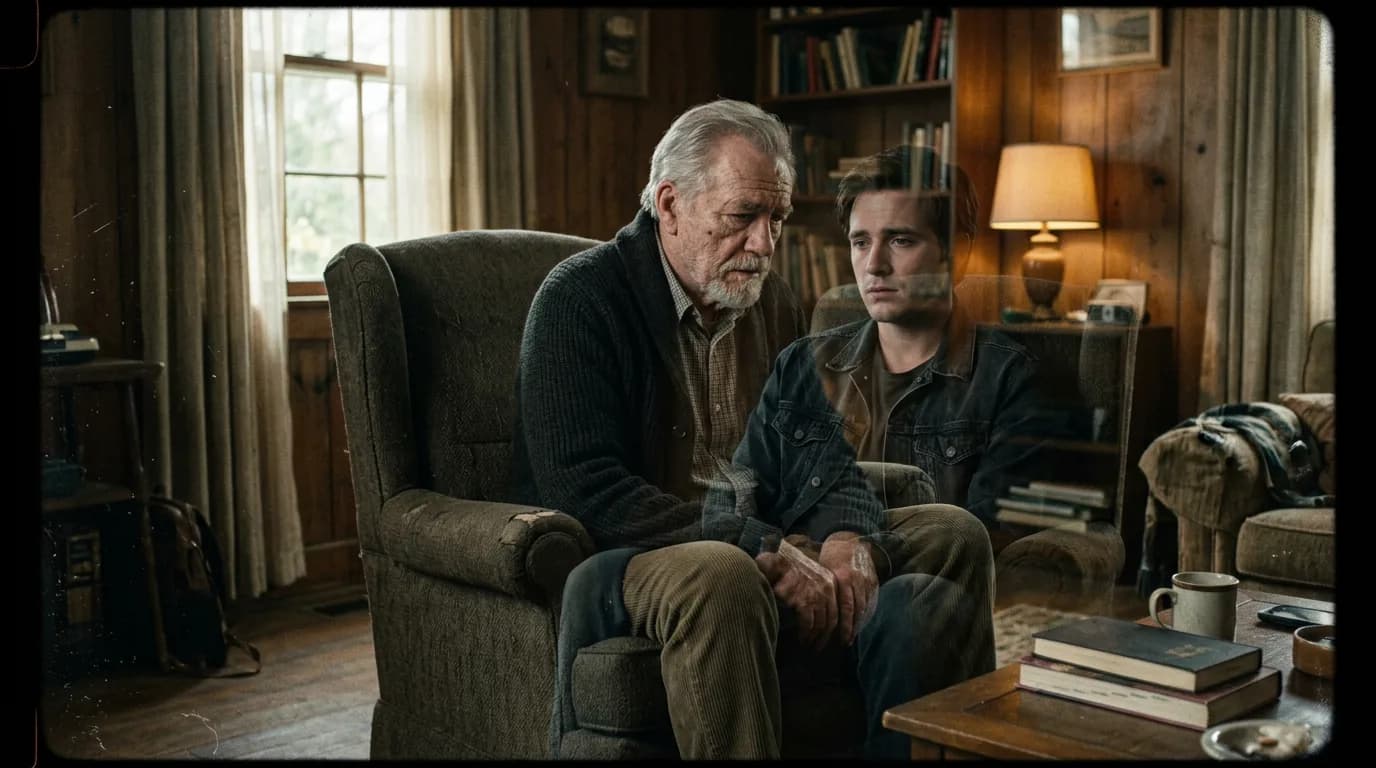

The character sits at the same kitchen table in 2008 and in 2028.
In one timeline, they hide a letter.
In the other, they find it.
Same room.
Same action pattern.
Different emotional truth.
That is split-timeline writing at its best.
It can also implode fast if the page does not clearly signal when and why timeline shifts occur.
Writers often try split timelines for emotional depth and structural sophistication. Then they discover a brutal reality: readers forgive complexity, not disorientation.
Here’s why that matters: when one scene contains multiple time layers, your formatting must do heavy cognitive work. If it fails, tension gets replaced by timeline bookkeeping.
Think about it this way: split timelines are not about jumping around. They are about placing two truths in collision until meaning changes.
Free tool: use the Slugline Formatter to clean up and standardize your scene headings.
Cinematic workflow frames
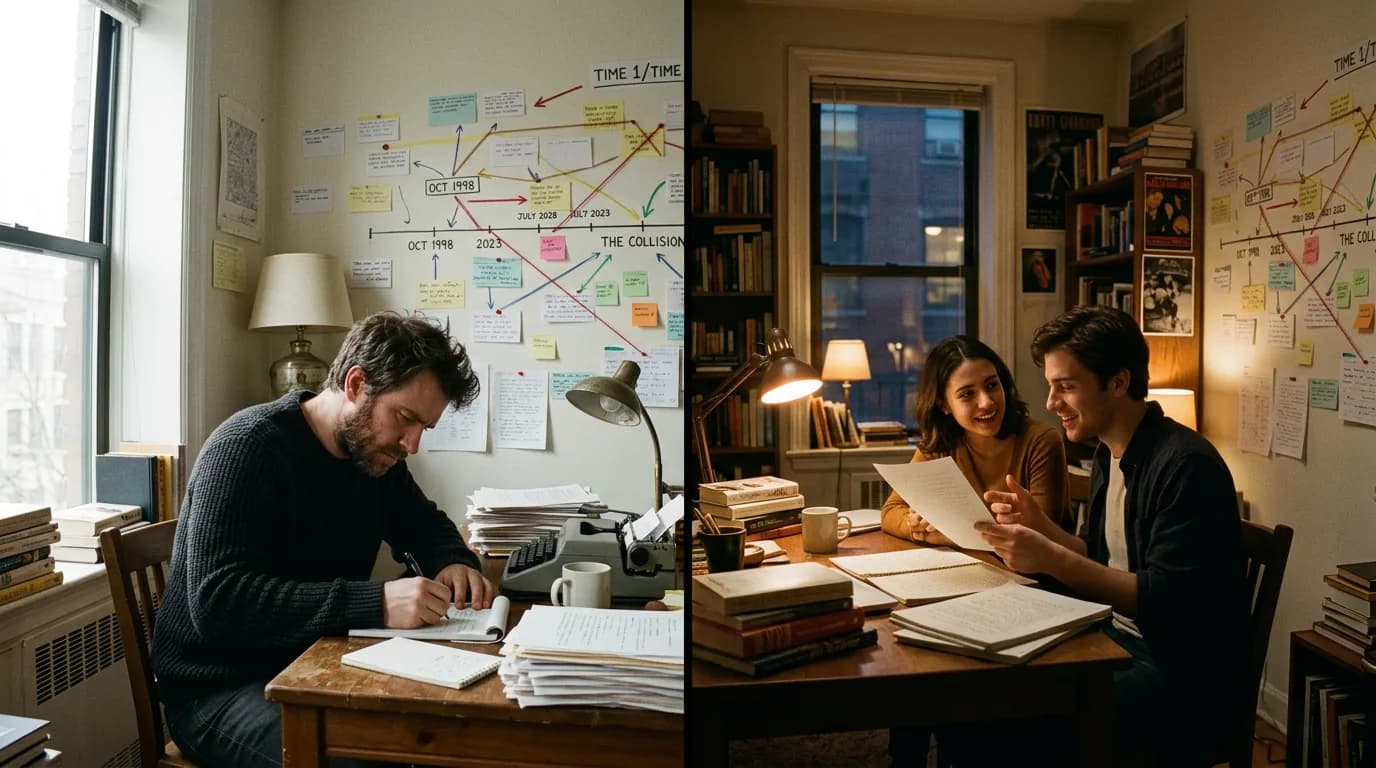
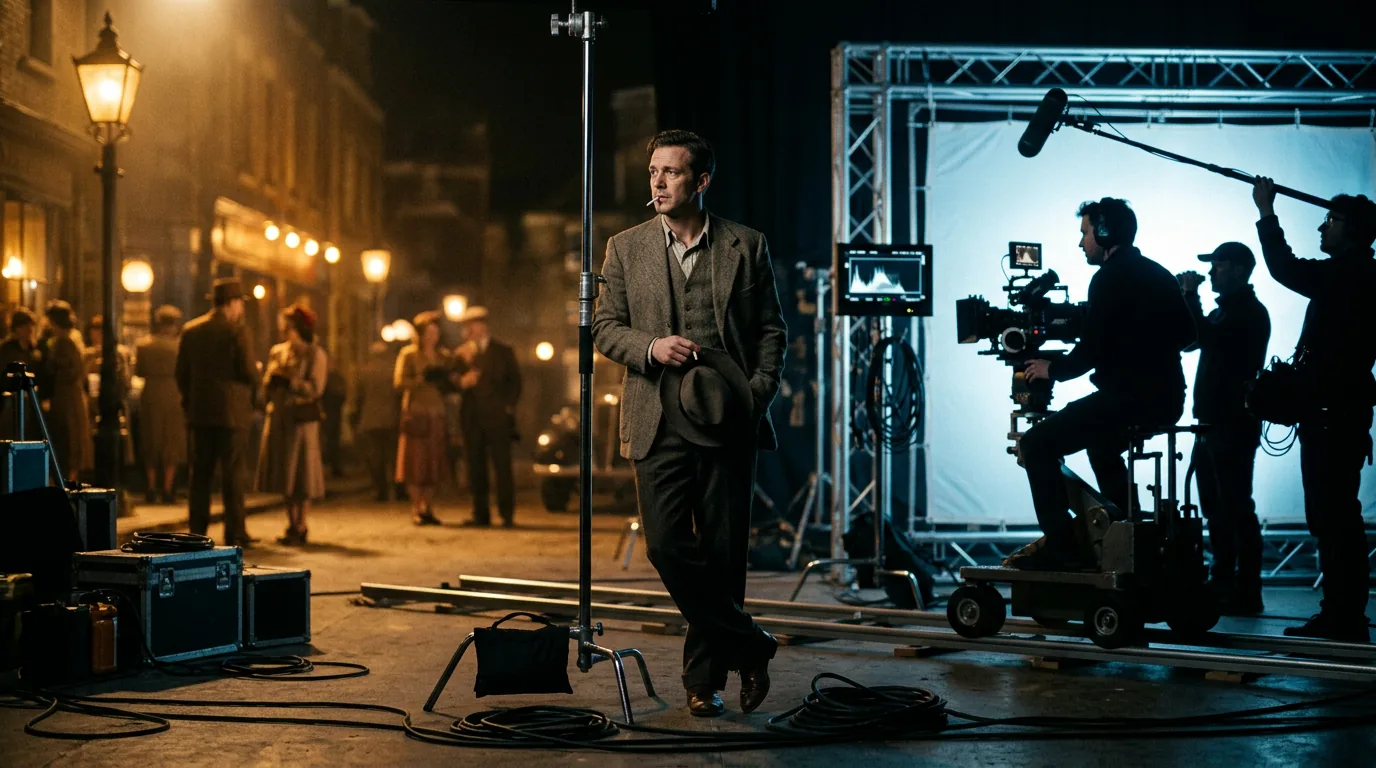
These two visuals work as a pair: the first shows Cinematic workflow still, first angle, 35mm film grain, and the second shifts to Cinematic workflow still, second angle, 35mm film grain - compare them briefly, then move on.
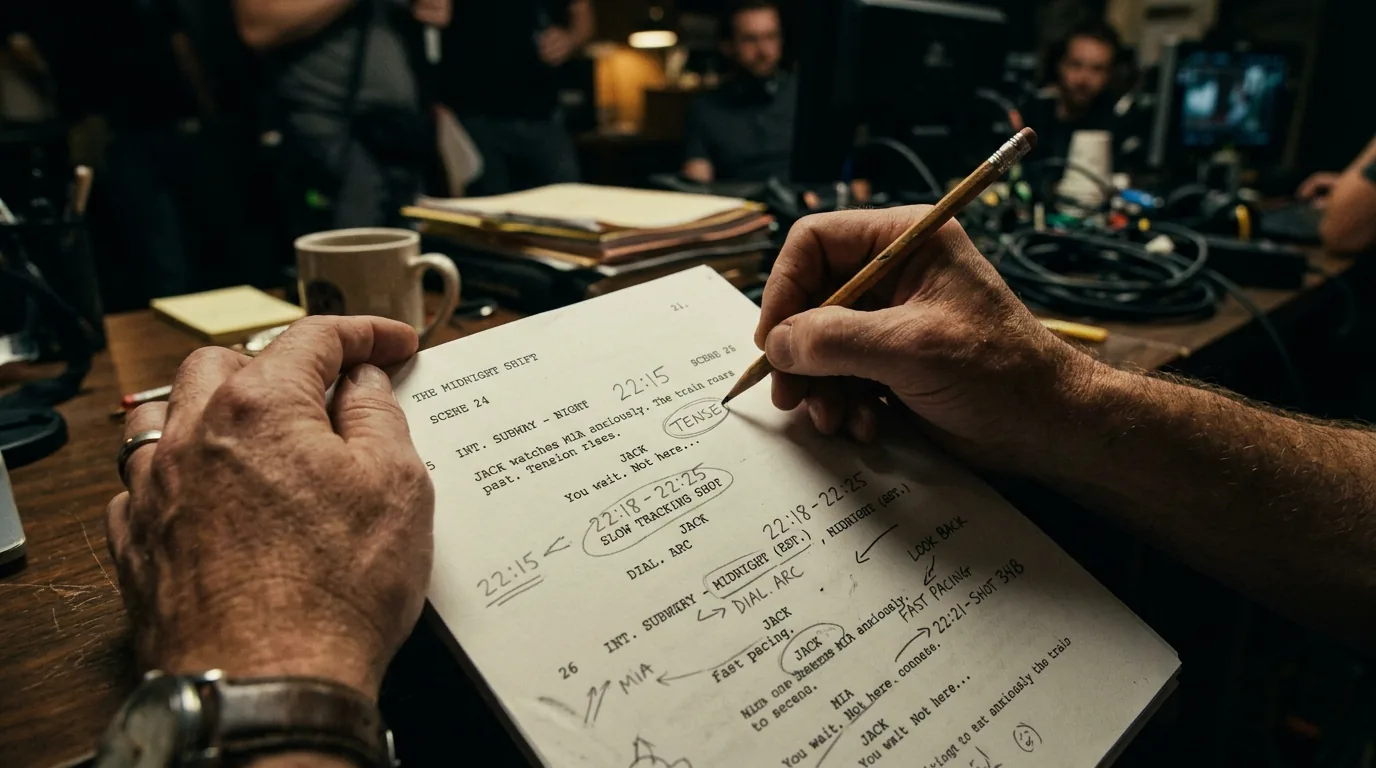
What “Split Timelines in One Scene” Actually Means
This is not just flashback insertion.
A split-timeline scene interweaves two (or more) time states within one dramatic unit so each time layer actively reframes the other.
Key characteristics:
shared location or mirrored action,
intercut timeline beats,
meaning shift through juxtaposition,
synchronized or contrastive emotional rhythm,
clear audience orientation despite temporal complexity.
If one timeline could be removed without changing scene meaning, you likely have sequence adjacency, not true split-timeline design.
Split timelines should produce interpretation pressure, not stylistic decoration.
Core Formatting Patterns That Work
Pattern 1: Timeline-Labeled Scene Headings
INT. KITCHEN - NIGHT - 2008
INT. KITCHEN - NIGHT - 2028
Most reliable for readability.
Pattern 2: INTERCUT With Explicit Timeline Tags
Set both timelines once, then intercut while re-anchoring at strategic intervals.
Pattern 3: Visual Motif Anchors
Use repeated object/action cues to help readers map transitions (same mug, same door creak, same phrase fragment).
Pattern 4: Time-Sync Markers at Pivots
Minimal markers (THEN, NOW, TWENTY YEARS EARLIER) used only at high-risk confusion points.
Comparison Table: Split-Timeline Formatting Trade-Offs
| Approach | Best Use Case | Strength | Risk |
|---|---|---|---|
| Fully labeled headings each switch | High-complexity narrative scenes | Maximum clarity | Can slow rhythm if over-switched |
| Intercut with periodic re-anchors | Balanced pacing + clarity | Cinematic flow | Confusion if re-anchors too sparse |
| Motif-led transitions | Emotion-heavy mirrored scenes | Elegant thematic resonance | Ambiguous if motifs are weak |
| Minimal explicit markers | Advanced stylized scripts | Lean page feel | High reader disorientation risk |
Three Beginner Scenarios That Usually Fail
Scenario 1: The “Same Room, Who Knows When?” Problem
Writer intercuts timelines in one location but uses no year labels.
Result: reader guesses wrong and misses scene intent.
Fix: explicit timeline labels in headings or transition lines until pattern trust is built.
Scenario 2: The Mirror Action That Means Nothing New
Past and present actions look similar but neither reframes the other.
Result: repetitive rather than revelatory.
Fix: design each juxtaposed beat to alter interpretation.
Scenario 3: Over-Frequent Timeline Switching
Shifts every line without stable beat units.
Result: cognitive overload.
Fix: group actions into meaningful beat chunks before switching.
Step-by-Step Workflow for Split-Timeline Scenes
Step 1: Define Scene Thesis in One Sentence
What does this split reveal that linear version cannot?
If answer is weak, restructure before drafting.
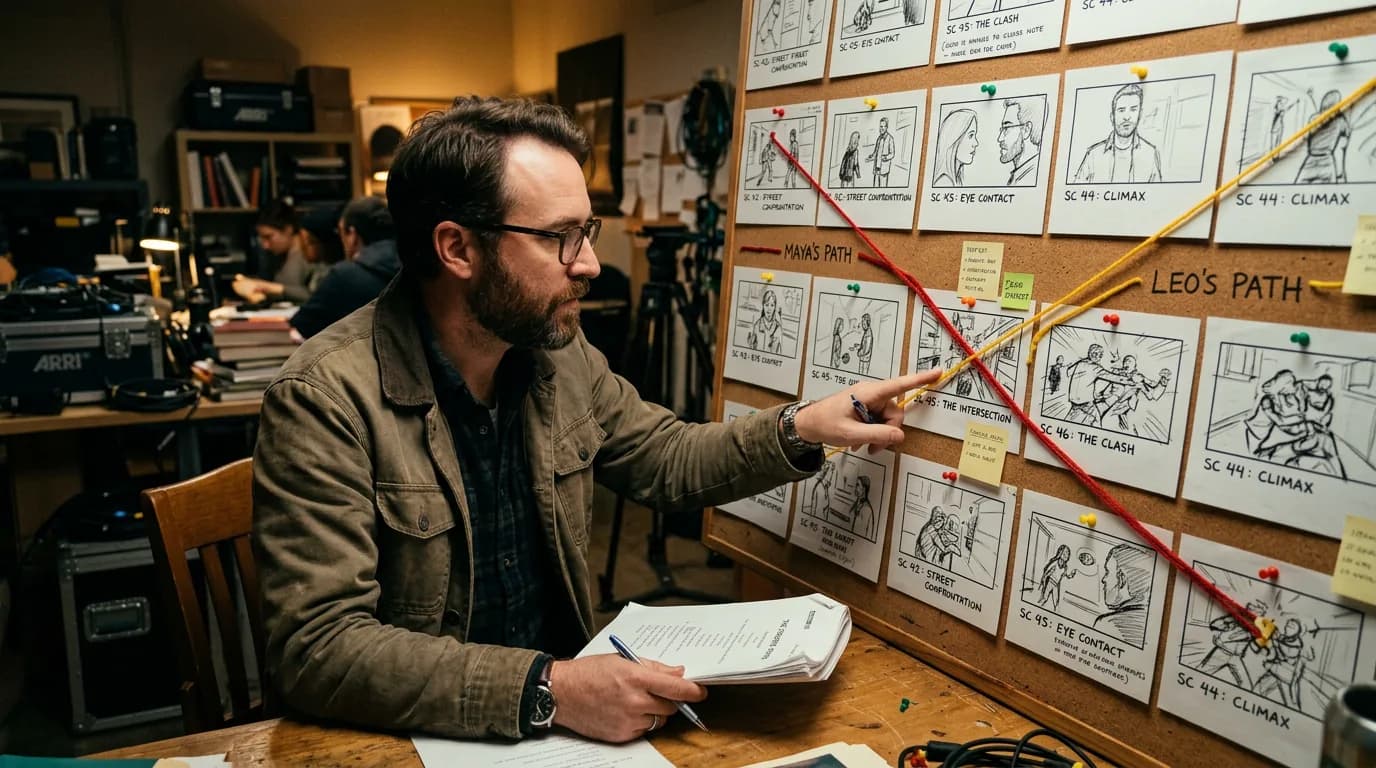
Step 2: Map Paired Beats Across Timelines
Create beat pairs:
Past action A <-> Present action A’,
Past lie B <-> Present consequence B’,
Past choice C <-> Present cost C’.
Step 3: Choose Orientation System
Headings, tags, motif anchors, or hybrid.
Pick one primary method and apply consistently.
Step 4: Build Transition Logic
Transitions should transfer energy or irony, not just move time.
Use action echoes, sound bridges, or object matches.
Step 5: Control Switch Density
Switch on turning beats, not for visual novelty.
Step 6: Validate Causality
Ensure timeline interplay changes stakes or understanding in real time.
Step 7: Run a Cold-Read Timeline Test
Ask reader to summarize order and meaning without explanation.
Any confusion on basic orientation means revision needed.
Body Image: Paired Beat Mapping Diagram
The Trench Warfare Section: What Beginners Get Wrong and Exact Fixes
Failure 1: Style Over Clarity
Timeline jumps prioritize flair over readability.
Fix: clarity first, then stylistic refinement.
Failure 2: Label Inconsistency
Mixed terminology for time states.
Fix: lock timeline label vocabulary and normalize globally.
Failure 3: Weak Beat Pairing
Juxtaposed moments do not meaningfully connect.
Fix: design explicit paired beat logic.
Failure 4: No Emotional Escalation
Scene stays same emotional note in both timelines.
Fix: escalate through contradiction or revelation.
Failure 5: Switches at Arbitrary Points
Cuts happen mid-thought without narrative reason.
Fix: switch on mini-cliff or interpretive pivot.
Failure 6: Overexplaining Timeline in Dialogue
Characters verbalize temporal context unnaturally.
Fix: rely on headings, motifs, and action cues.
Failure 7: Timeline Redundancy
Both threads deliver same information.
Fix: ensure each thread contributes distinct value.
Failure 8: Lost Spatial Orientation
Same location but unclear positional continuity.
Fix: anchor blocking details at each timeline return.
Failure 9: Ambiguous End State
Scene ends without clear timeline consequence integration.
Fix: end on one cross-time payoff beat.
Failure 10: Drift in Rewrites
Later edits break timeline logic.
Fix: maintain timeline ledger and re-validate after structural edits.
The best split-timeline scenes are easy to follow and hard to forget.
Advanced Craft: Temporal Irony as Scene Engine
Split timelines become exceptional when they create temporal irony: audience sees cause and consequence in immediate juxtaposition, while characters in each timeline remain partially blind.
This creates layered empathy.
You feel the hope in the earlier timeline and the cost in the later timeline at once.
You can also engineer perspective inversion.
At first, past timeline appears morally clear and present appears compromised.
Later, new paired beats reveal opposite interpretation.
This inversion keeps scene alive and avoids one-note nostalgia or regret framing.
Workflow and Revision Discipline
Maintain a split-timeline ledger:
timeline label,
paired beat ID,
transition trigger,
interpretation shift,
consequence beat.
Use search to normalize all timeline tags before lock draft.
Run two passes:
Pass 1: read only one timeline thread in extracted order.
Pass 2: read intercut scene as published.
Both must function.
For comparative structural inspiration, the <a href="https://thescriptlab.com/screenplays/download-screenplays/" rel="nofollow">Script Lab screenplay archive</a> can provide references, but your internal pairing logic and orientation discipline should drive final formatting.
As discussed in our guide on [how to show simultaneous action in two locations in a script], complex intercutting succeeds only when causal links stay legible.
If one timeline is reconstructed via testimony, pair with [how to format a documentary interview inside a narrative film script] to keep source framing clear.
And when timeline reveals rely on evidentiary records, [how to format a courtroom transcript in a script] helps maintain legal-text readability under temporal complexity.
Try it free
Try Screenweaver for free on your script
It is free. Import your existing project, get a clearer view of your outline, and regain control of your story structure in minutes.
Start FreeBody Image: Timeline Inversion Ladder
YouTube Placeholder
Before-and-After Micro Example
Before:
“INT. KITCHEN - NIGHT
Mara looks at a letter.
INT. KITCHEN - NIGHT
Mara finds a letter.
She cries.
She hides it.
She opens it.”
Same-room overlap, low orientation.
After:
“INT. KITCHEN - NIGHT - 2008
Mara folds the letter, hands shaking.
INT. KITCHEN - NIGHT - 2028
Older Mara opens the same drawer. Empty.
INTERCUT - SPLIT TIMELINES
2008: Mara tapes the letter under the table.
2028: Mara kneels, runs her fingers beneath the table edge.
2008: She whispers, ‘No one can see this.’
2028: Her fingers catch paper.
She closes her eyes before unfolding it.”
Same concept.
Now with clear orientation, paired beats, and payoff.
Ending Perspective: Split Time, Single Purpose
Split timeline scenes are powerful because they let one moment answer another across years.
But power only lands when readers never lose the map.
Label clearly.
Pair beats intentionally.
Switch on purpose.
Escalate interpretation.
Pay off cross-time consequence.
Do this, and split timelines stop feeling like puzzle-box style.
They become precise emotional machinery that lets your story hold memory and consequence in the same breath.
One additional craft framework can make split-timeline scenes much stronger: asymmetrical revelation control.
In many weak drafts, both timelines reveal information at similar rates. This flattens tension.
In stronger scenes, one timeline leads while the other lags.
Past timeline may reveal motive slowly while present timeline reveals consequence fast.
Or present may begin opaque while past gives context drip-by-drip.
This asymmetry creates interpretive momentum because readers are always reconciling unequal information streams.
Another high-value concept is temporal motif drift.
A repeated image across timelines should not stay static in meaning.
The same key, same table, same song, same phrase, same stain can evolve:
innocent in past, ominous in present, tragic in retrospective alignment.
This drift is where split-timeline scenes gain emotional depth without extra exposition.
Practical Drill: Pair Integrity Test
For each paired beat, answer two questions:
What does timeline A contribute that timeline B cannot?
What does timeline B reframe in timeline A?
If either answer is weak, pairing may be decorative.
Practical Drill: Switch Delay Experiment
Take one switch point and test three placements:
immediate cut, one-beat delay, two-beat delay.
Observe how interpretation changes. Slight switch timing adjustments often eliminate confusion and sharpen emotional impact without rewriting entire scene.
Practical Drill: Timeline Extraction Pass
Extract Timeline A as linear mini-scene.
Extract Timeline B as linear mini-scene.
If one timeline cannot stand as coherent mini-scene, intercut may be masking structural weakness.
Strengthen weak strand before recombining.
Practical Drill: Convergence Sentence Check
Complete this sentence: “This split exists because only simultaneous visibility of then and now reveals ____.”
If answer sounds generic (“theme,” “emotion,” “contrast”), dig deeper until it becomes concrete and scene-specific.
One more advanced move is chronology friction through mistaken memory.
A character in present timeline remembers an event one way; the past timeline quietly shows the event differently. This can be potent, but fairness is essential. Plant subtle cues that memory may be unreliable before major inversion lands.
Without cues, reveal feels like cheat.
With cues, reveal feels earned and haunting.
Operationally, maintain a split-timeline ledger in revisions:
timeline ID, beat number, paired counterpart, transition trigger, new interpretation, carry-forward consequence.
Update ledger each time scenes move. Temporal edits create hidden continuity breaks quickly, and they are expensive to debug late.
From a pacing standpoint, avoid stacking multiple high-complexity split scenes back-to-back unless your script’s formal grammar already trained the reader. Complexity should compound strategically, not continuously.
A good rule: after a dense temporal scene, follow with one cleaner linear scene that cashes in the emotional or plot consequences. This gives readers cognitive recovery while preserving momentum.
Finally, split-timeline scenes succeed when they are emotionally inevitable, not technically impressive. The audience should feel that both time layers had to be seen together for truth to land. If that necessity is clear, formatting sophistication feels natural rather than ornamental.
That is the target: temporal precision in service of human consequence.
One final sequence-level framework can make split-timeline writing much more robust: timeline role assignment.
Assign each timeline a dominant role in the scene:
Timeline A as cause,
Timeline B as consequence,
or Timeline A as myth and Timeline B as correction.
When roles are clear, transitions gain purpose. When roles blur, scenes feel busy but directionless.
You can even rotate roles across acts for sophistication:
early scenes: past explains present, mid scenes: present reinterprets past, late scenes: both collapse into one unavoidable truth.
This macro progression creates formal evolution rather than repeating one split trick.
Practical Drill: Role Clarity Audit
For each split scene, write:
“Timeline A is doing ____.”
“Timeline B is doing ____.”
If both blanks contain the same function, redesign one timeline’s role.
Practical Drill: Reader Orientation Stress Test
Give the scene to a cold reader with no prep and ask for two outputs:
- bullet list of timeline order as they experienced it,
- one-sentence summary of what changed emotionally by scene end.
If order is unclear, orientation markers need revision.
If emotional change is unclear, beat pairing needs stronger contrast.
Practical Drill: Motif Necessity Filter
List all recurring motifs used as transition bridges. Remove one motif at a time in a test draft.
If scene meaning collapses when one motif is removed, it is doing real structural work.
If nothing changes, motif may be ornamental and can be simplified.
Practical Drill: End-Beat Lock
Write three alternate final beats for the split scene:
one ending in past, one ending in present, one ending on direct transition between both.
Choose the one that best delivers interpretive closure plus forward momentum.
This prevents weak endings where split mechanics are clever but emotional landing is soft.
From a production perspective, split timeline scenes can trigger confusion in departments if script-level markers are inconsistent. Keep timeline labels stable and avoid inventing new tag phrases midway through draft. Consistency reduces downstream interpretation error and keeps the scene’s intent intact through revision, prep, and shoot planning.
Another high-value consideration: split timelines are strongest when they change not only what we know, but what we feel about what we know. Information alone is not enough. The scene should produce emotional reclassification - guilt becomes grief, anger becomes pity, certainty becomes doubt, nostalgia becomes dread.
If your paired beats are designed for that emotional reclassification, readers will follow temporal complexity willingly.
And that is the highest standard for this format: not “Can they track the timeline?” but “Did the timeline collision transform meaning?”
As a final quality gate, run one ruthless pass where you remove every transition that does not create either clearer orientation or stronger reinterpretation. What remains is usually the real scene.
If that stripped version still lands emotionally, your split structure is doing real work. If it collapses, you likely built transition choreography without thematic engine. Rebuild around paired decision beats instead of decorative echo cuts. The most reliable split-timeline scenes are simple at core: one choice then, one cost now, one reframe connecting them. Everything else should serve that chain. Keep that discipline and temporal complexity will feel inevitable, not indulgent, and consistently readable under deadline pressure for professional teams everywhere today.
That discipline travels.
Final Step
Build your next script with Screenweaver
Move from ideas to production-ready pages faster with timeline-native writing and AI-assisted story flow.
Try Screenweaver