Scelta del modello video IA
Un confronto interattivo tra modelli, filtrato in base a quello che serve alla tua inquadratura
Questo strumento di confronto dice quale modello video IA usare per una data inquadratura, in base a quello che conta davvero: durata della clip, risoluzione, audio nativo, supporto da immagine a video e budget. Attiva i vincoli del tuo progetto e i modelli adatti salgono in cima, mentre quelli che non passano restano sotto, con il motivo scritto.
Non esiste il miglior generatore video IA, esiste solo il modello giusto per una data inquadratura. Una scena di dialogo ha bisogno di audio nativo, il che esclude metà del mercato. Un montaggio social 9:16 ha esigenze diverse da un'inquadratura di punta in 4K. Le classifiche incoronano un vincitore e invecchiano in un mese; una scheda tecnica filtrabile risponde alla domanda che hai davvero, inquadratura per inquadratura.
Tutto funziona nel tuo browser. Nessun dato viene inviato a un server. Caratteristiche e prezzi verificati a settembre 2026 sulla documentazione dei fornitori e sulle pagine pubbliche delle API; questo mercato cambia ogni mese, quindi controlla le note di rilascio prima di impegnare un budget grosso.
Ogni interruttore è un requisito vincolante. I modelli che non lo soddisfano scendono più in basso, col motivo indicato.
Fascia di budget12 modelli compatibili
Prezzi verificati a settembre 2026 (dati del 2026-09).
The open-source escape hatch: unlimited retries for the price of a GPU.
Free to self-host under an open license; the real cost is GPU time (roughly $0.50 to $1.00/hour for a rented 24GB+ card). Hosted API versions exist at budget rates.
Best price-to-quality ratio for character motion, with optional native audio.
fal.ai rate of $0.07/sec with audio off; enabling native audio doubles it to $0.14/sec ($0.70 per 5s clip).
Best prompt adherence and physics at the top of the market, with 4K output.
Gemini API standard tier, $0.40/sec at 1080p with audio. 4K and multi-reference inputs lock the clip to 8 seconds.
Longest coherent single takes of any closed model, up to 25 seconds.
API rate of $0.30/sec at 720p up to $0.50/sec at 1024p+. 25-second clips require the Pro app plan's storyboard mode.
Multi-shot generation inside one clip, unusual at this price point.
Volcano Engine / BytePlus API, about $0.07/sec at 1080p ($0.03/sec at 720p). Newer Seedance versions price higher.
Standout stylized and anime motion; strong value on dynamic action.
MiniMax API bills per clip: $0.49 for a 6s 1080p clip (normalized here to 5s). 10-second clips are 768p only.
Strong scene logic and dialogue audio; the app ecosystem is where it shines.
API rate of $0.10/sec at 720p. 15-second clips are an in-app limit; the API caps single generations at 12 seconds. OpenAI has announced an API sunset for late September 2026, so treat API access as transitional.
Veo quality with audio at a price you can afford to iterate on.
Gemini API fast tier, $0.12/sec at 1080p with audio. Same model family, lower fidelity, roughly a third of the standard price.
Only model shipping true HDR output, with a reasoning pass on the prompt.
Luma API, about $0.24/sec for 1080p SDR. HDR output roughly doubles the price; draft mode is far cheaper for look development.
Fast, playful iteration and effects templates aimed at social formats.
Credit-based estimate: 40 credits per 5s 1080p clip on the $28/mo, 700-credit Standard plan ($0.04/credit). 480p drafts cost about a third of that.
Cheapest way into the Runway ecosystem for previz and animatics.
Runway developer API, $0.05/sec (5 credits/sec in-app). The workhorse tier for previz volume.
Precise motion control and the most mature editing toolchain around the model.
Runway developer API, $0.12/sec (12 credits/sec in-app). Output is 720p native; upscaling is a separate pass.
Tabella completa delle caratteristiche
| Modello | Clip massima | Risoluzione massima | FPS | Audio | Da immagine | Per clip da 5 s |
|---|---|---|---|---|---|---|
| Veo 3.1 | 8s | 4K | 24 | sì | sì | $2.00 |
| Veo 3.1 Fast | 8s | 1080p | 24 | sì | sì | $0.60 |
| Sora 2 | 15s | 720p | 30 | sì | sì | $0.50 |
| Sora 2 Pro | 25s | 1080p | 30 | sì | sì | $2.50 |
| Kling 2.6 Pro | 10s | 1080p | 30 | sì | sì | $0.35 |
| Runway Gen-4.5 | 10s | 720p | 24 | no | sì | $0.60 |
| Runway Gen-4 Turbo | 10s | 720p | 24 | no | sì | $0.25 |
| Seedance 1.0 Pro | 10s | 1080p | 24 | no | sì | $0.35 |
| Luma Ray 3 | 10s | 1080p | 24 | no | sì | $1.20 |
| Pika 2.2 | 10s | 1080p | 24 | no | sì | $1.60* |
| Hailuo 2.3 | 10s | 1080p | 24 | no | sì | $0.41 |
| Wan 2.5 | 10s | 1080p | 24 | sì | sì | gratuito (autoinstallato) |
Prezzi in dollari per clip da 5 secondi, dai listini pubblici delle API. L'asterisco indica una stima basata sui crediti, ricavata da un piano di abbonamento intermedio.
Come funziona
Ogni interruttore è un filtro vincolante su un insieme di dati verificato a mano per i modelli principali: Veo 3.1, Sora 2, Kling 2.6, Runway Gen-4.5, Seedance, Luma Ray 3, Pika, Hailuo e Wan open source. I modelli compatibili sono ordinati per un punteggio di capacità (risoluzione, audio nativo, da immagine a video, durata della clip), coi più economici davanti a parità. I modelli che non passano un filtro non vengono nascosti: scendono più in basso col requisito mancato scritto per esteso, perché sapere perché un modello è sbagliato per quell'inquadratura è metà della decisione.
Quale modello video IA conviene usare?
Parti dall'inquadratura, non dalla classifica. Per le scene di dialogo contano solo i modelli con audio: Veo 3.1, Sora 2, Kling 2.6 e Wan open source generano parlato sincronizzato nella stessa passata, mentre Runway, Luma, Pika, Seedance e Hailuo restituiscono video muto a cui va aggiunto il suono in post. Per una scelta tra Kling, Veo e Sora su una scena parlata, di solito decidono prezzo e durata della ripresa: Kling è la scelta economica, Veo quella della resa, Sora 2 Pro quella della ripresa lunga.
Durata e risoluzione dividono il campo con la stessa nettezza. La clip più lunga ottenibile da una singola generazione su modello chiuso è quella di Sora 2 Pro, 25 secondi; la maggior parte del mercato si ferma a 10, e Veo 3.1 a 8 con una funzione di estensione oltre quel limite. Se ti serve il 4K nativo, a settembre 2026 Veo 3.1 è l'unico. Un confronto tra Veo 3 e Sora 2, o tra Runway e Kling, che ignori questi limiti sta confrontando pagine di marketing, non strumenti.
È anche per questo che uno strumento interattivo batte una classifica del miglior generatore video del 2026: le caratteristiche cambiano ogni mese. Kling ha aggiunto l'audio nativo nella 2.6, Veo il 4K nella 3.1, e i prezzi di entrambi si sono mossi nell'arco di un trimestre. I dati dietro questa pagina portano una data visibile e prezzi normalizzati alla clip da 5 secondi, così quando il mercato si muoverà di nuovo vedrai esattamente quanto è aggiornato il confronto, invece di fidarti di un articolo senza data.
Per chi è
- Chi fa cinema con l'IA: abbina ogni inquadratura della lista al modello che le si adatta, invece di costringere un solo modello a fare tutto.
- Agenzie e squadre di contenuti: giustifica la scelta di un modello a un cliente con caratteristiche precise e un prezzo datato, non con una classifica.
- Chi crea con budget stretti: trova il modello più economico che soddisfa comunque i tuoi requisiti reali, compresa la corsia gratuita dei modelli autoinstallabili.
Parti dalla sceneggiatura.Ottieni lo storyboard.
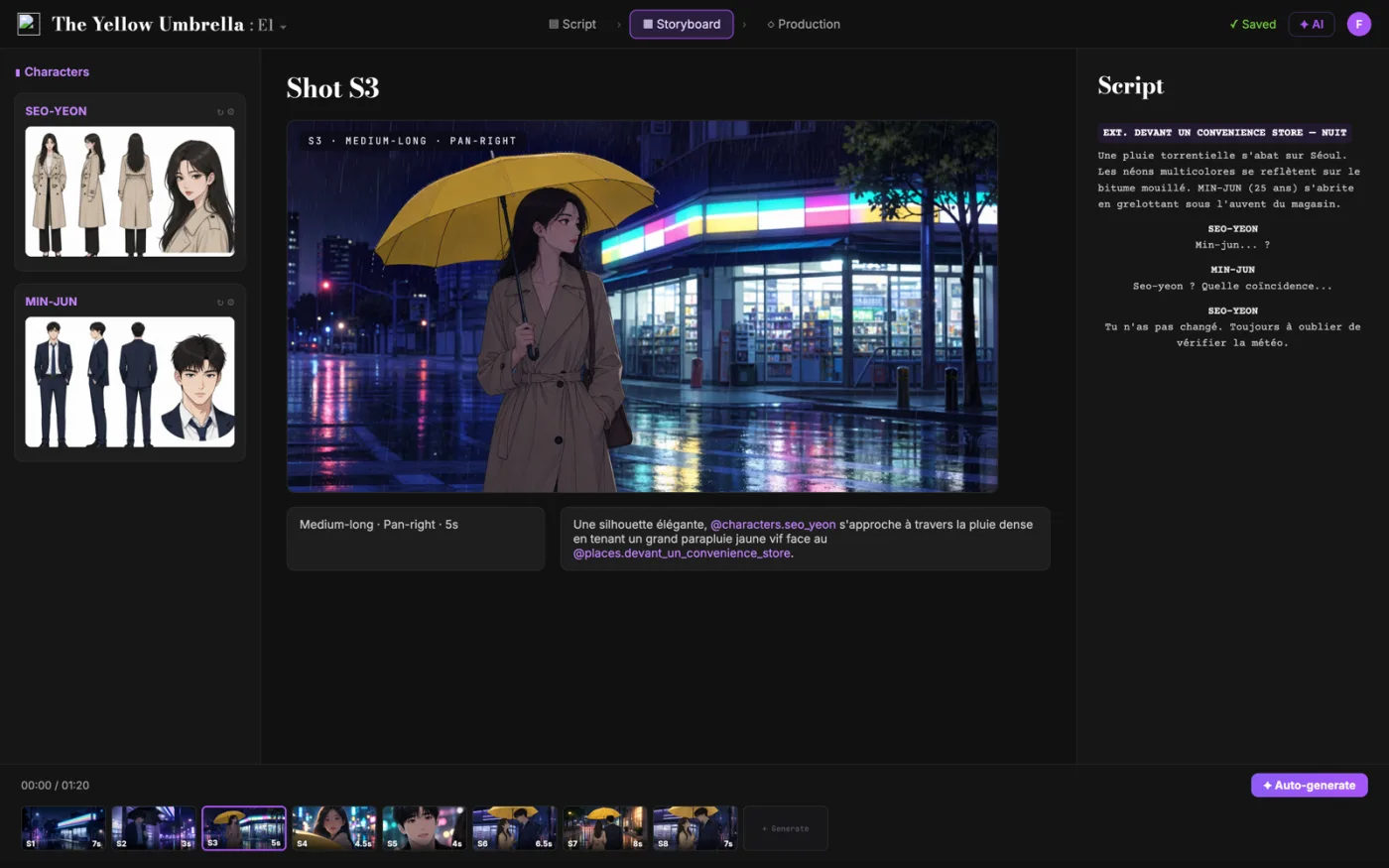
ScreenWeaver divide la sceneggiatura in inquadrature e ne genera lo storyboard. Decidi tu taglio, angolazione, movimento e durata. I personaggi restano coerenti da un'inquadratura all'altra.
- 0 $, senza scadenza
- Export in PDF e Final Draft
- Mac, Windows, Linux, iPad
Selettore di modello video IA: la guida completa
Filtra un dataset datato e verificato a mano dei principali modelli video IA (Veo, Sora, Kling, Runway, Seedance, Luma, Pika, Hailuo, Wan) per audio, durata della clip, risoluzione, immagine-video, uscita verticale e fascia di prezzo.
In questo lavoro il problema centrale è chiaro: gli articoli di confronto invecchiano in poche settimane e incoronano un vincitore, mentre il modello giusto in realtà cambia da un'inquadratura all'altra. Se resta lì, produce attrito più avanti e decisioni più lente. L'obiettivo concreto è una rosa di modelli che soddisfano i requisiti duri dell'inquadratura, con i modelli esclusi elencati e il motivo dichiarato.
Limite da tenere presente: Confronta specifiche e prezzi pubblicati, non la qualità soggettiva sul tuo prompt specifico; una rosa merita comunque una generazione di prova per modello prima di una spesa grossa.
Uso avanzato: I team esperti lanciano il selettore una volta per categoria di inquadratura della lista (dialogo, azione, inserto, taglio social) e fissano una mappa di modelli per categoria invece di un unico modello di casa.
Il metodo passo per passo
- Attiva solo i requisiti che l'inquadratura ha davvero; ogni filtro è un vincolo duro, non una preferenza.
- Leggi la riga dei punti di forza e la nota sui prezzi dei primi risultati, non solo la colonna del prezzo.
- Guarda l'elenco degli esclusi: un modello bocciato solo per l'audio può vincere lo stesso se il suono lo fai in post.
- Copia il testo di confronto nelle tue note di produzione, con la data di settembre 2026 allegata.
Casi d'uso per profilo
- Filmmaker IA: trovare i soli modelli capaci di reggere una ripresa di dialogo da 10 secondi, prima di costruirci intorno lo storyboard.
- Team di contenuti: scegliere il modello più economico che supera il 9:16 verticale e il 1080p per una campagna social.
- Produttore: documentare la scelta del modello con specifiche datate, così la decisione regge una revisione con il cliente.
Errori frequenti da evitare
- Scegliere un modello per l'intero film invece di abbinare i modelli ai tipi di inquadratura.
- Prendere per attuale una classifica senza data, mentre le specifiche cambiano ogni mese.
- Filtrare per audio nativo su inquadrature che verranno comunque sonorizzate in post.
Buone pratiche del mestiere
- Tieni una pipeline a due modelli: uno economico per copertura e iterazione, uno premium per le inquadrature chiave.
- Per il dialogo parti dai modelli con audio nativo; sincronizzare le labbra in post regge di rado.
- Usa la fascia gratuita auto-ospitata come leva: conoscere il prezzo minimo di Wan affina ogni decisione su un modello a pagamento.
Tratta quello che esce da questo strumento come un supporto alla decisione, non come un sostituto della scrittura. Una buona sceneggiatura resta in mente per le scelte precise, la precisione emotiva e la chiarezza del movimento drammatico. Gli strumenti servono a togliere il rumore, così la tua energia va dove conta: personaggio, conflitto, escalation e resa. Se rivedi i risultati dopo ogni passaggio e tieni un registro delle modifiche accettate, il tuo metodo diventa più rapido e più prevedibile da una stesura all'altra. È esattamente quello che i collaboratori professionisti apprezzano: meno sorprese, ragioni più chiare e una sceneggiatura che cresce con intenzione.
Domande approfondite
Quale modello video IA è migliore per le scene di dialogo?
Parti dai modelli con audio nativo: Veo 3.1 per la fedeltà, Sora 2 Pro per riprese fino a 25 secondi, Kling 2.6 Pro come opzione economica con l'audio attivabile, e Wan 2.5 se ti auto-ospiti. I modelli muti impongono un lavoro di sincronizzazione in post che raramente regge un primo piano.
Come si confrontano Runway e Kling nel 2026?
Runway Gen-4.5 offre controllo preciso del movimento e una catena di montaggio matura, a 720p nativi senza audio, intorno a 0,60 dollari per clip da 5 secondi. Kling 2.6 Pro dà 1080p, buon movimento dei personaggi e audio nativo opzionale da 0,35. Kling di solito vince sulla scheda tecnica, Runway sul flusso di lavoro.
Esiste un generatore video IA gratuito adatto al cinema?
Wan 2.5 è l'opzione gratuita seria: open source, 1080p, clip da 10 secondi, audio nativo e immagine-video. Costa tempo GPU invece di tariffe a clip, quindi si adatta ai flussi pieni di rifacimenti e ai team a proprio agio con l'inferenza in casa.
Quali specifiche vanno confrontate?
Sei dati duri decidono la maggior parte delle inquadrature: durata massima di una generazione, risoluzione massima, frequenza fotogrammi, audio nativo, supporto immagine-video e prezzo per clip. Tutto il resto (stile, aderenza, qualità del movimento) si giudica su una generazione di prova, non su una scheda.
Quali modelli supportano l'uscita verticale 9:16?
A settembre 2026 tutti i modelli principali di questo dataset generano il 9:16 in modo nativo, compresi Veo 3.1, Sora 2, Kling 2.6 e Runway Gen-4.5. Per il verticale social a fare la differenza sono prezzo per clip e risoluzione, non il supporto al formato.
Cosa separa Veo 3.1 da Sora 2 nella pratica?
Veo 3.1 guida su fedeltà dell'immagine, fisica e 4K nativo, con generazioni da 8 secondi. Sora 2 punta su riprese continue più lunghe (15 secondi, 25 con Pro) e sul suo ecosistema applicativo. Per una singola inquadratura chiave di solito vince Veo; per azione continua estesa, Sora 2 Pro.
Domande frequenti
A settembre 2026: Google Veo 3.1 (entrambe le fasce), OpenAI Sora 2 e Sora 2 Pro, Kling 2.6 Pro (come opzione che raddoppia più o meno il prezzo) e Wan 2.5 open source. Runway Gen-4.5, Luma Ray 3, Pika, Seedance e Hailuo generano video muto.
Sora 2 Pro guida con riprese singole da 25 secondi tramite la modalità storyboard. Sora 2 arriva a 15 secondi nell'app, la maggior parte degli altri modelli (Kling, Runway, Seedance, Luma, Pika, Hailuo, Wan) si ferma a 10, e Veo 3.1 a 8, anche se la sua funzione di estensione può concatenare un'inquadratura ben oltre i due minuti.
Risolvono problemi diversi. Kling 2.6 Pro dà un buon movimento dei personaggi a circa 0,35-0,70 dollari per clip da 5 secondi, il che si adatta ai flussi con molti tentativi. Veo 3.1 costa circa 2,00 dollari per clip da 5 secondi nella fascia standard, ma è avanti su aderenza al prompt, fisica e 4K. Molti lavorano le bozze su Kling e rigirano le inquadrature di punta su Veo.
Perché il motivo dell'esclusione è un'informazione. Vedere che Runway Gen-4.5 è caduto per l'audio nativo e non per la qualità ti dice che resta un'opzione se gestisci il suono in post. Nascondere gli esclusi trasforma una decisione tecnica in una scatola nera.
Ogni caratteristica e ogni prezzo sono stati verificati a settembre 2026 sulla documentazione dei fornitori e sui listini pubblici delle API, e i dati portano quella data in modo visibile. Le caratteristiche dei modelli video IA cambiano ogni mese, ed è esattamente per questo che qui trovi un insieme di dati datato e filtrabile invece di una classifica statica.
Related tools
Calcolatore di costi per video con IA
Fai il budget di un film IA al minuto finito, tentativi compresi.
Divisore di scene in clip
Divide una scena in clip video IA che rispettano il limite di durata del modello.
Generatore di prompt per video con IA
Costruisci prompt cinematografici per Veo, Sora, Runway e Kling.
Prompt di movimento macchina
Libreria animata dei movimenti macchina con prompt pronti da copiare.
You can also browse the full library on /tools.
Core blog guides
- Idea → first draft (process hub)
- Screenplay format guide 2026
- Hidden costs of “free” software
- Affordable software & TCO
- Revision passes (structure → dialogue)
Tecniche cinematografiche
Tecniche cinematografiche da esplorare
Ognuna con una clip, un estratto di sceneggiatura e la riga della lista inquadrature.