Generatore di prompt per video con IA
Prompt cinematografici per Veo, Sora, Runway e Kling
Descrivi la tua inquadratura come farebbe la regia con la direzione della fotografia: soggetto, azione, inquadratura, movimento, luce. Questo generatore gratuito assembla quelle scelte in un prompt strutturato che i modelli testo-verso-video interpretano in modo affidabile, invece di una fila di aggettivi tirata a indovinare.
I modelli video con IA rispondono meglio alla vera grammatica cinematografica in un ordine costante: scala di ripresa, soggetto, azione, ambientazione, movimento macchina, luce, carattere dell'ottica, stile e atmosfera. È esattamente la struttura che questo strumento costruisce, con risultato in testo o in JSON pronto da copiare.
L'assemblaggio del prompt è deterministico e funziona interamente nel tuo browser. Nulla di quello che scrivi viene inviato a un server.
Scegli inquadratura, movimento e resa visiva. Lascia vuoto quello che non ti serve, per tenere il prompt asciutto.
Il tuo prompt
Descrivi un soggetto qui sopra e il tuo prompt si comporrà qui.
Come funziona
Il generatore mette insieme le tue scelte nell'ordine che i modelli testo-verso-video interpretano meglio: prima l'inquadratura, poi soggetto e azione, poi ambientazione, movimento macchina, luce, ottica, stile e atmosfera. Ogni opzione viene dal vocabolario reale della fotografia cinematografica, le stesse scale e gli stessi movimenti che userebbe una lista di inquadrature, così il modello riceve istruzioni invece di parole d'atmosfera. La scheda JSON restituisce la stessa inquadratura come campi strutturati, utile per pipeline e lavorazioni in serie.
Come si scrivono prompt per video IA che funzionano davvero
L'errore più comune nei video IA non è il modello, è il prompt: un mucchio di aggettivi di stile senza un soggetto chiaro, senza un'azione concreta e senza indicazioni di macchina. Il modello riempie ogni vuoto con invenzioni proprie, ed è per questo che i risultati derivano da una generazione all'altra.
I prompt forti si leggono come descrizioni di inquadratura, non come mood board. Un soggetto, un'azione che una macchina da presa potrebbe riprendere, un'inquadratura, un movimento. «Primo piano di un investigatore segnato dal tempo che accende una sigaretta in un vicolo fradicio di pioggia, lenta carrellata in avanti, luce al neon notturna» batte «atmosfera noir cinematografica, 4K, capolavoro» su tutti i modelli principali.
La coerenza tra le inquadrature nasce dalla ripetizione, non dalla fortuna. Fissa le descrizioni di soggetto e ambientazione parola per parola e riusale in ogni prompt della sequenza, cambiando solo la grammatica di ripresa. È così che chi fa cinema con l'IA tiene un personaggio riconoscibile dal campo lungo al primo piano.
Per chi è
- Chi fa cinema con l'IA: genera una serie coerente di prompt per un'intera sequenza invece di improvvisare ogni clip a memoria.
- Regia in previsualizzazione: genera campo lungo, mezza figura e primo piano dello stesso momento per verificare la copertura prima delle riprese vere.
- Creazione di contenuti e studi: ottieni prompt ripetibili e di livello commerciale senza imparare il folklore dei prompt da discussioni sparse nei forum.
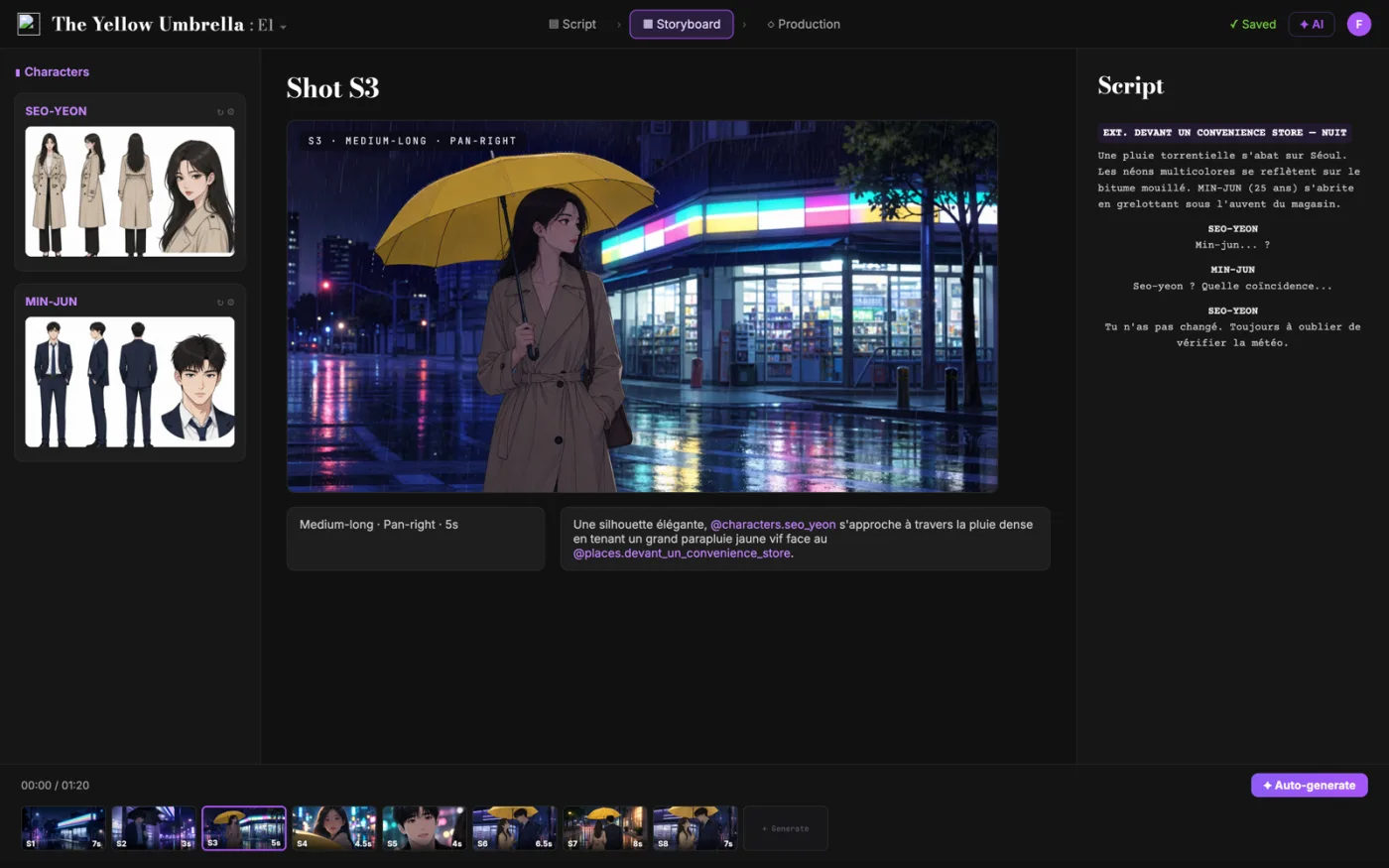
Parti dalla sceneggiatura.Ottieni lo storyboard.
ScreenWeaver divide la sceneggiatura in inquadrature e ne genera lo storyboard. Decidi tu taglio, angolazione, movimento e durata. I personaggi restano coerenti da un'inquadratura all'altra.
- 0 $, senza scadenza
- Export in PDF e Final Draft
- Mac, Windows, Linux, iPad
Generatore di prompt per video IA: la guida completa
Assembla un prompt cinematografico strutturato con il linguaggio vero del cinema: dimensione dell'inquadratura, movimento di macchina, luce, carattere dell'ottica, stile e atmosfera, nell'ordine che i modelli da testo a video leggono meglio.
In questo lavoro il problema centrale è chiaro: la maggior parte dei prompt per video IA sono file di aggettivi improvvisate, quindi i risultati cambiano tra una generazione e l'altra e non corrispondono mai all'inquadratura immaginata. Se resta lì, produce attrito più avanti e decisioni più lente. L'obiettivo concreto è prompt coerenti, scritti in vera grammatica cinematografica, che dicono a Veo, Sora, Runway, Kling o Seedance esattamente quale inquadratura costruire.
Limite da tenere presente: Costruisce il prompt, non il video: ogni modello interpreta il linguaggio a modo suo, e la coerenza di personaggi o luoghi tra le inquadrature richiede un metodo, non un singolo prompt.
Uso avanzato: Chi fa cinema con l'IA sul serio tiene un foglio di prompt per scena, blocca parola per parola le descrizioni di soggetti e ambienti ricorrenti, e varia solo la grammatica dell'inquadratura tra una generazione e l'altra.
Il metodo passo per passo
- Descrivi soggetto e azione in linguaggio semplice e concreto: quello che una macchina da presa vedrebbe davvero.
- Scegli dimensione dell'inquadratura e movimento che il momento richiede, come lo diresti a un direttore della fotografia.
- Scegli luce, carattere dell'ottica, stile e atmosfera, poi copia il prompt assemblato o la sua forma JSON.
- Riusa esattamente le stesse parole per soggetto e ambiente in ogni inquadratura della scena, così proteggi la continuità.
Casi d'uso per profilo
- Filmmaker IA: generare una serie coerente di prompt per una sequenza invece di improvvisare ogni clip.
- Regista: previsualizzare la copertura di una scena generando campo lungo, mezza figura e primo piano dello stesso momento.
- Creator: ottenere inquadrature ripetibili di qualità commerciale senza raccogliere ricette sparse nei forum.
Errori frequenti da evitare
- Impilare dieci aggettivi di stile invece di un soggetto chiaro, un'azione e un'istruzione di macchina.
- Cambiare la descrizione del soggetto tra un'inquadratura e l'altra e poi stupirsi che il volto cambi.
- Scrivere astrazioni emotive invece di descrizioni fisiche e riprendibili di ciò che è in quadro.
Buone pratiche del mestiere
- Un prompt, un'inquadratura: descrivi una sola posizione di macchina, non l'intera copertura di una scena.
- Il concreto batte l'astratto: 'pioggia che gocciola da una scala antincendio' funziona meglio di 'atmosfera malinconica'.
- Tieni un blocco di descrizione bloccato per ogni personaggio ricorrente e incollalo identico in ogni prompt.
Tratta quello che esce da questo strumento come un supporto alla decisione, non come un sostituto della scrittura. Una buona sceneggiatura resta in mente per le scelte precise, la precisione emotiva e la chiarezza del movimento drammatico. Gli strumenti servono a togliere il rumore, così la tua energia va dove conta: personaggio, conflitto, escalation e resa. Se rivedi i risultati dopo ogni passaggio e tieni un registro delle modifiche accettate, il tuo metodo diventa più rapido e più prevedibile da una stesura all'altra. È esattamente quello che i collaboratori professionisti apprezzano: meno sorprese, ragioni più chiare e una sceneggiatura che cresce con intenzione.
Domande approfondite
Cosa rende buono un prompt per video IA?
Un soggetto chiaro, un'azione concreta, un'istruzione di macchina, poi luce e stile. I modelli leggono una grammatica cinematografica strutturata molto meglio di un mucchio di aggettivi, ed è esattamente quello che assembla questo generatore.
I prompt funzionano allo stesso modo su Veo, Sora, Runway e Kling?
La struttura di base si trasferisce bene su tutti i modelli principali, ma ognuno interpreta il linguaggio in modo un po' diverso. Il prompt generato è un ottimo punto di partenza; metti in conto una o due iterazioni per modello.
Come tengo coerente un personaggio tra le inquadrature?
Blocca la descrizione fisica parola per parola e riusala in ogni prompt. La coerenza nasce dal ripetere le stesse parole, ed è più facile con uno strumento strutturato che a memoria.
Prompt in testo o in JSON?
La maggior parte dei modelli accetta il linguaggio naturale, che è l'uscita predefinita qui. Il JSON serve per pipeline strutturate, lavorazioni in blocco e strumenti che accettano input per campi.
Perché i risultati cambiano a ogni generazione?
Un prompt vago lascia al modello ogni libertà di reinventare. Più specifichi soggetto, azione, inquadratura e luce, meno margine ha il modello e più il risultato è ripetibile.
Posso usarlo per un intero corto in IA?
Sì, tratta ogni prompt come un'inquadratura della tua lista. Pianifica prima la sequenza, tieni bloccate le descrizioni di soggetto e ambiente, e genera inquadratura per inquadratura come una produzione gira la copertura.
Domande frequenti
Sì. La struttura di prompt che costruisce (inquadratura, soggetto, azione, ambientazione, movimento, luce, stile) vale per tutti i principali modelli testo-verso-video. Ogni modello interpreta il linguaggio in modo un po' diverso, quindi metti in conto una passata di rifinitura per modello.
No. Mette insieme le tue scelte in modo deterministico usando la vera grammatica cinematografica, nel tuo browser, senza chiamate ad alcuna API. Con gli stessi dati in ingresso ottieni sempre lo stesso prompt, che è esattamente quello che serve alla coerenza tra un'inquadratura e l'altra.
Il testo va bene per il campo prompt di qualsiasi modello. Il JSON è utile per pipeline strutturate, generazioni in serie e strumenti che accettano dati per campi.
Riusa la stessa identica descrizione del soggetto, parola per parola, in ogni prompt della sequenza, e cambia solo tipo di inquadratura, movimento e azione da una generazione all'altra.
I prompt vaghi lasciano al modello la libertà di reinventare tutto quello che non gli è stato detto. Più precisi sono soggetto, azione, inquadratura e luce, più stretta è la sua libertà e più ripetibili sono i tuoi risultati.
Related tools
Divisore di scene in clip
Divide una scena in clip video IA che rispettano il limite di durata del modello.
Scheda di coerenza del personaggio per l'IA
Costruisci un blocco di personaggio riutilizzabile che ferma la deriva tra i clip.
Prompt di movimento macchina
Libreria animata dei movimenti macchina con prompt pronti da copiare.
Generatore di modelli di storyboard
Crea fogli di storyboard stampabili in qualsiasi formato.
You can also browse the full library on /tools.
Core blog guides
- Idea → first draft (process hub)
- Screenplay format guide 2026
- Hidden costs of “free” software
- Affordable software & TCO
- Revision passes (structure → dialogue)
Tecniche cinematografiche
Tecniche cinematografiche da esplorare
Ognuna con una clip, un estratto di sceneggiatura e la riga della lista inquadrature.