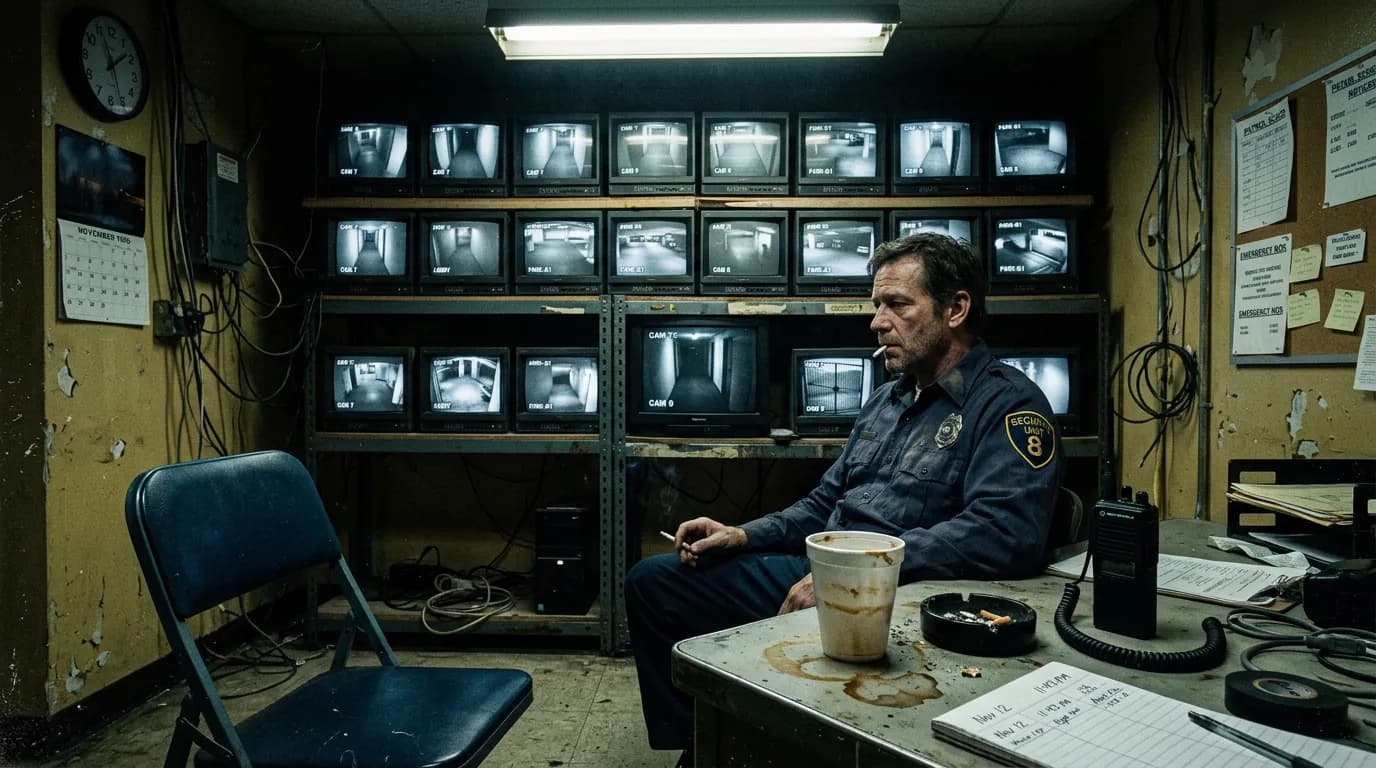

A hallway camera catches your protagonist entering the building at 02:13.
Three pages later, she swears she was never there.
That contradiction can become a great scene. Or it can become timeline mud if the surveillance footage is formatted like random action prose.
Writers love CCTV moments because they add tension, proof, doubt, and paranoia quickly. Readers often hate them because badly formatted surveillance scenes force constant re-parsing: Is this live? Playback? Who is watching? Is timestamp relevant? Are we in one camera or four?
Here’s why that matters: surveillance scenes are high-information by design. High-information scenes collapse fast when orientation is weak.
Surveillance formatting is not about decorative style.
It is about preserving causality under constrained perspective.
Think about it this way: normal scene writing gives you camera freedom. Surveillance writing takes freedom away and replaces it with evidentiary pressure. Your formatting must carry that pressure cleanly.
Free tool: use the Slugline Formatter to clean up and standardize your scene headings.
Cinematic workflow frames

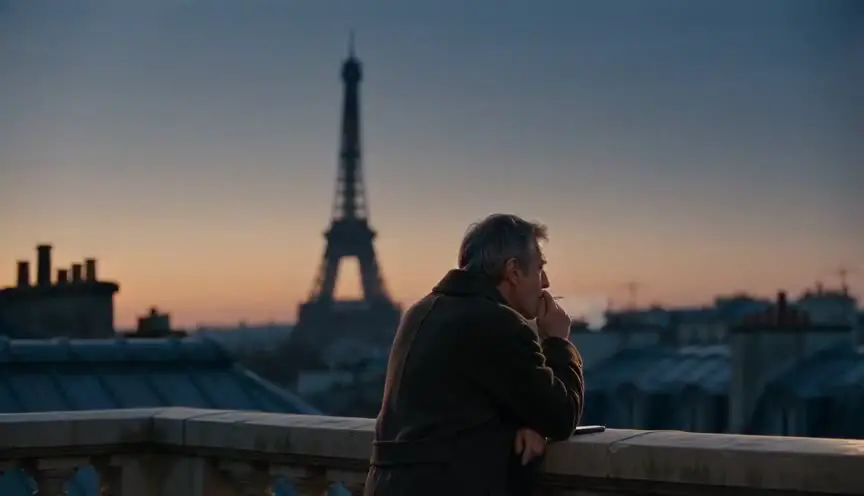
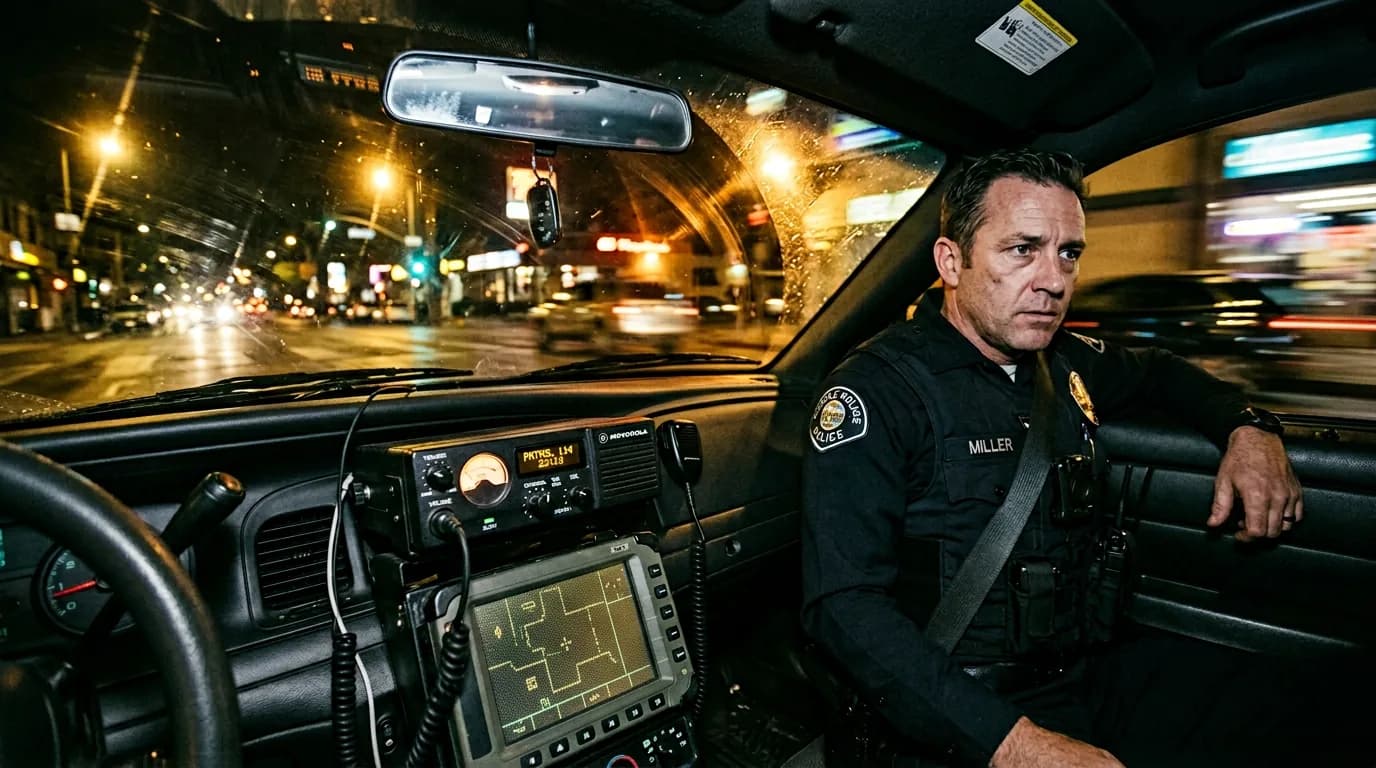
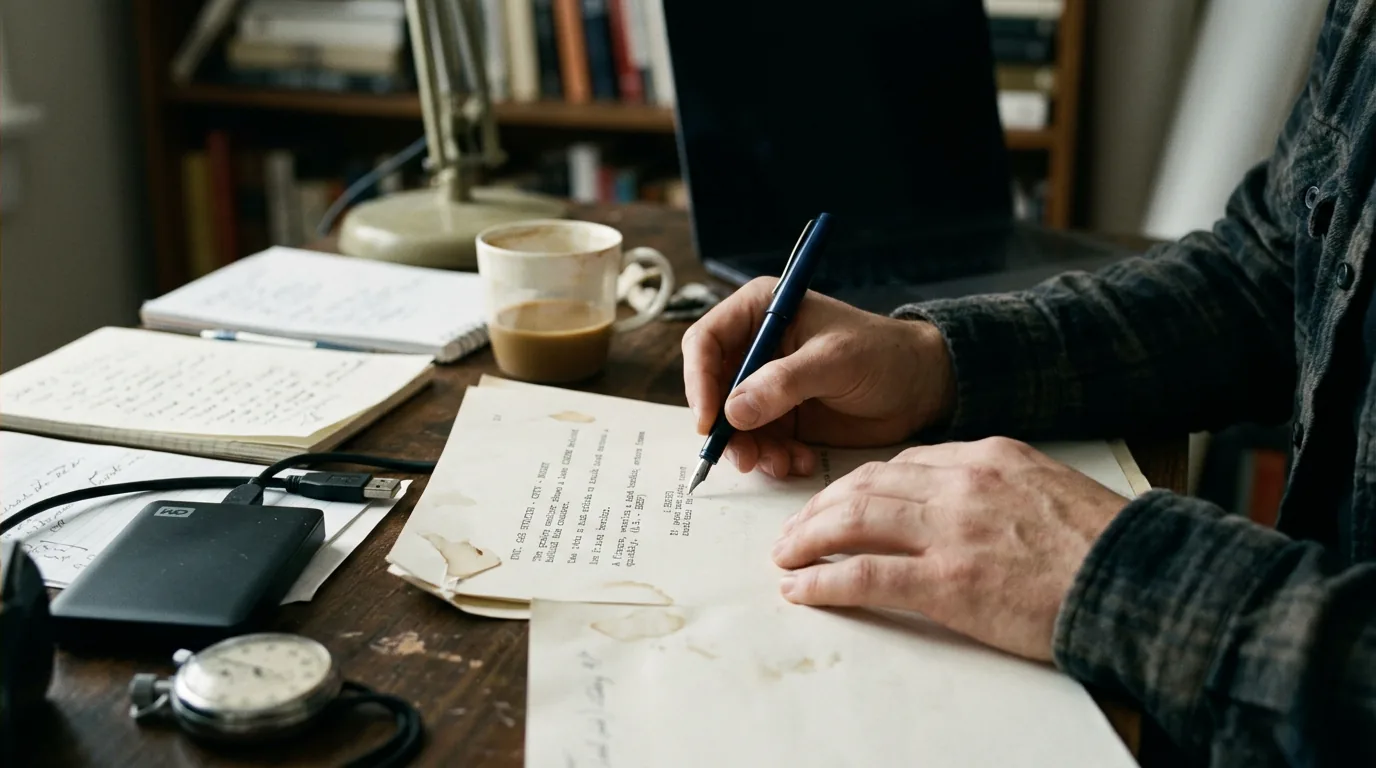
These two visuals work as a pair: the first shows Cinematic workflow still, first angle, 35mm film grain, and the second shifts to Cinematic workflow still, second angle, 35mm film grain - compare them briefly, then move on.
What Surveillance Footage Changes in Story Logic
A surveillance feed alters three foundational assumptions.
First, viewpoint is restricted. You cannot magically cut to flattering angles unless your story justifies source switching.
Second, image quality and coverage are imperfect. Blind spots, low frame rates, dead zones, and compression artifacts become part of narrative truth.
Third, footage is usually watched by someone with an agenda: investigator, suspect, journalist, security contractor, family member, defense attorney.
That agenda shapes interpretation.
A good surveillance scene is never just “what happened.” It is “what this camera could show, what it could not show, and who weaponizes that gap.”
Surveillance scenes work when visual limits create narrative pressure, not when they become tech wallpaper.
Core Formatting Patterns That Keep Pages Legible
You do not need one rigid industry template. You need consistency and fast parse signals.
Pattern 1: Explicit Source Heading
Use a scene heading that declares feed context:
INT. SECURITY OFFICE - NIGHT - SURVEILLANCE MONITOR
Then label camera feed lines clearly in action:
CAM 12 - LOBBY - 02:13:04
This is strong when timestamps and camera IDs matter to plot.
Pattern 2: Embedded Feed Blocks Inside Live Scene
Start in watcher scene, then drop concise feed blocks:
“On-screen: CAM 4 shows the loading dock, empty.”
This keeps human reaction and footage evidence braided together.
Pattern 3: Playback Sequence With Time Jumps
If characters scrub or jump timestamps, represent jumps on their own lines to avoid continuity confusion:
FAST-FORWARD - 02:13 TO 02:47
This preserves evidentiary clarity.
Pattern 4: Multi-Camera Montage With Strict Labels
When cross-cutting multiple feeds, camera labeling must be unwavering. Drift kills comprehension.
Comparison Table: Practical Trade-Offs
| Approach | Best Use Case | Strength | Risk |
|---|---|---|---|
| Source heading + camera labels | Investigation and timeline logic scenes | Maximum evidentiary clarity | Can look technical if over-detailed |
| Embedded feed in live scene | Character-driven tension moments | Emotional continuity with watcher | Source ambiguity if labels are too loose |
| Time-jump playback labels | Forensic review and reveal beats | Clear chronology shifts | Overuse can feel mechanical |
| Multi-cam labeled sequence | Heist/security escalation | Spatial complexity and dread | Reader overload without strict naming |
Three Beginner Scenarios That Commonly Fail
Scenario 1: The Detective Review Scene With Floating Timestamps
Writer includes timestamps randomly in paragraph text, sometimes with seconds, sometimes without, sometimes absent.
Result: reader cannot trust chronology.
Fix: define one timestamp style and apply it consistently where relevant. If exact time matters once, mark that moment explicitly and stop over-tagging non-critical beats.
Scenario 2: The Heist Script With Unlabeled Camera Switching
Scene jumps from lobby to stairwell to parking garage feeds without camera identifiers.
Result: spatial tension turns into spatial confusion.
Fix: label each feed switch with stable camera IDs and locations. Keep labels short and repeatable.
Scenario 3: The Courtroom Thriller Where Footage “Shows Too Much”
Surveillance magically captures close emotional detail impossible for fixed high-angle cameras.
Result: scene feels fake and convenient.
Fix: honor surveillance limitations. Use distance, occlusion, and ambiguity as assets. Let interpretation conflict drive drama.
Step-by-Step Workflow for Writing Surveillance Footage Sequences
Step 1: Define Evidence Objective
What must footage prove, disprove, or leave uncertain?
Pick one primary objective per sequence.
If the scene tries to prove everything, it usually proves nothing clearly.
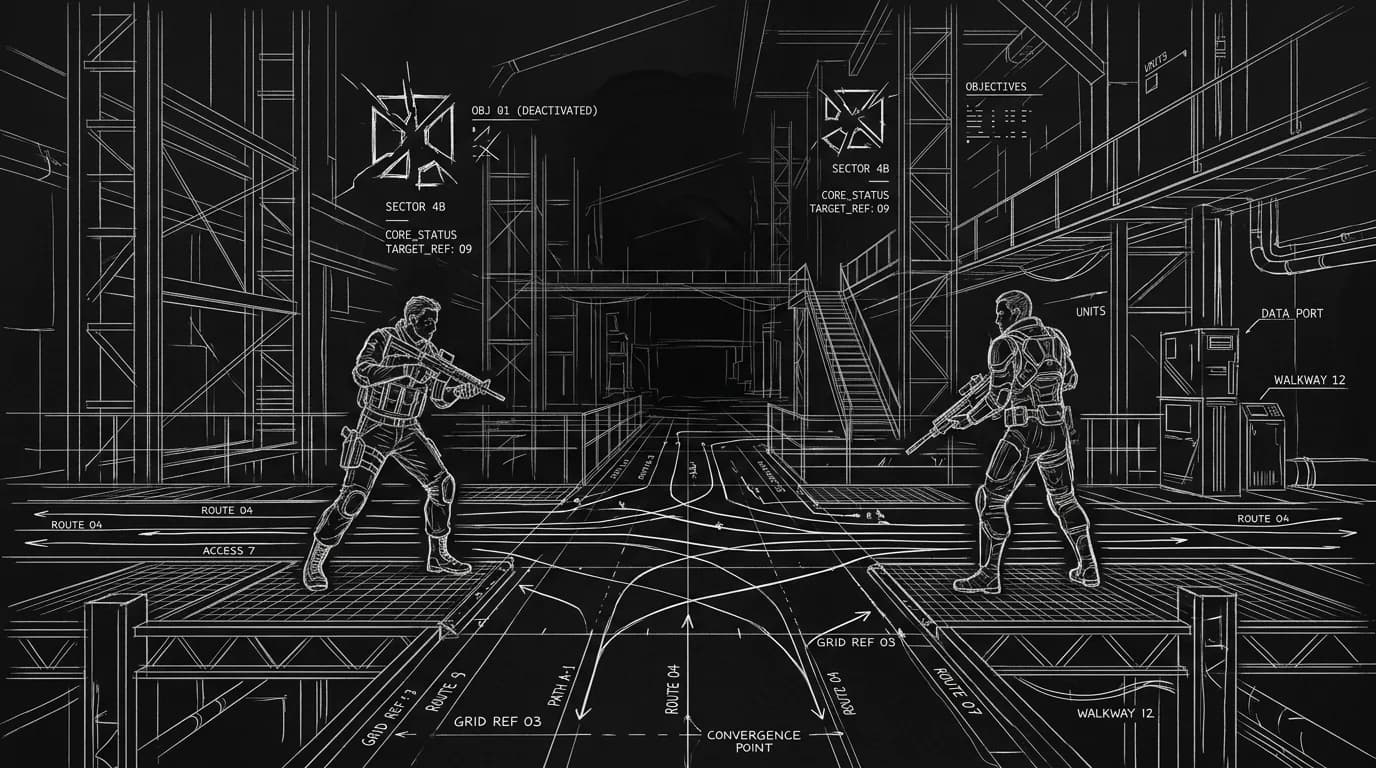
Step 2: Map Camera Topology
List available cameras, angles, dead zones, and blind spots before drafting.
Even a tiny map in your notes helps prevent impossible continuity later.
Step 3: Choose Naming Convention
Set camera labels once:
CAM 01 - LOBBY
CAM 07 - EAST HALL
CAM 14 - SERVICE DOOR
Then stick to these labels through the sequence.
Step 4: Separate Watcher Action From Feed Action
Keep watcher behavior and feed content distinct but interlocked.
Watcher lines are where interpretation tension lives.
Feed lines are where evidentiary tension lives.
Mixing them sloppily blurs both.
Step 5: Control Time Explicitly
Use clear markers for pause, rewind, fast-forward, and freeze-frame only when they alter interpretation.
Do not annotate every button press.
Annotate meaningful time manipulation.
Step 6: Write Around What Camera Cannot Show
The strongest surveillance scenes often hinge on absence.
Someone disappears for six seconds in a blind corner.
A key exchange happens just outside frame.
A reflection suggests movement without confirmation.
Use these constraints deliberately to generate suspense or plausible doubt.
Step 7: Run a “Proof Chain” Pass
Read the sequence asking:
What does this footage objectively establish?
What remains interpretive?
Who benefits from the ambiguity?
If those answers are unclear, revise labeling and beat order before polishing language.
Body Image: Camera Topology and Blind-Spot Grid

The Trench Warfare Section: What Beginners Get Wrong and How to Fix It Precisely
This is where surveillance sequences usually break in coverage.
Failure 1: Treating Surveillance as Omniscient
Writers forget fixed-camera constraints and depict impossible coverage.
Fix: predefine camera limitations and enforce them. Use limitation as drama generator.
Failure 2: Inconsistent Camera Labels
CAM A, LOBBY CAM, SECURITY FEED used interchangeably.
Fix: lock one naming system and normalize in revision.
Failure 3: Timestamp Noise
Every line includes timestamp metadata, overwhelming readability.
Fix: include timestamp only at entry points, key events, and interpretive pivots.
Failure 4: No Distinction Between Live Feed and Playback
Reader cannot tell whether events are happening now or reviewed later.
Fix: anchor mode explicitly in heading/action (LIVE FEED, PLAYBACK, REWIND TO).
Failure 5: Watching Character Has No Agency
Footage plays while watcher passively narrates facts.
Fix: give watcher tactical actions: zoom request, angle switch, pause on clue, selective omission, forwarding clip.
Failure 6: Technical Jargon Overload
Codec and hardware terms flood page without dramatic function.
Fix: retain only terms that change stakes or procedural credibility.
Failure 7: Feed Content Repeats Known Information
Surveillance scene replays facts audience already has.
Fix: each footage beat must add contradiction, confirmation, or escalation.
Failure 8: Multi-Cam Sequences Without Hierarchy
All feeds described with equal weight.
Fix: define primary feed per beat and treat secondary feeds as support.
Failure 9: Convenience Clue Syndrome
Critical clue appears perfectly centered, clear, and unambiguous.
Fix: make clues partial, costly to interpret, or contested by character perspective.
Failure 10: No Aftermath Behavior
Footage ends, scene emotional state unchanged.
Fix: end on decision pivot: arrest attempt, cover-up, confession, deletion, leak.
In surveillance scenes, uncertainty is not a bug. Uncontrolled uncertainty is.
Try it free
Try Screenweaver for free on your script
It is free. Import your existing project, get a clearer view of your outline, and regain control of your story structure in minutes.
Start FreeAdvanced Craft: Surveillance as Narrative Morality Test
Surveillance footage is rarely neutral inside a story.
It is collected by systems.
Viewed by people.
Interpreted under pressure.
Edited, leaked, buried, reframed.
When you treat footage as objective truth, you flatten moral complexity.
When you treat it as constrained evidence moving through human incentives, your scenes gain political and psychological depth.
A prosecutor sees intent.
A defense attorney sees ambiguity.
A grieving parent sees certainty where none exists.
A corrupt official sees a file to disappear.
Same clip. Different stakes.
This perspective lets your screenplay explore truth-making, not just truth-finding.
Software Workflow and Revision Discipline
In drafting tools, surveillance sequences often decay over revisions because labels drift and inserted beats break chronology.
Use a short scene style key in notes:
LIVE FEED vs PLAYBACK
camera ID format (CAM 07 - EAST HALL)
time control markers (REWIND TO 02:13:04)
Then run global search to normalize variants before lock draft.
Do a skim pass reading only camera labels and timestamps. You should be able to reconstruct event order without full prose.
For produced-script readability benchmarks in procedural scenes, the <a href="https://imsdb.com/" rel="nofollow">IMSDb archive</a> can be useful for comparative study, but internal consistency inside your own sequence matters more than imitating one legacy style.
As discussed in our guide on [how to write a news anchor scene in screenplay format], mediated source clarity is the foundation of audience trust.
If your sequence includes dispatch audio layered on top of video, pair this with [how to format police dispatch audio in a script] so channels remain distinct.
And when a surveillance reveal triggers parallel action elsewhere, [how to show simultaneous action in two locations in a script] helps keep chronology coherent under pressure.
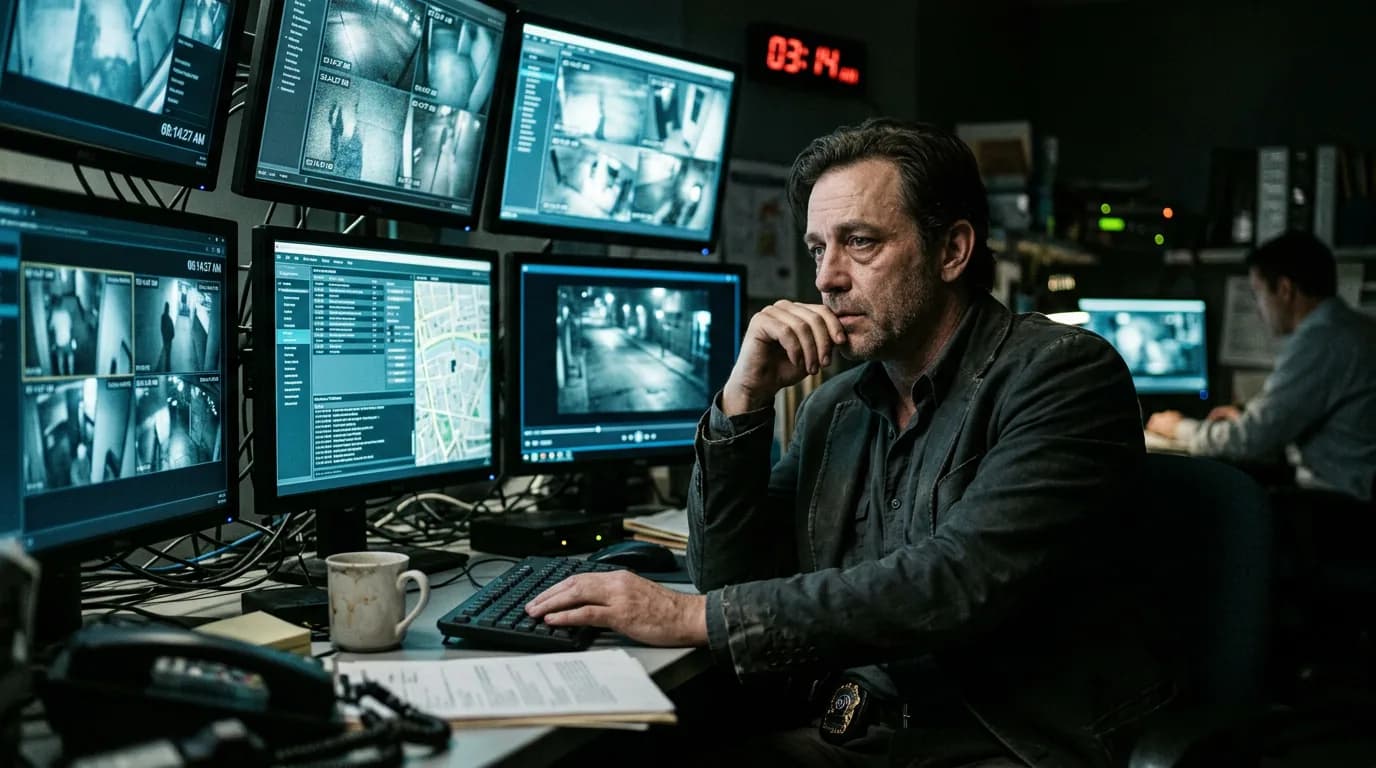
Body Image: Playback-to-Decision Sequence Strip
YouTube Placeholder
Before-and-After Micro Example
Before:
“INT. SECURITY ROOM - NIGHT
They watch footage.
VOICE There he is.
On the screen he goes into the hall then appears outside somehow.
DETECTIVE Rewind.
They rewind and see he drops something.”
Vague source logic, weak camera identity, unclear chronology.
After:
“INT. SECURITY OFFICE - NIGHT - PLAYBACK
CAM 07 - EAST HALL - 02:13:04
Rami enters frame, hood up, moving fast.
DETECTIVE LEE Pause.
Freeze-frame on his right hand.
CAM 07 - EAST HALL - 02:13:06
A metal object flashes, then disappears as he turns the blind corner.
DETECTIVE LEE Rewind two seconds.
REWIND TO 02:13:04.
CAM 14 - SERVICE DOOR - 02:13:12
Rami exits into rain, empty-handed.
Lee and Maya exchange a look. That missing six-second gap just became the case.”
Same scene idea.
Stronger evidence chain, better tension, cleaner read.
Ending Perspective: Format Evidence, Stage Interpretation
Surveillance scenes are easy to write badly because they feel technical.
The trick is that they are not technical first.
They are dramatic argument scenes disguised as evidence review.
One side says the footage proves it.
Another says it proves nothing.
A third side decides what to do before certainty exists.
Your formatting job is to make source, time, and camera perspective instantly clear.
Your writing job is to make interpretation costly.
When you do both, surveillance footage stops being clunky procedural filler.
It becomes a high-pressure engine for doubt, power shifts, and irreversible choices.
That is the level where readers stop skimming and start leaning in.
There is another craft layer most beginner drafts miss entirely: surveillance scenes are fundamentally about contested certainty.
A clip does not end argument. It starts a new argument about frame boundaries, temporal context, and intention. Who entered first? Why did the subject vanish for seven seconds? Was the object in hand a weapon, a keycard, or nothing at all? Did the missing frame happen due to compression or tampering?
If your script treats footage as simple truth, scenes flatten into procedural recitation.
If your script treats footage as constrained evidence under social pressure, scenes gain life.
The distinction is not academic. It affects how you write every line around the monitor.
When one character says “There. Proof,” another should have a plausible counter-reading rooted in camera limitations, not random denial. That creates dramatic friction without requiring melodrama. It also makes your procedural world feel credible because real investigations rarely move from video to certainty in one clean beat.
You can escalate this friction structurally by staging interpretation in waves:
Initial read creates one conclusion.
Rewind reveals contradiction.
Secondary camera appears to resolve contradiction.
Then blind-spot logic reopens ambiguity at higher stakes.
This rhythm keeps surveillance scenes active instead of static. Readers stay engaged because certainty keeps shifting based on intelligible evidence mechanics.
Another professional move: tie camera limitations to character flaws.
The impatient detective jumps to conclusions from incomplete footage.
The cautious analyst misses the obvious because they distrust every image.
The politically exposed chief chooses the interpretation that minimizes institutional risk.
Now surveillance is not just world texture. It is character pressure testing.
When you pair evidentiary limits with psychological limits, the scene does double duty: plot and characterization advance together.
You can also use surveillance formatting to control pacing across larger sequences. A common mistake is writing every camera moment at equal descriptive intensity. That exhausts attention. Instead, compress routine footage in short summary lines and expand only pivotal moments where interpretation flips. Think in zoom levels: scan mode, then microscope mode, then back to scan.
This selective expansion keeps pages lean while preserving impact where it counts.
One more operational note: if your script includes legal or media fallout, preserve chain-of-custody logic in small but clear beats. Who pulled the clip? Who copied it? Who had access? You do not need documentary detail, but one or two clean lines can prevent later plot holes when evidence gets challenged.
Surveillance scenes often look strongest in first draft because they feel inherently dramatic. In revision, they can quietly degrade as added beats blur labels and chronology. Build a mandatory surveillance audit pass before lock draft:
Normalize camera IDs.
Normalize mode labels (LIVE, PLAYBACK, REWIND).
Verify timestamp consistency where time matters.
Confirm each footage beat changes interpretation or decision.
Cut everything else.
If you do this pass rigorously, your surveillance pages stay sharp under production notes pressure.
Practical Drill: The Three-Version Stress Test
Take one surveillance scene and rewrite it in three variants without changing core plot facts.
Version A: footage appears clear and damning. Version B: same footage but with one blind-spot gap and lower confidence.
Version C: same footage plus a competing camera angle that partially contradicts initial read.
Then compare how your character decisions evolve in each version. If decisions stay identical across all three, your scene is probably not using evidence quality as true dramatic leverage.
If decisions shift credibly, you are writing surveillance as story engine rather than forensic decoration.
That is the target.
Final Step
Build your next script with Screenweaver
Move from ideas to production-ready pages faster with timeline-native writing and AI-assisted story flow.
Try Screenweaver