Scene Card Generator
Create screenplay scene cards and export to CSV.
Your beats needa script attached.
In ScreenWeaver, the outline and beats live in the same project as your screenplay. Structure and pages stay linked. Free.
- $0, does not expire
- PDF and Final Draft export
- Mac, Windows, Linux, iPad
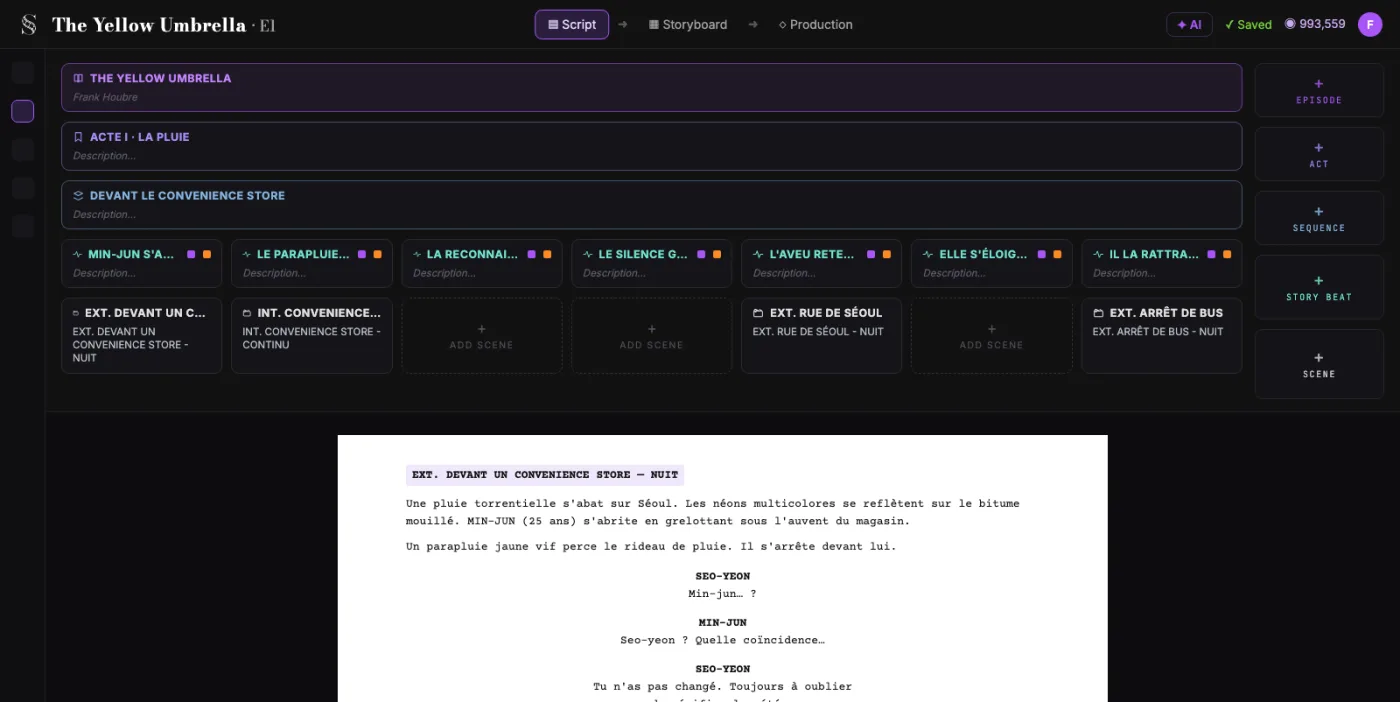
Scene Card Generator: the complete guide
It turns scenes into structured cards so progression, conflict, and turns can be reviewed at sequence level.
For this workflow, the central problem is clear: without clear scene cards, rewrites become diffused and sequence-level logic is harder to maintain. Left unresolved, this creates downstream friction and slower decisions. The practical target is structured scene cards that make conflict, change, and purpose visible at a glance.
Limitation to keep in mind: It does not guarantee pacing quality unless cards are written with real dramatic intent.
Advanced workflow: Tag each card by function and emotional movement, then reorder to test escalation strength before page rewrites.
Step-by-Step Workflow
- Create cards with objective, obstacle, and turn for every major scene.
- Sort cards by sequence and identify redundancy or missing escalation.
- Revise card intent before rewriting pages to reduce wasted effort.
- Export cards for collaborative reviews and rewrite planning.
Use Cases By Profile
- Writer: isolate weak scenes before line-level edits.
- Editor: audit sequence redundancy and missing turns.
- Room lead: align collaborators on scene purpose rapidly.
Common Mistakes To Avoid
- Using cards as summaries without dramatic spine.
- Skipping turn-point definition on key scenes.
- Failing to prune low-impact scenes.
Professional Best Practices
- Mark each card as setup, reversal, payoff, or bridge.
- Track character state change per card to protect arc continuity.
- Use card color or tags to surface pacing bottlenecks.
Treat this tool output as a decision support layer, not a replacement for authorship. Great scripts are remembered for specific choices, emotional precision, and clarity of dramatic movement. Tools help by removing noise so your energy can go where it matters: character, conflict, escalation, and payoff. If you review outcomes after each pass and keep an explicit log of accepted changes, your workflow becomes faster and more predictable from draft to draft. That consistency is exactly what professional collaborators value: fewer surprises, clearer rationale, and a script that evolves with intent.
Extended FAQ
What should every scene card include?
Objective, obstacle, turn, and emotional value shift at minimum.
How do cards help cut weak scenes?
Weak cards usually show no turn or low consequence; they become obvious candidates for merge or deletion.
Should cards be chronological or thematic?
Chronological first for pacing logic, then tag thematic threads for balance checks.
Can carding help collaborative rooms?
Yes. It creates a shared, concrete view of scene intent before line-level debate.
When should I recard a script?
After structural notes, major story pivots, or when sequence energy feels flat.
What is the key quality signal in a card set?
Escalation continuity: each card should increase pressure, information, or emotional stakes.
FAQ
Yes.
No.
Copy CSV output.
No.