Extrator de maiúsculas
Lista de objetos de cena, personagens e efeitos sonoros em MAIÚSCULAS
No formato padrão, quem escreve coloca em maiúsculas a primeira aparição de um personagem, os efeitos sonoros e os objetos de cena importantes nos blocos de ação.
Cole seu roteiro. A ferramenta percorre o texto e extrai todas as palavras escritas em MAIÚSCULAS numa lista limpa, em ordem alfabética, para montar rápido suas listas de personagens, suas decupagens de objetos e suas listas de som, tanto na reescrita quanto na preparação.
Como funciona
Uma expressão regular detecta cada palavra escrita inteiramente em capitais com pelo menos 3 letras (as letras soltas são ignoradas). Os resultados são limpos de duplicatas e ordenados de A a Z. Tudo roda no seu navegador, nenhum dado é enviado a um servidor.
Do roteiro aos planos,num só lugar.
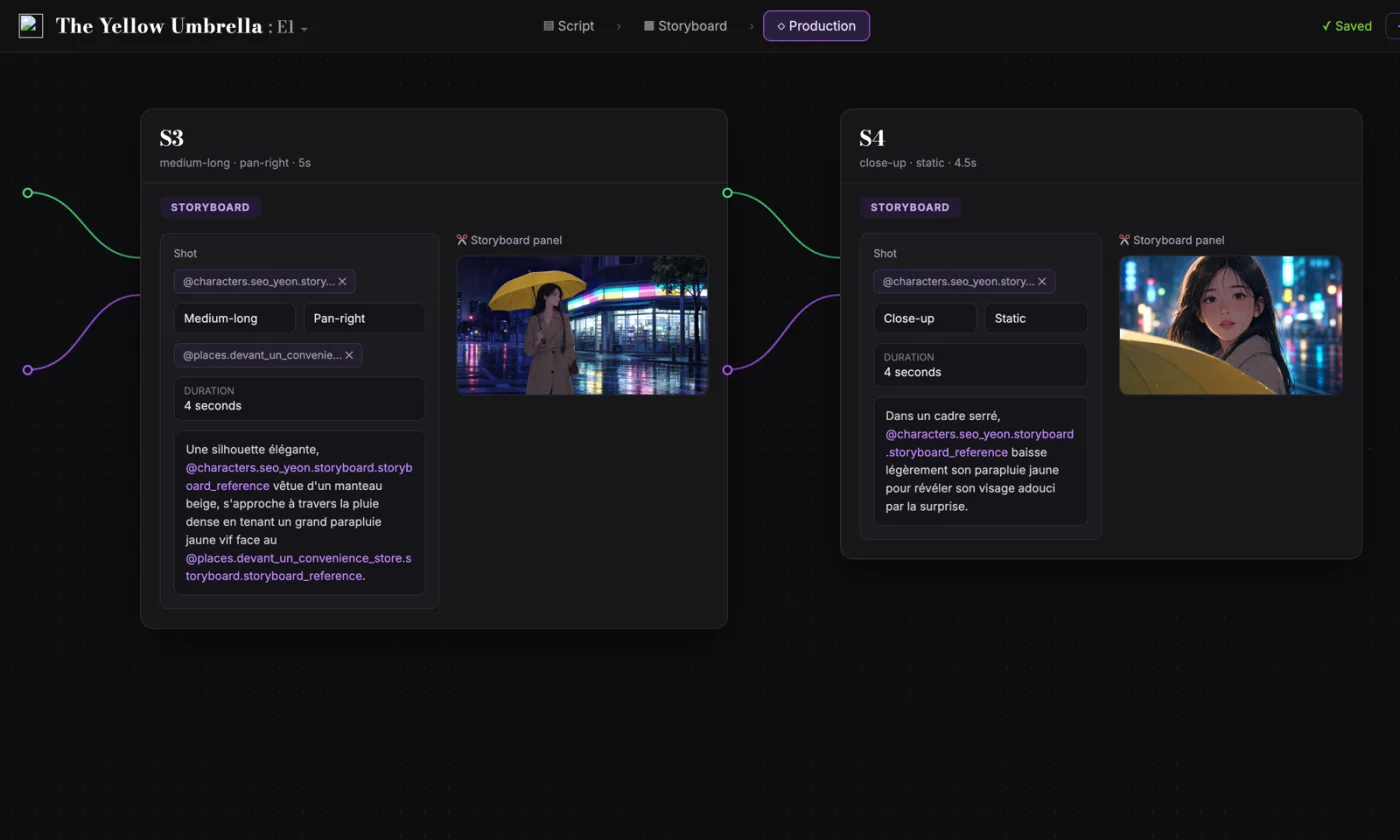
O ScreenWeaver transforma seu roteiro em uma decupagem automática de planos e depois em storyboard. Personagens, locações e referências seguem de um plano para o outro.
- US$ 0, sem prazo de validade
- Exportação em PDF e Final Draft
- Mac, Windows, Linux, iPad
Extrator de maiúsculas: o guia completo
Captura os termos em caixa alta para os elementos que interessam à produção ficarem visíveis sem leitura manual.
Neste trabalho o problema central é claro: termos importantes em caixa alta escapam fácil quando o roteiro é longo ou muda rápido. Se ele fica sem solução, gera atrito lá na frente e decisões mais lentas. O alvo prático é extração rápida de personagens, objetos de cena e efeitos candidatos para a decupagem seguinte.
Limite para ter em mente: Não classifica sozinho as entradas ambíguas, os termos ainda precisam de marcação conforme o contexto.
Uso avançado: Junte a lista extraída com colunas por departamento e marcadores de custo, e você tem um mapa de risco por versão.
O método passo a passo
- Extraia todos os termos em caixa alta do tratamento atual antes de começar a marcar.
- Classifique cada entrada em personagem, objeto de cena, efeito no set, efeito digital ou ambiente.
- Junte as variações de nome e tire o ruído de formatação.
- Use a lista limpa como base para as planilhas de decupagem por departamento.
Casos de uso por perfil
- Roteirista: conferir se personagens e objetos de cena são apresentados de forma consistente.
- Coordenador: montar modelos de decupagem para vários departamentos.
- Produtor: trazer os elementos caros mais cedo para a conversa de orçamento.
Erros comuns a evitar
- Achar que todo termo em caixa alta pertence a uma categoria só.
- Esquecer de padronizar rótulos quase iguais.
- Pular a revisão em contexto dos termos ambíguos.
Boas práticas do ofício
- Guarde as marcações de categoria direto na sua planilha de referência.
- Extraia de novo a cada tratamento importante, para ver cedo os elementos novos.
- Sinalize na hora as entradas caras para a produção olhar.
Trate o que sai desta ferramenta como apoio à decisão, não como substituto da escrita. Um bom roteiro fica na memória pelas escolhas específicas, pela precisão emocional e pela clareza do movimento dramático. As ferramentas servem para tirar o ruído, para a sua energia ir onde importa: personagem, conflito, escalada e pagamento. Se você revisa os resultados a cada passada e mantém um registro das mudanças aceitas, o seu método fica mais rápido e mais previsível de uma versão para outra. É exatamente isso que os colaboradores profissionais valorizam: menos surpresas, razões mais claras e um roteiro que evolui com intenção.
Perguntas detalhadas
A extração classifica as categorias sozinha?
Não. Ela tira os candidatos rápido, a classificação em contexto continua sendo trabalho humano.
Como reduzo os falsos positivos?
Padronize a formatação do roteiro e tire as maiúsculas decorativas que não são elementos de produção.
Isso ajuda na preparação do orçamento?
Ajuda. Uma lista marcada deixa os elementos caros à vista cedo.
Quando refazer a extração?
Depois de cada revisão grande que acrescente cenas, objetos de cena, elenco ou efeitos.
É útil em produção independente?
Muito. Tira trabalho administrativo manual quando a equipe é pequena.
Qual é o fluxo mais rápido depois?
Exportar a lista, marcar por departamento, indicar nível de risco e custo, e revisar na reunião de produção.