Generatore di cue sheet musicali
Costruisci il documento che chiedono società di gestione dei diritti e festival
Questo generatore gratuito costruisce il documento standard che dichiara quale musica compare nel tuo film, chi l'ha scritta, come viene usata e per quanto tempo. Pensato per chi produce, per chi compone e per la supervisione di post-produzione che prepara un pacchetto per festival o distribuzione.
Le società di gestione dei diritti d'autore (SIAE, ASCAP, BMI, SESAC, PRS) pagano i compensi di autori ed editori proprio a partire dai cue sheet, ed è per questo che distributori e festival li mettono tra i materiali obbligatori. Ogni brano porta un tipo di utilizzo, perché l'utilizzo cambia il peso del compenso: l'uso visivo e quello sui titoli valgono in genere più dell'uso di sottofondo nelle formule di ripartizione. I timecode si indicano in HH:MM:SS, perché le società accreditano la musica in base alla durata, non ai fotogrammi.
Tutto funziona nel tuo browser e si salva in automatico in locale. Nessun dato dei brani, dei contatti o della produzione viene inviato a un server.
Una riga per brano, nell'ordine di riproduzione. La durata viene calcolata dai timecode di ingresso e di uscita.
Il tuo cue sheet si salva da solo in questo browser, così puoi chiudere la scheda e riprendere da dove eri.
Durata musicale totale
00:00:00
0 brani su 1 hanno timecode validi e contano nel totale.
Come funziona
Compila l'intestazione di produzione, poi aggiungi una riga per ogni brano: titolo, autori, editore, interprete, società di gestione dei diritti, tipo di utilizzo e timecode di ingresso e uscita. Lo strumento verifica ogni timecode, calcola la durata di ciascun brano e somma la durata musicale complessiva. L'esportazione in PDF imposta il foglio come tabella orizzontale con il blocco di intestazione in alto, il formato che si aspettano la supervisione musicale e i distributori, mentre il CSV si apre direttamente in Excel o in Fogli Google per le produzioni che tengono i brani su un foglio di calcolo.
Come si compila un cue sheet, e chi lo legge davvero
Un cue sheet per festival non è burocrazia fine a sé stessa. Quando il tuo film viene proiettato o trasmesso, la sala o l'emittente segnala l'esecuzione alle società di gestione, e queste pagano chi ha composto la musica proprio a partire dal cue sheet depositato. Nessun cue sheet significa nessun compenso, ed è per questo che chi compone insiste perché la produzione lo depositi e per cui i distributori respingono i pacchetti che ne sono privi.
La colonna dell'utilizzo conta più di quanto immagini chi produce per la prima volta. Un commento strumentale sotto il dialogo ha un peso inferiore rispetto a un'esecuzione cantata visibile in scena, e i temi dei titoli di testa e di coda hanno pesi propri. Segnare tutto come sottofondo perché è l'impostazione predefinita è un errore comune che, negli anni di sfruttamento, costa a chi compone soldi veri.
I timecode vanno presi dal montaggio bloccato, indicati in HH:MM:SS dall'inizio del programma. Le società accreditano in base alla durata, quindi un cue sheet con punti di uscita approssimativi o mancanti sottostima la musica. Questo generatore calcola per te ogni durata e il totale, esporta un PDF per la cartella dei materiali e ti dà un CSV, così gli stessi dati possono alimentare il modello del distributore quando insiste per usare il suo.
Per chi è
- Produzione indipendente: chiudi la voce musica nella lista dei materiali di distribuzione senza comprare un software di supervisione musicale per un solo progetto.
- Chi compone: consegna alla produzione un cue sheet già finito, con la tua società di gestione e le tue edizioni indicate correttamente, così i compensi arrivano davvero a te.
- Supervisione di post-produzione: registra i brani sul timecode del montaggio bloccato ed esporta sia PDF sia CSV, così il pacchetto per il festival e il registro interno restano allineati.
Dalla sceneggiatura alle inquadrature,in un unico posto.
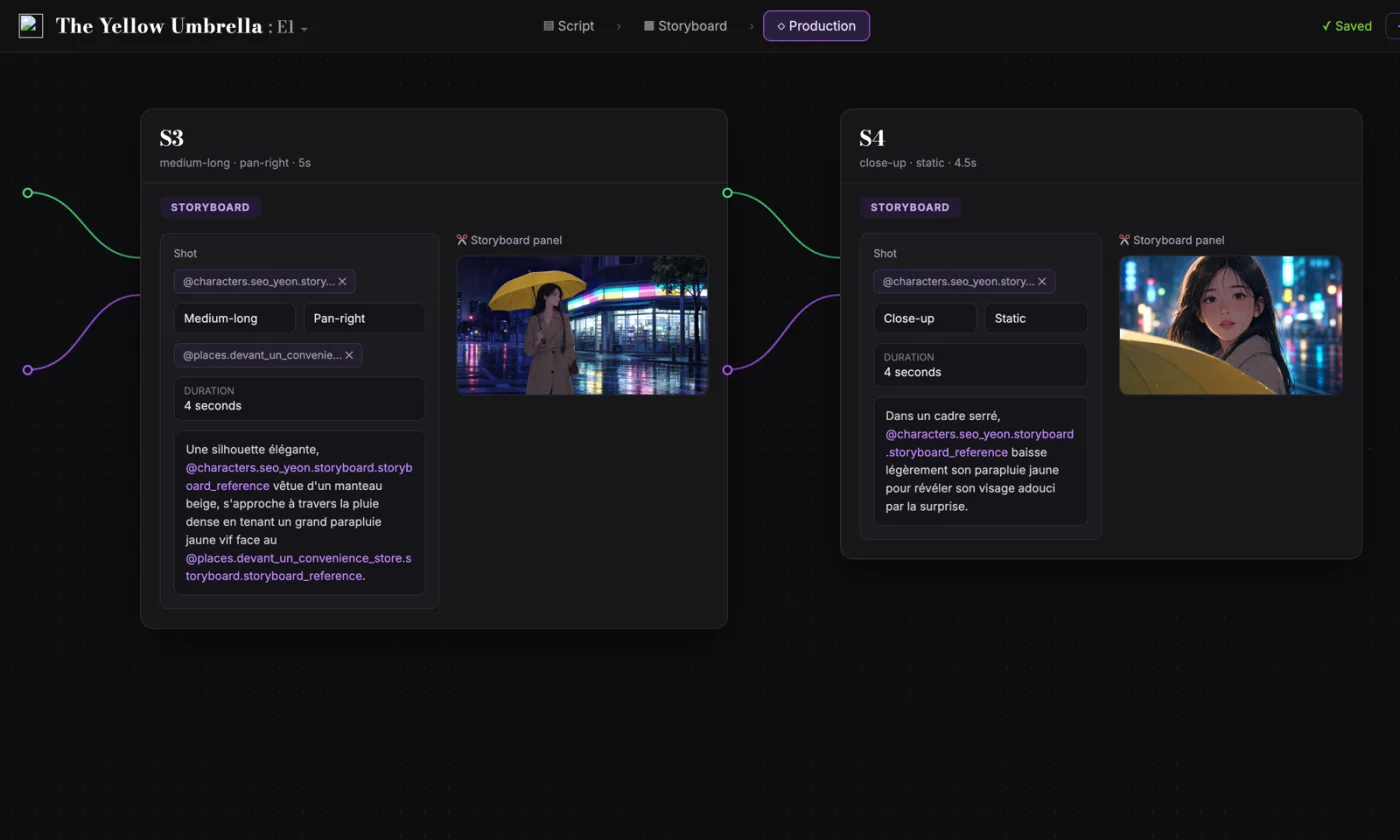
ScreenWeaver trasforma la sceneggiatura in uno spoglio delle inquadrature automatico, poi in uno storyboard. Personaggi, location e riferimenti passano da un'inquadratura all'altra.
- 0 $, senza scadenza
- Export in PDF e Final Draft
- Mac, Windows, Linux, iPad
Generatore di cue sheet musicale: la guida completa
Raccoglie l'intestazione di produzione e una riga per ogni brano (titolo, compositori, editore, interprete, società di gestione, tipo di utilizzo, timecode di entrata e uscita), calcola la durata di ogni brano e il totale, ed esporta un PDF orizzontale o un CSV.
In questo lavoro il problema centrale è chiaro: la cue sheet è un documento di consegna obbligatorio da cui le società di gestione pagano i diritti ai compositori, eppure quasi tutte le produzioni arrivano alla consegna senza averla e ricostruiscono i tempi a memoria. Se resta lì, produce attrito più avanti e decisioni più lente. L'obiettivo concreto è una cue sheet completa e formattata correttamente, con timecode verificati, durate calcolate ed esportazione in PDF e CSV pronta per il pacchetto di consegna.
Limite da tenere presente: Non verifica le quote tra autori, le società editoriali o le registrazioni presso le società di gestione contro alcun database, e lavora in HH:MM:SS invece che in timecode al fotogramma, come nella prassi delle società ma non come in una EDL.
Uso avanzato: I team di post compilano la scheda sull'immagine bloccata, esportano il CSV nel loro registro di consegna, e riesportano il PDF ogni volta che un cambio di versione sposta un tempo, tenendo identici il pacchetto festival e il registro interno.
Il metodo passo per passo
- Compila prima l'intestazione di produzione: titolo, episodio, società, contatto e data di messa in onda o uscita, esattamente come devono comparire sulla scheda depositata.
- Aggiungi i brani in ordine di riproduzione, con i timecode di entrata e uscita presi dall'immagine bloccata, e lascia calcolare le durate.
- Imposta con attenzione il tipo di utilizzo di ogni brano (di sottofondo, in scena, sigla iniziale, sigla finale), perché l'utilizzo cambia la ponderazione dei diritti.
- Esporta il PDF per la cartella di consegna e il CSV per il tuo registro, e manda copia a ogni compositore ed editore elencato.
Casi d'uso per profilo
- Produttore: chiudere la voce cue sheet nella lista di consegna di un distributore senza software di supervisione musicale.
- Compositore: consegnare una scheda con la tua società di gestione e il tuo editore indicati correttamente, così i diritti arrivano a te.
- Supervisore di post: registrare i brani sull'immagine bloccata e tenere allineate le versioni PDF e CSV nei cambi di versione.
Errori frequenti da evitare
- Segnare per impostazione predefinita tutti i brani come sottofondo strumentale, il che svaluta la ponderazione della musica in scena e delle sigle.
- Costruire la scheda prima del blocco dell'immagine, così tutti i tempi si spostano e la scheda depositata non corrisponde più al film finito.
- Lasciare vuoti i campi editore o società, il che blocca la distribuzione dei diritti anche quando il compositore è accreditato bene.
Buone pratiche del mestiere
- Compila la scheda nella stessa settimana in cui blocchi l'immagine, mentre sessioni e licenze sono ancora aperte sulla scrivania.
- Indica ogni cocompositore con la propria società; una disputa sulle quote scoperta a livello di società richiede mesi per essere sistemata.
- Tieni a portata la durata totale della musica: i distributori a volte la incrociano con i termini delle licenze nello stesso pacchetto.
Tratta quello che esce da questo strumento come un supporto alla decisione, non come un sostituto della scrittura. Una buona sceneggiatura resta in mente per le scelte precise, la precisione emotiva e la chiarezza del movimento drammatico. Gli strumenti servono a togliere il rumore, così la tua energia va dove conta: personaggio, conflitto, escalation e resa. Se rivedi i risultati dopo ogni passaggio e tieni un registro delle modifiche accettate, il tuo metodo diventa più rapido e più prevedibile da una stesura all'altra. È esattamente quello che i collaboratori professionisti apprezzano: meno sorprese, ragioni più chiare e una sceneggiatura che cresce con intenzione.
Domande approfondite
Come compilo una cue sheet per un cortometraggio?
Esattamente come per un lungometraggio, solo più corta: intestazione di produzione, poi una riga per brano con titolo, compositori, editore, interprete, società di gestione, tipo di utilizzo e timecode di entrata e uscita dal montaggio bloccato. Anche un corto con tre brani ne ha bisogno se andrà nei festival o passerà da un distributore.
Quali tipi di utilizzo pagano di più?
Le ponderazioni cambiano da società a società, ma le esecuzioni vocali in scena e i brani in primo piano stanno in genere sopra gli usi di sottofondo, e i temi di sigla iniziale e finale hanno ponderazioni proprie, più alte. Per questo la colonna dell'utilizzo merita attenzione vera, non un valore predefinito.
Serve una cue sheet se ho usato solo musica di libreria?
Sì. Anche i brani di libreria hanno compositori ed editori che incassano diritti di esecuzione, e la licenza che hai firmato quasi certamente ti obbliga a depositare la scheda. Il foglio metadati della libreria di solito riporta i nomi esatti di autore ed editore da inserire.
Cos'è una società di gestione e quale indico?
Una società di gestione incassa i diritti di esecuzione per autori ed editori: SIAE in Italia, ASCAP, BMI e SESAC negli Stati Uniti, SOCAN in Canada, PRS nel Regno Unito. Indica quella a cui ogni compositore ed editore è realmente iscritto; è la loro registrazione, non una scelta della produzione.
Quanto devono essere precisi i timecode?
Al secondo, misurati dall'inizio del programma sull'immagine bloccata. Le società accreditano la musica per durata e non per posizione del fotogramma, quindi HH:MM:SS è lo standard. Conta soprattutto che entrata, uscita e durata siano coerenti e provengano dalla versione consegnata.
Posso mandare un CSV invece di un PDF?
La maggior parte dei distributori si aspetta un PDF formattato, e alcuni impongono il proprio modello. La cosa pratica è tenere entrambi: il PDF come documento di consegna e il CSV per incollare le stesse righe in qualsiasi modello altrui in pochi minuti.
Domande frequenti
Un registro di ogni brano presente in un film o in un episodio: titolo, autori, editore, interprete, società di gestione dei diritti, tipo di utilizzo e durata. Le società lo usano per ripartire i compensi da esecuzione, e distributori e festival lo richiedono come materiale standard.
La musica di sottofondo si sente ma la sua fonte non fa parte della scena, come il commento sotto il dialogo. L'uso visivo significa che l'esecuzione si vede o ha una fonte chiara in scena, come un gruppo che suona dentro l'inquadratura. Gli usi visivi hanno in genere un peso maggiore nelle formule di ripartizione.
Molti sì, e praticamente tutti i distributori e le emittenti lo richiedono. Di solito sta nella lista dei materiali accanto alla trascrizione dei dialoghi e alle licenze musicali. Prepararlo al blocco del montaggio richiede un'ora; ricostruirlo a memoria un anno dopo è quello che chi produce rimpiange.
Ore, minuti e secondi (HH:MM:SS) misurati dall'inizio del programma, con un ingresso e un'uscita per brano. I fotogrammi si omettono di norma, perché le società accreditano la musica in base alla durata in secondi e non alla posizione del fotogramma.
Per consuetudine lo prepara e lo deposita la casa di produzione, spesso tramite l'emittente o il distributore, ma in pratica chi compone lo insegue di frequente, perché i suoi compensi ne dipendono. Chiunque lo depositi, ogni autore ed editore elencato dovrebbe riceverne una copia.