FDX 转 PDF 转换器

没有 Final Draft 也能打开 Final Draft 文件

这个免费的 FDX 转 PDF 转换器,直接在你的浏览器里把 Final Draft 的 .fdx 文件变成排版正确的剧本 PDF。把文件拖进来,看一眼实时预览,下载 PDF。不需要 Final Draft 授权、不用注册、不上传:你的剧本从不离开你的电脑。

一个 .fdx 文件就是普通的 XML。剧本里的每个元素都装在一个带 Type 属性的 Paragraph 标签里(场景标题、动作、人物、对白、括号提示、转场),这正是通用文件转换器会把剧本糟蹋掉的原因:它们无视这些类型,把所有内容压到左边距上。这个工具读懂类型,重新搭起行业版式:US Letter 纸上的 Courier 12 磅、左边距 3.8 厘米、对白在 6.4 厘米处、人物名在 9.4 厘米处、转场右对齐、每页 55 行。

解析和 PDF 生成完全在你的浏览器里运行。文件在本地读取,没有任何内容被发送到服务器。当前版本会把双栏对白拆成先后排列的两段发言。

把你的 .fdx 文件拖到这里

或者用按钮从你的电脑里选一个文件。

百分之百私密:文件在这个标签页里处理,从不上传。

载入一个 .fdx 文件或粘贴它的 XML,就能得到排版预览和可下载的 PDF。

工作原理

转换器用浏览器自带的 XML 解析器读你的 .fdx,取出每个 Paragraph 的 Type 属性,把 Final Draft 因为样式而拆开的文本片段重新拼回去,然后用 jsPDF 按标准版式排版:Courier 12 磅、US Letter 纸、左边距 3.8 厘米、其余各边 2.5 厘米、对白在距页边 6.4 厘米处宽 8.9 厘米的栏里、人物名在 9.4 厘米处,页码在右上角并带一个点。工具不认识的元素类型会按动作行打印出来,所以你剧本里的任何内容都不会丢。

没有 Final Draft,怎么把 FDX 转成 PDF

典型场景:合写者、制片方或某个比赛发来一个 .fdx 文件,而你没有 Final Draft,它眼下售价约 200 美元。仅仅为了读一读或传一传剧本,你并不需要它。一个在线的 FDX 转 PDF 转换器处理的就是你真正想要的那件事:一份干净、可打印、和写作者排版一致的 PDF。这一个免费转换 fdx 文件,不用账号,也没有水印。

通用文档转换器在这件事上失败得非常具体。FDX 把每一行的角色存在 Type 属性里,而版式(3.8 厘米的装订边距、对白栏、看起来居中的人物名)只有在转换器应用了这些角色时才存在。把文件当成通用 XML 或富文本来处理的工具,会输出一堵左对齐的 Courier 墙,没有哪个读者会当真。真正的 fdx 转换器,是逐个元素把剧本的版式网格重新搭起来。

还有隐私问题:大多数提供 Final Draft 转 PDF 在线服务的网站,都要你把文件上传到他们的服务器。对一个还没拍出来的剧本,这是实实在在的风险,而且完全没必要。FDX 就是 XML,你的浏览器在本地就能解析它。这个页面既是在线的 fdx 阅读器,也是一条从 Final Draft 到 PDF 的导出通道,不用注册,也没有一个字节离开你的电脑。

适合谁

  • 收到 .fdx 的写作者 打开合作者的 Final Draft 文件、检查排版,然后做出一份能传给别人的 PDF,不必买软件。
  • 投比赛和申请扶持的人 大多数比赛要 PDF。把你最终的 .fdx 转成可直接提交的 PDF,同时保留读者预期的标准版式。
  • 制片和剧本读者 在任何一台机器上拿到一份可打印的稿子,包括那些装不了编剧软件的电脑。

FDX to PDF Converter: the complete guide

It parses the .fdx XML locally, reads each paragraph's element type, and rebuilds the industry layout in a downloadable PDF: Courier 12 point, US Letter, 1.5 inch left margin, proper dialogue and character indents, right-aligned transitions, and numbered pages.

For this workflow, the central problem is clear: an .fdx file is useless to anyone without Final Draft, and generic converters destroy screenplay formatting because they ignore the element types stored in the XML. Left unresolved, this creates downstream friction and slower decisions. The practical target is a correctly formatted, submission-ready screenplay PDF produced in the browser, with no Final Draft license and no upload.

Limitation to keep in mind: It converts for reading, printing, and submission, not for editing: dual dialogue is flattened to sequential speeches, and revision colors, scene numbers, and script notes are not carried into the PDF.

Advanced workflow: Teams exchanging drafts keep .fdx as the editable master and use this converter to cut reader PDFs at each milestone, comparing estimated page counts between versions to catch formatting drift before a submission deadline.

Step-by-Step Workflow

  1. Drop the .fdx file into the converter, or open it in a text editor and paste the XML if the file arrived in a zip or email preview.
  2. Check the formatted preview: scene headings, indents, and transitions should match what the writer built in Final Draft.
  3. Review the parse summary (scene count, dialogue blocks, estimated pages) to confirm nothing obvious is missing.
  4. Download the PDF and archive it next to the source .fdx so the readable copy and the editable master stay paired.

Use Cases By Profile

  • Writer: open a collaborator's Final Draft file and produce a clean shareable PDF without buying the software.
  • Contest submitter: convert the final .fdx to the PDF upload every major contest requires, keeping the standard layout intact.
  • Producer or reader: get a printable copy of a draft on any machine, with the script never leaving the browser.

Common Mistakes To Avoid

  • Running an .fdx through a generic document converter and sending out the left-aligned wall of text it produces.
  • Uploading an unproduced script to an unknown conversion site when the format is plain XML a browser can parse locally.
  • Assuming the PDF page count matches Final Draft exactly and quoting it in a submission form without checking the file.

Professional Best Practices

  • Keep the .fdx as your editable master; the PDF is a delivery format, not a working file.
  • If a file refuses to parse, open it in a text editor: a real .fdx starts with an XML declaration and a FinalDraft root tag.
  • For contests, convert and then open the PDF once before uploading; thirty seconds of checking beats a formatting disqualification.

Treat this tool output as a decision support layer, not a replacement for authorship. Great scripts are remembered for specific choices, emotional precision, and clarity of dramatic movement. Tools help by removing noise so your energy can go where it matters: character, conflict, escalation, and payoff. If you review outcomes after each pass and keep an explicit log of accepted changes, your workflow becomes faster and more predictable from draft to draft. That consistency is exactly what professional collaborators value: fewer surprises, clearer rationale, and a script that evolves with intent.

Extended FAQ

What is an FDX file?

It is Final Draft's native document format, and under the hood it is plain XML: paragraphs tagged with element types like Scene Heading, Character, and Dialogue. That is why a converter that respects those tags can rebuild the script layout perfectly.

Can I convert FDX to PDF on my phone or tablet?

Yes. The converter runs in any modern browser, so a phone or tablet works. Pasting the XML is often easier than the file picker on mobile if the .fdx arrived inside an email.

Will the PDF page count match Final Draft exactly?

It will be close but not guaranteed identical. Line breaking and widow control differ slightly between engines, so a 100 page script may land within a page or two. Check the output before quoting a page count.

Can I edit the script after converting it to PDF?

Not in the PDF itself. Keep the .fdx as your editable master and re-convert after changes. If you need to edit without Final Draft, import the .fdx into a free screenwriting app, then export a fresh file.

Does the converter handle revision marks and colored pages?

No. Production features like revision asterisks, colored revision pages, and locked scene numbers are not reproduced. The output is a clean reading and submission copy of the current text.

Is FDX to PDF conversion safe for an unproduced script?

Here, yes: parsing and PDF generation happen in your browser and the file is never uploaded. Avoid converter sites that process scripts server-side; an unreleased screenplay should not sit in a stranger's storage.

FAQ

常见问题

把 .fdx 文件拖进这个转换器。它会在你的浏览器里解析 XML,显示排版预览,并给你一份 PDF。如果你要的是编辑而不只是阅读,能导入 FDX 的免费软件也行,但要传阅和打印的话,PDF 通常就够了。

真的。不用注册、输出没有水印、不限页数、没有试用期。它是 ScreenWeaver 出的免费工具,转换在你自己的机器上完成。

不会。文件由浏览器的 XML 解析器在本地读取,PDF 也在本地生成。你可以在页面加载完之后断开网络,转换照样能用。

行业标准版式:US Letter 纸上的 Courier 12 磅、左边距 3.8 厘米、上右下各 2.5 厘米、对白在距页边 6.4 厘米处宽 8.9 厘米的栏里、人物名在 9.4 厘米处、转场右对齐、每页约 55 行,页码在右上角并带一个点。

并排的双栏对白需要一套当前版本还没做的双栏版式。两段发言都完整保留,并按剧本顺序先后打印,所以没有对白丢失。页数可能会因此略有增加。

Preview of ScreenWeaver visual timeline and script rhythm

把那份剧本变成分镜和镜头

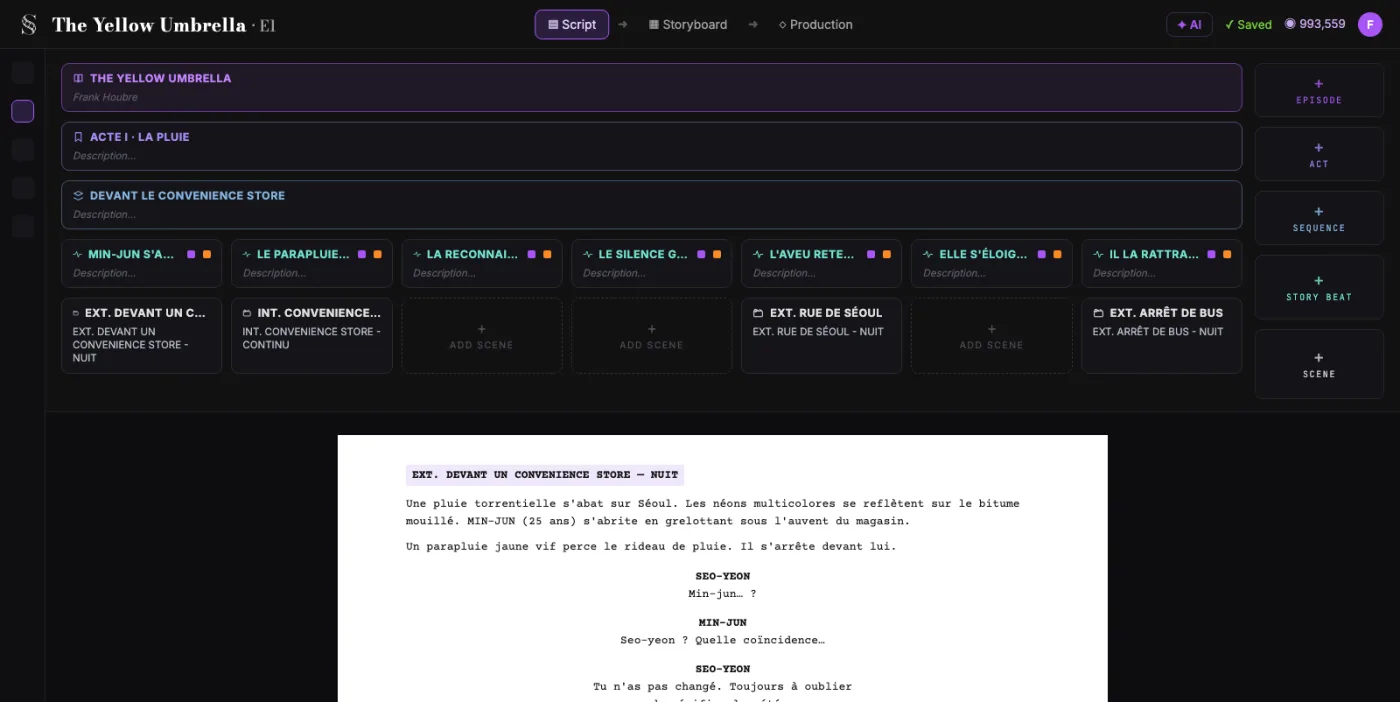
ScreenWeaver 读你的剧本,帮你把它拆成场次、分镜和 AI 生成的镜头,你刚做出来的这份 PDF,于是成了筹备的起点。免费开始。

免费试用 ScreenWeaver