重复词查找器

重复检查器 · 剧本用词回声查找

每个写作者都有自己的口头禅,那些不知不觉重复的词:同一个动词、同一个名词、同一个形容词,在一场戏里一遍遍冒出来。

在下面粘贴你的场景文本。工具会忽略功能词(的、了、和、但是之类),并高亮那些出现超过三次且挨得很近的实义词(动词、名词、形容词),让你发现回声并把用词变得多样。

全部在你的浏览器里运行。一段小脚本统计词频和每次出现之间的距离,只有至少出现四次、且至少有一对出现相距不超过 50 个词的词才会被标出来。

工作原理

算法把你的文本切成词,过滤掉停用词(冠词、连词、代词、常见助词),再记录剩下每个词的所有位置。当一个词至少出现四次,且其中至少两次相距不超过 50 个词时,它就会被标记为回声。高亮在你的浏览器里完成,没有任何数据被发送到服务器。

Echo Finder: the complete guide

It finds repeated high-impact words that cluster too closely, helping prose feel intentional instead of repetitive.

For this workflow, the central problem is clear: unnoticed word repetition can make prose feel flat, rushed, or unintentionally comedic. Left unresolved, this creates downstream friction and slower decisions. The practical target is cleaner language texture with stronger sentence-level variety and less accidental redundancy.

Limitation to keep in mind: It cannot distinguish every poetic recurrence from accidental echo automatically; human judgment remains required.

Advanced workflow: Run echo analysis after structural rewrites, because scene moves often duplicate verbs and emotional labels unintentionally.

Step-by-Step Workflow

  1. Analyze one sequence at a time and inspect clusters of repeated content words.
  2. Decide whether each repetition is intentional motif or unintentional echo.
  3. Replace or reframe only the low-value repeats that reduce clarity or tone.
  4. Run a final pass to confirm voice consistency after substitutions.

Use Cases By Profile

  • Writer: clean verbal tics before sharing pages.
  • Editor: accelerate polish pass on diction diversity.
  • Team rewrite room: standardize tone across multiple contributors.

Common Mistakes To Avoid

  • Removing all repetition, including intentional rhetorical effects.
  • Replacing words with weaker synonyms just to vary vocabulary.
  • Ignoring nearby echoes that degrade line impact.

Professional Best Practices

  • Protect intentional motifs while trimming accidental repetition.
  • Prioritize high-frequency verbs and adjectives in cleanup passes.
  • Read revised sections aloud to catch rhythmic monotony.

Treat this tool output as a decision support layer, not a replacement for authorship. Great scripts are remembered for specific choices, emotional precision, and clarity of dramatic movement. Tools help by removing noise so your energy can go where it matters: character, conflict, escalation, and payoff. If you review outcomes after each pass and keep an explicit log of accepted changes, your workflow becomes faster and more predictable from draft to draft. That consistency is exactly what professional collaborators value: fewer surprises, clearer rationale, and a script that evolves with intent.

Extended FAQ

Should all repetition be removed?

No. Keep intentional motifs and rhetorical echoes. Remove only low-value accidental repetition.

What words should I prioritize in cleanup?

High-frequency verbs, adjectives, and emotional labels that flatten voice when repeated.

Can echo checks change tone accidentally?

Yes if replacements are careless. Always validate revised diction against character voice and genre tone.

How often should I run this tool?

At late rewrite stages and after heavy structural changes that duplicate language patterns.

Is this useful for dialogue-only passes?

Very. Dialogue rewrites often introduce repeated phrasing unconsciously.

What is a good final QA step?

Read revised pages aloud to verify rhythm, precision, and intentional recurrence.

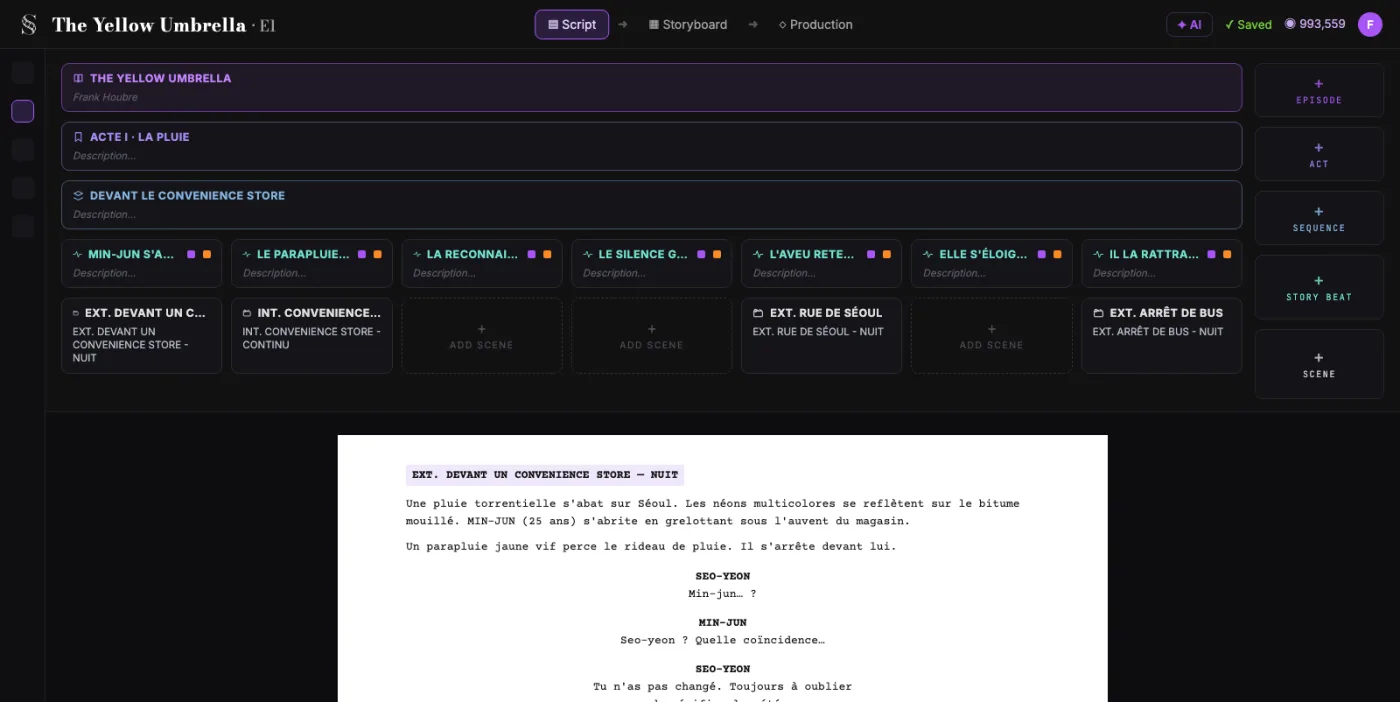
Preview of ScreenWeaver visual timeline and script rhythm

从重复词到完整结构

在这里清掉重复,然后把剧本带进 ScreenWeaver,在一处看到节拍、段落和节奏。大纲和剧本始终同步。

了解 ScreenWeaver