Comic to Animation Calculator
How long your comic, manga or graphic novel runs as animation
Enter the page count and panel density of a comic, manga, album or graphic novel and this comic to animation calculator returns the shot count, the runtime, an episode split for the format you target, and the board frames and clips an AI pipeline would need to make it.
A comic page is not a minute of screen time and a panel is not a shot. Action panels drawn mid-movement hide a before and an after and become two or three shots; three talking-head panels in the same framing are one shot with three lines; and every scene needs an establishing shot the page never drew. The calculator applies those three corrections, then converts shots to time.
Everything runs in your browser. Nothing you enter is sent anywhere or stored.
Presets set the page count and panel density. Edit either number for your own book.
Flip through the book once and estimate. Recalibrate after boarding one chapter.
Adaptation size
| Scenes and establishing shots | 7 scenes, 7 establishing shots added |
| Screen time per page | 24.2 s |
| Per episode | Whole book in one film |
| Storyboard frames | 152 frames, one per shot |
| AI generation load | 152 clips, about 456 generations at 3 tries per shot |
Take the clip count to the AI video cost calculator with your model to turn it into a budget.
How the calculator counts
Pages times panels per page gives the panel count. The action share of those panels is multiplied by 2.5, because a panel drawn mid-movement becomes a wind-up, an impact and a result. The merge share is divided by three, because same-framing dialogue panels of one speaker are a single shot with several lines. The rest count one for one. One establishing shot is added per scene at roughly a scene every three pages. Shots times seconds per shot gives the runtime; the runtime divided by the target episode length gives the episode count, and the pages per episode tell you where the breaks fall in the book. The generation load is one board frame and one clip per shot, with three generations per shot as the typical retry rate.
Why page count is the wrong way to size an adaptation
Writers size a screenplay by pages because a screenplay page was designed to be a minute. A comic page was designed to be read at whatever speed the reader chooses, and its panels were composed to be looked at, not to last. Two books with the same page count can be a nine-minute short and a forty-minute film, and the difference is entirely in how many panels are action, how many are conversation, and how many scenes there are.
Those three numbers are what the calculator asks for, and they are the three decisions a storyboard artist makes on every page: split this, merge these, add an establishing shot here. The runtime is a consequence of them, not of the page count.
For an AI-produced adaptation the same three numbers are the budget. Every shot is a board frame and a clip, and every clip gets generated about three times before one survives the edit. Sizing the book first is the difference between a plan and a surprise.
For the panel-by-panel method behind the ratios, read comic panels to storyboard and its worked page.
Who uses the comic to animation calculator
- Comic creators. Size an issue or an album before pitching it as a short, a series or a film.
- Manga adapters. Split a tankobon into 22-minute episodes and see how many chapters each one eats.
- AI filmmakers. Turn a book into a clip count and a retry budget before the first generation.
Comic to Animation Calculator: la guida completa
It multiplies pages by panels per page, splits action panels into several shots, merges same-framing dialogue panels, adds one establishing shot per scene at roughly a scene per three pages, converts shots to runtime at your seconds-per-shot, splits the runtime into episodes of the length you target, and reports the storyboard frames, clips and generations at a typical three-tries-per-shot retry rate.
In questo lavoro il problema centrale è chiaro: a comic page is not a minute of screen time and a panel is not a shot, so adaptation runtimes guessed from page count are wrong by a factor of two in either direction. Se resta lì, produce attrito più avanti e decisioni più lente. L'obiettivo concreto è a shot count, a runtime, an episode split and the board frames and clips an AI pipeline would need, from page count, panel density and three editorial ratios.
Limite da tenere presente: The ratios are averages over a whole book, not a reading of your pages: a fight-heavy issue can double its shot count and a talky chapter halve it. Use the result to size the project and pick a format, then board the first chapter for real and recalibrate the ratios against it.
Uso avanzato: Advanced users run the calculator per chapter with different action and merge ratios, sum the runtimes, and use the per-episode page count to decide where episode breaks fall on the page, then paste the episode list as the outline of a ScreenWeaver project and board each chapter in the target aspect ratio.
Il metodo passo per passo
- Pick the format preset closest to the book (US issue, album, tankobon, graphic novel) or type the page count and panel density by hand.
- Set the action share (panels drawn mid-movement that hide a before and after) and the merge share (same-framing dialogue panels) from a quick flip through the book.
- Choose seconds per shot: 2.5 to 3 for action and vertical, 3.5 to 4 for drama, 5 for slow graphic novel pacing.
- Pick the delivery target (film, 90 second vertical, 5 minute short, 11 or 22 minute episodes) and read the episode split, then copy the summary into your pitch or plan.
Casi d'uso per profilo
- Comic creator: find out whether a 22-page issue is a 90-second teaser or a nine-minute short before boarding a single panel.
- Manga adapter: size a tankobon into 22-minute episodes and see how many chapters each episode consumes.
- AI filmmaker: turn a graphic novel into a clip count and a retry budget before spending credits.
Errori frequenti da evitare
- Assuming one panel equals one shot, which undercounts fights and overcounts conversations.
- Forgetting establishing shots: the page told the reader where they were, the cut does not.
- Boarding the whole book before sizing it, then discovering the film is forty minutes and the budget was for nine.
Buone pratiche del mestiere
- Board one chapter first, count the real shots, and set the ratios so the calculator matches it before sizing the rest of the book.
- For a vertical release, set 2.5 seconds per shot and 90 second episodes and expect one issue to make three to five episodes.
- Use the per-page seconds figure as the sanity check: under 15 seconds a page means you are skipping panels, over 45 means you are animating every one.
Tratta quello che esce da questo strumento come un supporto alla decisione, non come un sostituto della scrittura. Una buona sceneggiatura resta in mente per le scelte precise, la precisione emotiva e la chiarezza del movimento drammatico. Gli strumenti servono a togliere il rumore, così la tua energia va dove conta: personaggio, conflitto, escalation e resa. Se rivedi i risultati dopo ogni passaggio e tieni un registro delle modifiche accettate, il tuo metodo diventa più rapido e più prevedibile da una stesura all'altra. È esattamente quello che i collaboratori professionisti apprezzano: meno sorprese, ragioni più chiare e una sceneggiatura che cresce con intenzione.
Domande approfondite
How long is a comic book as an animation?
A typical 22-page US issue at five to six panels a page comes out around 150 shots and eight to nine minutes at 3.5 seconds a shot, once action panels are split, dialogue panels merged and establishing shots added. A 48-page album runs 20 to 25 minutes, a 190-page tankobon about 90 minutes.
How many manga chapters make one anime episode?
At 18 to 20 pages a chapter and roughly 25 seconds of screen time per page, a 22-minute episode covers two to three chapters. The calculator gives the exact split for your page count and panel density; the pages-per-episode figure is where the episode breaks fall.
Why is a panel not a shot?
An action panel drawn mid-movement hides a before and an after, so it becomes two or three shots. Three talking-head panels of the same character in the same framing are one shot with three lines. And every scene needs an establishing shot the page never drew, because a page turn told the reader where they were and a cut does not.
Does the calculator work for manga and bande dessinee?
Yes. The manga preset uses 192 pages at five panels a page, the album preset 48 pages at nine; both are editable. Right-to-left reading order does not change the count, and dense Franco-Belgian pages mostly raise the merge share, since more of the panels are same-framing dialogue.
What does the AI generation load line mean?
One storyboard frame per shot, one clip per shot, and three generations per shot at a typical retry rate. Feed the clip count into the AI video cost calculator with your model to get a budget; the retry multiplier is what decides it.
Comic to animation calculator FAQ
A 22-page issue at five to six panels a page lands around 150 shots and eight to nine minutes at 3.5 seconds a shot. A 48-page album is 20 to 25 minutes, a 192-page tankobon about 90 minutes. The ratios matter more than the pages: a fight-heavy issue can double the count.
Two to three chapters of 18 to 20 pages per 22-minute episode, at roughly 25 seconds of screen time per page. The calculator gives your exact split; the pages-per-episode figure is where the breaks fall.
Because the page told the reader where they were and a cut does not. Comics open scenes on a face constantly, since the previous scene ended a page turn ago. Animation needs a wide shot the artist never drew, about one per scene.
2.5 to 3 for action or a vertical release, 3.5 to 4 for drama, 5 for a slow graphic novel. The average shot length of the animation you want to resemble is the right number, and most anime sits between 3 and 4.
Yes. Paste the episode split as the outline, write the shot list as a script, attach the characters as story elements with reference sheets cut from the book, and the storyboard generates a frame per shot in 16:9 or 9:16. The clip count from this calculator is what the production side then generates.
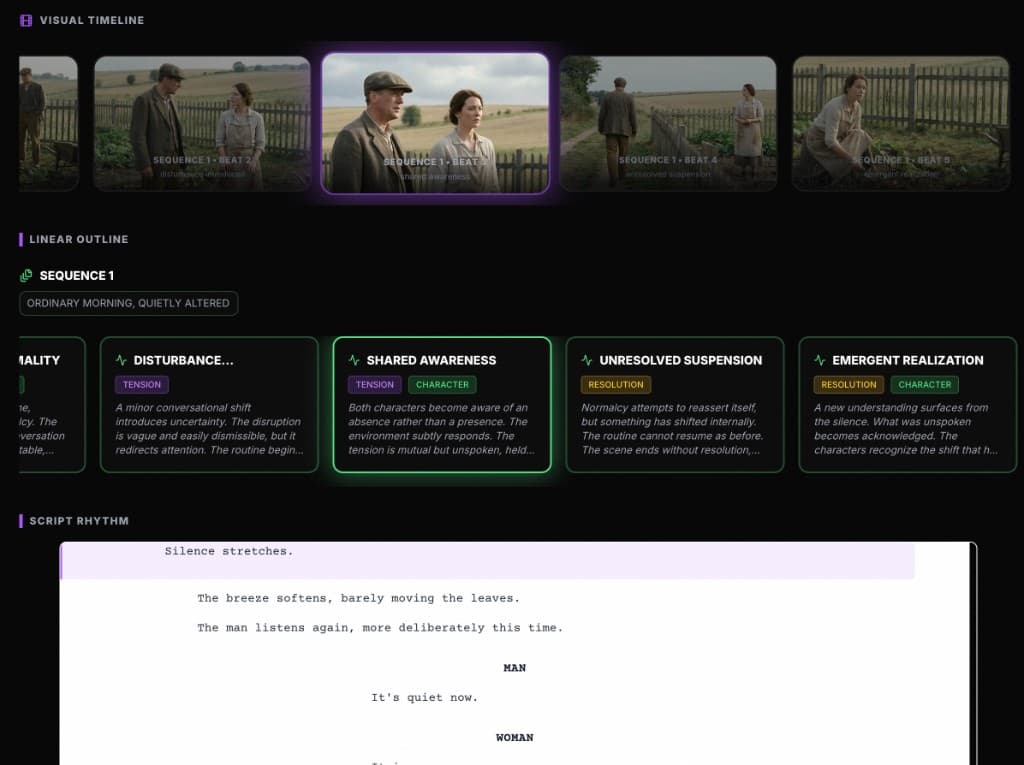
Board the book, one shot at a time
Outline by episode, write the shot list in screenplay format, generate storyboard frames with your own characters as references, and plan production in one workspace.
Start free